A temp email can work for a short Genesys Cloud trial, but it becomes risky once the account may control agent access, routing, shared queues, or recovery.
Use a disposable inbox for quick evaluation if you want less vendor follow-up, then switch to a stable team-controlled address before the setup becomes operational.
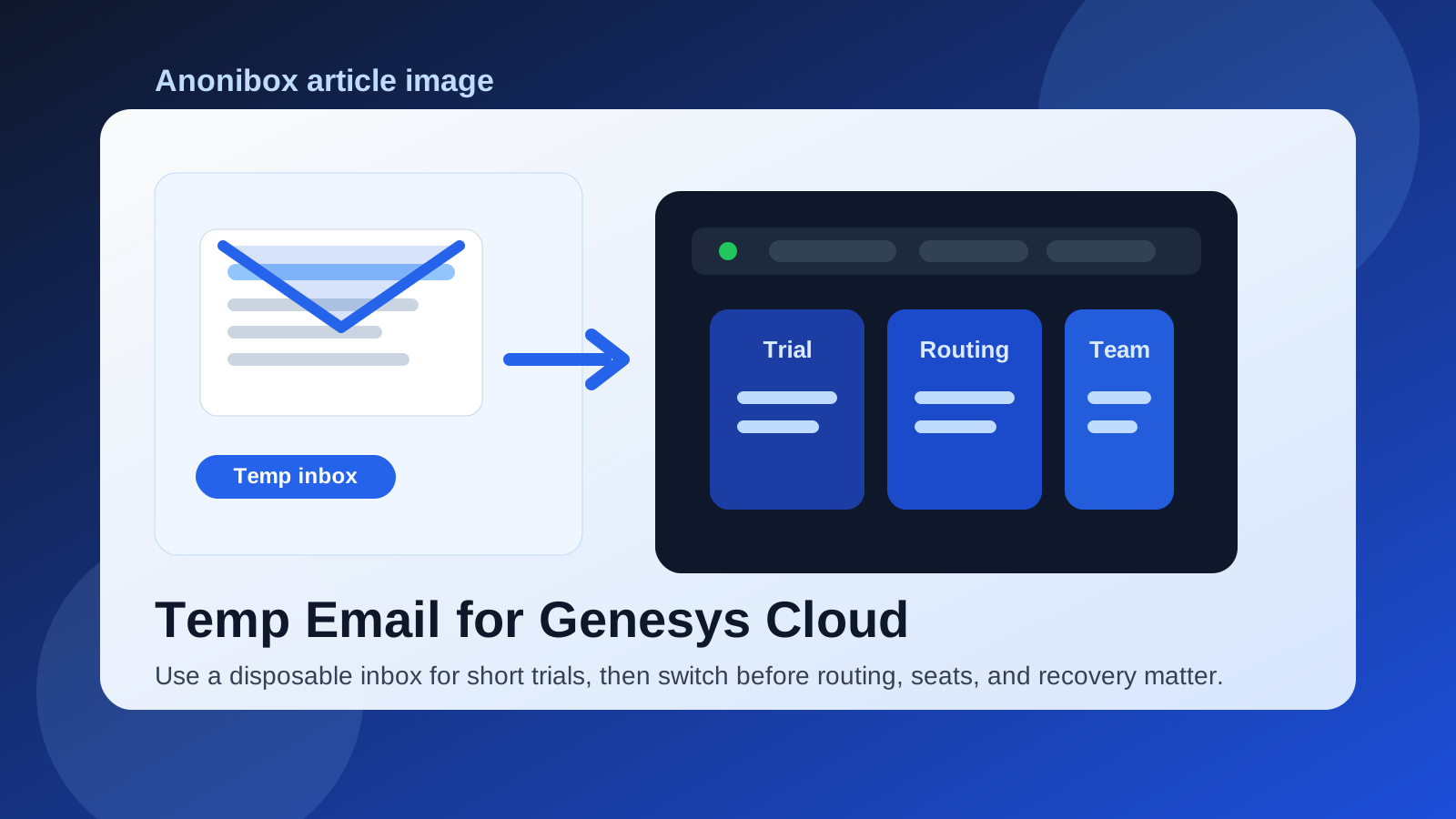
That balance matters because Genesys Cloud is not the kind of tool most people sign up for casually and forget. Even a trial can touch team invites, support workflows, voice configuration, admin notifications, and account ownership. A throwaway inbox is useful when you are still exploring whether the platform belongs on your shortlist. It is a bad fit once the account starts to matter to more than one person.
When a temp email for Genesys Cloud makes sense
Using a temporary inbox is reasonable in the very first stage of research. Maybe you want to see the dashboard, review onboarding emails, compare trial friction across vendors, or keep sales follow-up out of your main work inbox while you evaluate multiple contact-center tools.
That is the sweet spot for a temp email for Genesys Cloud:
- You only need the verification email and first welcome messages.
- You are comparing Genesys Cloud with tools like Five9, Talkdesk, NICE CXone, RingCentral, or Dialpad.
- You are not yet connecting real numbers, routing rules, or customer-facing workflows.
- You want to avoid turning one product demo into months of promotional email.
- You are still deciding whether the platform deserves a real internal owner.
In that early phase, a disposable inbox from a service like Anonibox can keep the trial clean and separate. You still receive the email verification link and starter guidance, but you do not immediately hand a permanent team address to every vendor you test.
Where a temporary inbox starts to break down
The problem is not the trial itself. The problem is what usually happens after the first hour or two. Contact-center software becomes more valuable as more of the real workflow moves inside it. That is also the moment when a temporary inbox becomes fragile.
A temp address is usually the wrong long-term choice if the Genesys Cloud account will be tied to any of the following:
- Agent seats or supervisor access
- Shared queues or internal role assignments
- Call routing experiments your team may want to keep
- Billing, procurement, or admin notices
- Password resets or recovery emails
- Any configuration another teammate may depend on later
At that point, the inbox is no longer just a signup convenience. It becomes part of operational control. If the address expires, becomes inaccessible, or simply gets forgotten, you can create unnecessary cleanup work for your team.
A practical way to use a temp email for Genesys Cloud safely
If you want the privacy benefit without creating account chaos, the best move is to treat the temporary inbox as a short research tool, not as the permanent identity for the workspace.
1. Use the temp inbox only for initial evaluation
Create the account with the temporary address if your goal is just to confirm the trial, click the welcome link, and get a feel for setup. That keeps the earliest stage of evaluation away from your main inbox.
2. Save the important onboarding details immediately
Do not assume you will want to revisit every email later. Save the verification message, any setup instructions worth keeping, and any trial details your team may reference during comparison.
3. Decide quickly whether the trial is serious
Within the first session or two, ask a simple question: is this still a casual look, or is this becoming a real internal evaluation? If it is moving toward a real pilot, switch to a durable address right away.
4. Move ownership before the platform touches real workflow
Do not wait until you have invited teammates, mapped routing logic, or started documenting findings in shared notes. Transition to a stable team-controlled inbox before the account becomes something other people might rely on.
Why this matters more for contact-center tools than for lightweight apps
A disposable inbox is easier to get away with on a simple consumer app trial, newsletter signup, or one-off download. Genesys Cloud is different because it sits closer to business operations. Even if you are only evaluating it, the account can quickly become the reference point for demos, vendor follow-up, internal screenshots, and implementation discussions.
That means the cost of losing access is higher. It may not be catastrophic, but it is annoying in exactly the wrong way: missing a reset email, losing a record of onboarding steps, or having no clean owner for the environment after the trial gains momentum.
Common mistakes people make
- Leaving the temp inbox attached too long: what started as a quick trial becomes a semi-real workspace with no durable owner.
- Inviting teammates before changing the address: that creates confusion about who controls the account.
- Using one disposable inbox for several vendor trials: this makes messages harder to track and weakens the point of separating evaluations.
- Forgetting about recovery: if the inbox is temporary by design, you should assume it may not be there when you need it most.
- Mixing evaluation and production intent: a privacy-first signup tactic is fine, but it should not quietly become your permanent admin setup.
What to evaluate during the short trial window
If you are using a temp email for Genesys Cloud, make the limited window count. Focus on the questions that matter most before you decide whether the tool deserves a stable internal account.
- Is the onboarding flow clear or bloated?
- Can you quickly understand the admin layout?
- Do the routing and queue concepts make sense for your team?
- Does the product look suitable for your size, budget, and support model?
- Are the vendor follow-up emails actually useful, or mostly sales pressure?
Those answers tell you whether to continue with a proper evaluation. They also help you avoid spending time on setup work before the platform has earned it.
When you should switch from temp email to a real address
Switch as soon as any one of these becomes true:
- The trial is now part of a formal shortlist.
- You want to keep the environment beyond a quick test.
- You are inviting teammates, admins, or evaluators.
- You may need recovery, auditability, or a shared point of ownership.
- You are discussing pricing, pilots, procurement, or rollout plans.
A good rule is simple: if losing the inbox would be annoying, switch now. If losing the inbox would disrupt other people, you already waited too long.
Quick checklist
- Use the temporary inbox for signup, verification, and first-look evaluation only.
- Save the welcome email and any setup details you may need later.
- Do not attach real routing, shared ownership, or long-lived admin responsibility to a throwaway address.
- Move to a stable team inbox before invites, billing, or recovery become important.
- Keep the privacy benefit, but stop before the shortcut becomes technical debt.
Final answer
A temp email for Genesys Cloud is useful for short, low-stakes evaluation and inbox privacy. It is not a smart long-term choice once the account starts to matter for agent access, routing, shared work, or recovery.
Use the disposable address to reduce noise during early research, especially if you are comparing several platforms. Then switch to a permanent, team-controlled email as soon as Genesys Cloud becomes a real pilot or operational candidate. That gives you the privacy upside without creating an avoidable ownership problem later.