Usually not for the full process: a temporary email can help with low-trust fellowship inquiry forms or early research, but it is risky for real fellowship applications because interview invites, recommendation requests, and deadline updates may arrive later.
If you want privacy without missing important messages, a separate long-term inbox or an email alias is usually safer once you begin serious applications.
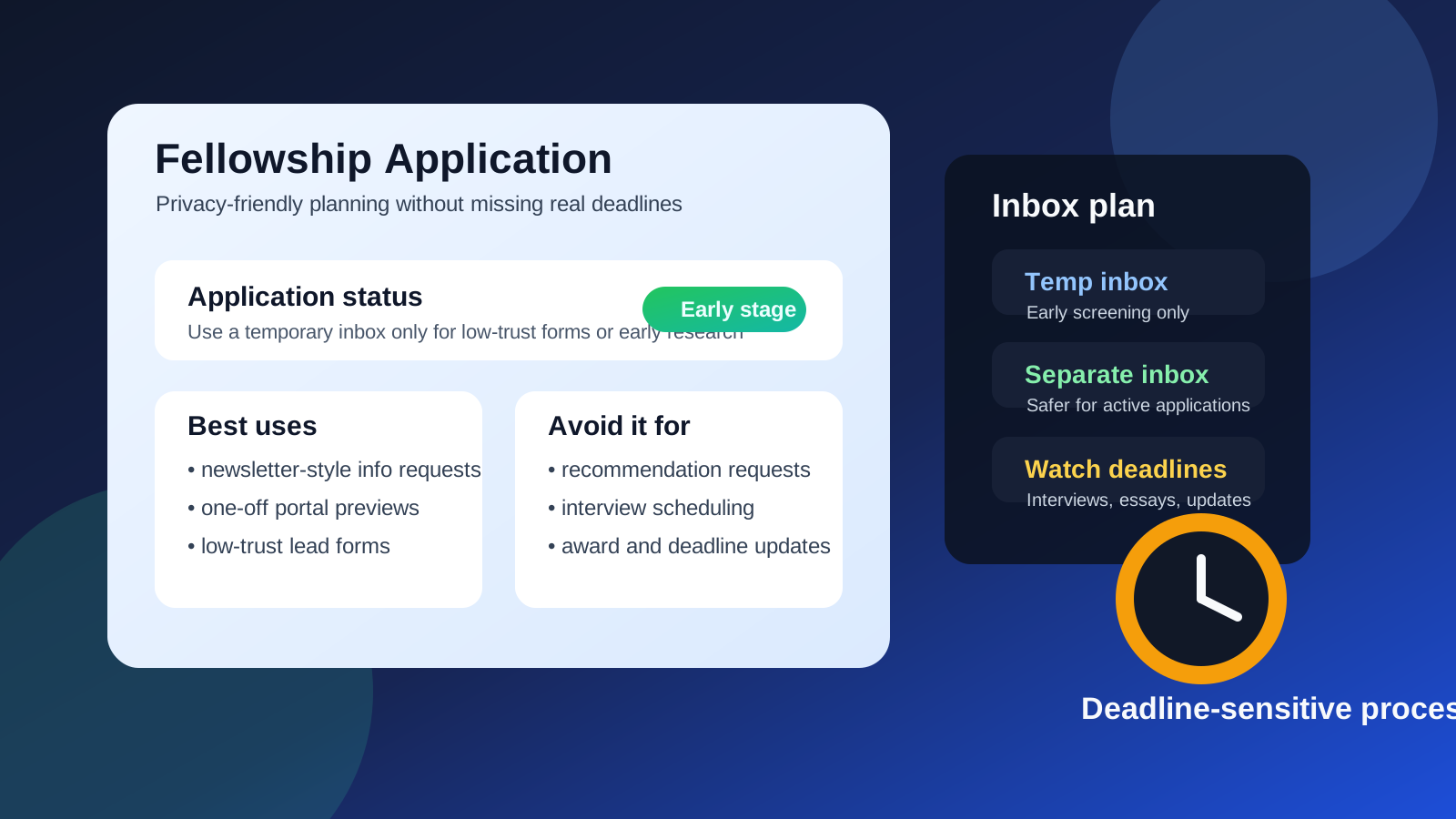
Why this question matters for fellowship applications
Fellowship applications often look simple at the start. You may see a form, a program page, a request for a résumé, or a short interest submission and think a temporary inbox will be enough. Sometimes that is true for the first contact. The problem is that fellowships rarely stay simple for long.
Unlike a one-click newsletter signup, a real fellowship process can stretch over weeks or months. Programs may send essay prompts, recommendation instructions, interview scheduling links, document reminders, portal access notices, finalist updates, travel logistics, or funding decisions. That makes fellowship applications much more deadline-sensitive than people expect.
A temporary inbox can protect your privacy at the very beginning, especially if you are exploring several programs and do not want every organization, university center, or lead form in your main inbox. But if you use it too long, you create a new risk: missing the exact messages that matter most.
When a temporary email can make sense
There are situations where using a temporary email for fellowship-related activity is reasonable. The key is understanding that these are usually early-stage or low-trust scenarios, not the whole application lifecycle.
- Browsing low-commitment interest forms: If a site mainly offers alerts, brochures, or informational follow-up, a temporary inbox can reduce inbox clutter.
- Comparing programs before applying: When you are still sorting through options and want to see what kind of email flow each program sends, a temporary address can help you stay organized.
- Testing a portal or signup gate: Some programs lock basic information behind an email verification step. A temporary inbox may be enough to inspect the workflow before you share a permanent address.
- Protecting yourself from vague third-party lead sites: If you are not sure whether the form belongs to a real fellowship provider or just a marketing funnel, caution is sensible.
In those cases, a temporary address from a service like Anonibox can act as a buffer. You get the confirmation email and initial information without committing your primary inbox to months of follow-up from a program you may never pursue.
When a temporary email is the wrong tool
Once you move from casual research to a real application, the downsides get stronger.
- Applications with multiple deadlines: If essays, references, transcripts, and interviews arrive on different dates, you need a stable inbox you actually monitor.
- Recommendation workflows: Many fellowship programs coordinate reference requests by email. Losing access to that chain can create confusion for you and your recommenders.
- Interview scheduling: Fellowship interviews often move quickly. A missed scheduling email can cost you the opportunity outright.
- Portal reset and account recovery: If you need to log back in later, a disposable inbox may become a liability.
- Award and finalist notices: Some of the most important messages arrive well after the first submission.
This is why the short answer is usually no for the full process. Fellowship applications often require continuity, and temporary inboxes are built for convenience, not long-term reliability.
What makes fellowship applications different from ordinary signups
People sometimes assume fellowship applications behave like standard job-board forms. They do not always. A fellowship process can be part admissions workflow, part hiring workflow, and part grant workflow. That hybrid structure changes the email risk.
You may be dealing with academic departments, nonprofit administrators, grant staff, host institutions, selection committees, and third-party application platforms. Messages can come from different domains and at irregular times. Some programs send an immediate confirmation and then go quiet for weeks before a critical follow-up. Others ask for additional paperwork in stages. A temporary inbox is easy to manage when messages arrive immediately and predictably. It is much less safe when timing is uneven.
There is also a professionalism issue. A real fellowship committee may not reject you just because you used a privacy-focused address, but a clearly disposable inbox can still make communication less stable and less polished than it needs to be. Even if the program never judges the address itself, you may be creating unnecessary friction for yourself.
A better approach: separate your application inbox without making it disposable
If your real goal is privacy and organization, a separate long-term inbox is usually the better answer. That gives you many of the benefits people want from a temporary email without the biggest risks.
- You keep fellowship traffic out of your everyday personal inbox.
- You can label or filter messages by program.
- You still have access weeks or months later.
- You can safely use the address for portals, references, and follow-up.
- You reduce the chance of missing a critical reset, deadline, or interview email.
An email alias can also work well if you already use a stable primary inbox and want one cleaner address for outward-facing applications. The main idea is simple: keep the privacy benefit, lose the fragility.
A practical workflow that works better
If you are applying to multiple fellowships and want both privacy and reliability, this workflow is usually the sweet spot:
- Use a temporary inbox only for low-trust discovery steps. That includes vague info-request forms, third-party lead pages, or portal previews you do not yet trust.
- Move serious programs to a dedicated long-term inbox. As soon as a program looks legitimate and worth applying to, switch.
- Create a simple tracking system. Keep deadlines, required documents, reference requests, and portal links in one place.
- Save key messages early. If a program sends instructions or unique links, do not assume you will remember them later.
- Check spam and promotions tabs. Fellowship emails sometimes come from automated systems and do not always land neatly in the primary inbox.
This gives you control without making the communication chain brittle.
Red flags where privacy caution is especially justified
Some fellowship-related pages deserve extra skepticism. A temporary inbox can be useful as a screening tool when you see warning signs like these:
- The program page is vague about who runs it.
- The site pushes you to submit contact details before showing basic eligibility information.
- The offer sounds too broad, too urgent, or too generous without clear selection criteria.
- The domain does not match the stated institution or sponsor.
- The page feels more like a lead funnel than an actual application portal.
In those cases, protecting your main inbox makes sense. But if the program proves legitimate and you decide to continue, do not stay on a disposable address out of habit.
Common mistakes applicants make
- Using one throwaway address for everything: it becomes hard to separate serious programs from casual research.
- Leaving the temporary inbox in place after submission: that is when the most important messages often start arriving.
- Forgetting about references: recommenders may need follow-up instructions that tie back to your application email trail.
- Assuming a confirmation email is the only message that matters: fellowship processes often unfold in stages.
- Optimizing for privacy alone: privacy matters, but reliability matters too.
Quick decision checklist
Before you use a temporary email for a fellowship-related form, ask yourself:
- Am I just gathering information, or am I starting a real application?
- Will this program send time-sensitive updates later?
- Could recommendation requests or portal resets depend on this address?
- Do I trust the program or website enough to use a stable inbox yet?
- Would a separate long-term inbox solve the problem better than a disposable one?
If you are only at the information-gathering stage, a temporary email may be fine. If you are submitting real materials or expecting follow-up, a stable inbox is the safer move.
Final answer
A temporary email can help at the edges of the fellowship process, especially for low-trust inquiry forms or early research. But for real fellowship applications, it is usually not the best choice because the process depends too much on reliable follow-up.
If you want the benefits of privacy without the risk of missed deadlines, use a separate long-term inbox or an alias once a program becomes serious. That gives you better control, better organization, and a much lower chance of losing an important opportunity to a disposable inbox.