Yes — using a separate email for residency applications is usually a smart idea. It gives you one reliable place for interview invites, coordinator updates, and deadline-related messages without burying them in your everyday inbox.
For most applicants, a separate email is safer and more practical than using a temporary inbox for residency applications. You want privacy and organization, but you also need a stable address that will still work when programs follow up weeks or months later.
Why residency applications deserve their own inbox
Residency applications are not like signing up for a newsletter or testing a one-off free trial. They usually involve multiple programs, strict timelines, interview scheduling, portal notices, and follow-up emails that may arrive at inconvenient times. A message that feels minor in another context can be important here. If a program coordinator sends an interview option, a document request, or a scheduling change, you do not want it mixed in with shopping receipts, social notifications, random subscriptions, and old school or work threads.
That is why the answer to the question should you use a separate email for residency applications is usually yes. A dedicated inbox creates a clean lane for a high-stakes process. It helps you notice what matters faster and reduces the chance of missing something because it landed in an overloaded personal account.
The biggest benefits of a separate email for residency applications
1. Better organization during a crowded application season
If you apply broadly, messages can pile up fast. Even if the volume is not overwhelming every day, the timing matters. Interview windows, follow-up questions, and program instructions are easier to manage when they are all in one inbox rather than scattered across your normal email history.
2. Less risk of missing an important message
Separate inboxes reduce noise. That matters because residency communication often includes practical details: scheduling links, confirmation notices, supplemental instructions, and updates from staff members rather than a polished branded marketing system. A clean inbox makes those messages easier to spot.
3. More privacy
Your primary email address is part of your long-term digital identity. Using it everywhere means more people, systems, and vendor tools get access to it. A dedicated residency inbox limits that spread without making you unreachable.
4. A more professional communication setup
A separate email can also help you present yourself consistently. If your main personal address is old, cluttered, or tied to an unhelpful username, this is a good excuse to use something cleaner and more professional for a serious application cycle.
What kind of separate email should you use?
The key word here is separate, not disposable. For residency applications, you want an inbox you control, can secure properly, and can keep active through the full cycle. That usually means a normal email account from a provider you trust, with a professional address format based on your real name.
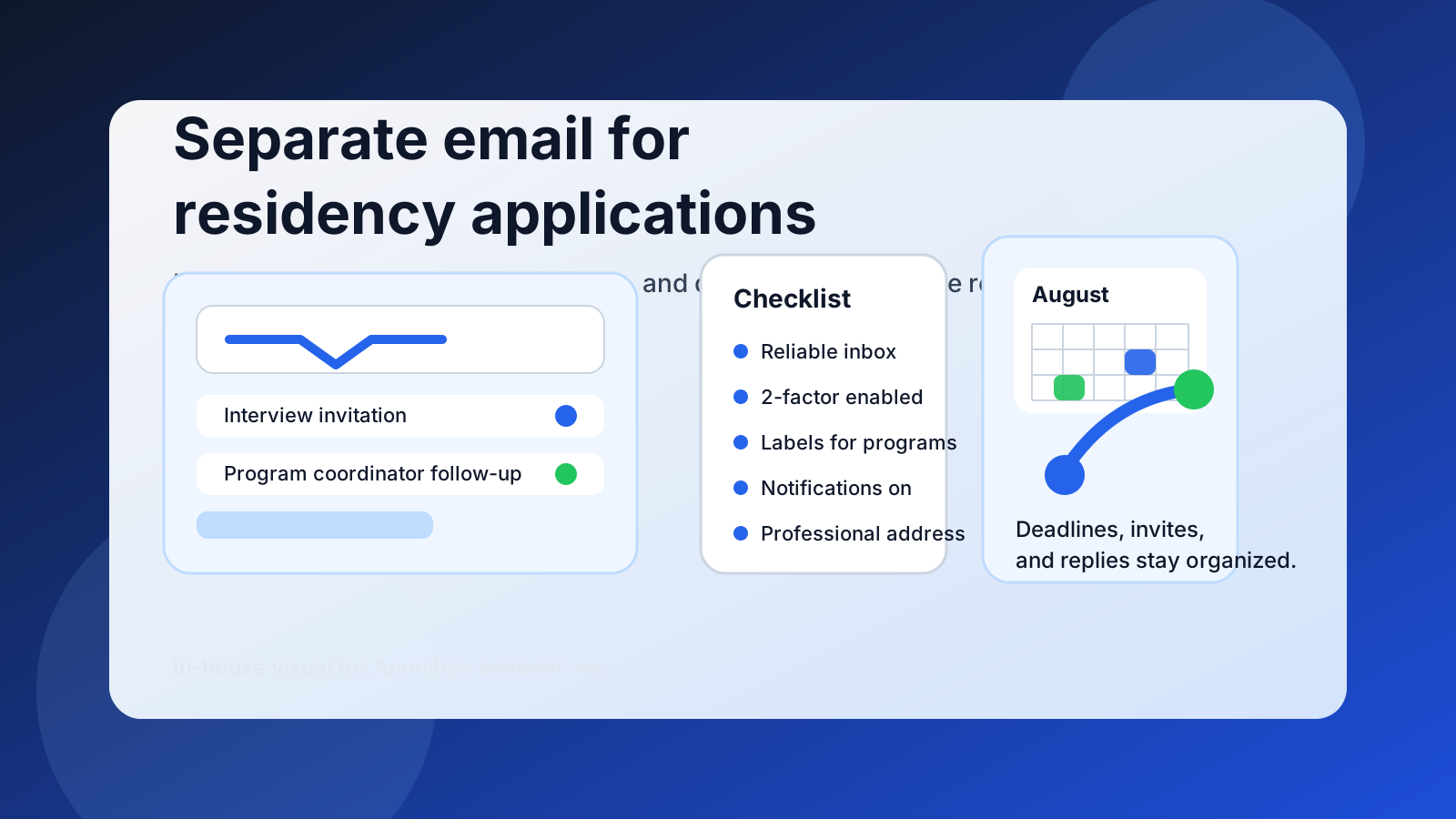
A good setup usually looks like this:
- a straightforward address based on your name
- a provider you can log into reliably from multiple devices
- two-factor authentication enabled
- strong password hygiene
- notifications turned on for important messages
If you already have a personal email that is professional and easy to monitor, you may not need a brand-new account. But if your current inbox is noisy, linked to many old accounts, or easy to lose track of, creating a dedicated address is worth the small effort.
Is an email alias enough, or do you need a whole new account?
Sometimes an alias is enough. If your email system lets you receive mail through a separate alias while still delivering everything into a dependable main mailbox, that can work well. It gives you a distinct public-facing address while keeping account management simple.
Still, for many applicants, a fully separate email account is the clearer choice. It creates stronger separation, makes filtering easier, and avoids accidental mixing with unrelated messages. If you are the kind of person who feels calmer when everything has its own lane, the separate account will probably serve you better than an alias alone.
Why a temporary or burner inbox is usually the wrong tool here
Temporary inboxes have real uses. They can be handy for low-stakes signups, one-off downloads, or situations where you expect spam and do not want to expose your main address. A service like Anonibox makes sense in those kinds of privacy-first scenarios.
Residency applications are different. The process can stretch over time, and communication may not arrive on your preferred schedule. If you use a short-lived or lightly managed inbox, you risk losing access to messages you still need later. That is why a separate long-term address is usually much safer than a disposable one for this use case.
In other words: if you are browsing resources, downloading a guide, or testing whether a third-party site is worth hearing from, a privacy tool may be useful. But for the actual application process, interviews, and program communication, reliability should beat disposability.
How to set up a residency inbox the right way
Choose a clean address
Use a name-based address that looks normal in a professional setting. Avoid nicknames, joke references, or anything that could create friction when a program coordinator sees it in their inbox.
Turn on security from day one
Enable two-factor authentication and use a strong password. High-stakes application email is not something you want protected by weak login habits.
Create simple folders or labels
You do not need an elaborate system. A few labels such as Applications, Interviews, Documents, and Follow-Up are usually enough. If you are dealing with many programs, add program-specific folders only if that actually helps you move faster.
Use search and stars deliberately
Star or flag time-sensitive messages immediately. Archive low-priority confirmations once you have handled them. The goal is not a perfect inbox. The goal is fast triage.
Connect it to your calendar habits
If an email contains a date, deadline, or interview slot, move it into your calendar quickly. A dedicated inbox helps you catch those messages, but you still need a habit for turning them into action.
What if you already started with your personal email?
You do not need to panic or restart everything. If you have already used your personal inbox for part of the process, you can still improve your setup:
- create the separate address now
- set up forwarding or filtering if appropriate
- use the dedicated address for any new contact points
- update profile materials or portals where edits are allowed
- watch both inboxes carefully until the cycle settles
It is better to improve your system midstream than to stay stuck with a messy one because you did not start perfectly.
Common mistakes to avoid
- Using a throwaway inbox for real applications: privacy matters, but not at the cost of reliability.
- Creating a separate email and never checking it: the system only helps if you actually monitor it.
- Picking an unprofessional address: keep it simple and name-based.
- Skipping security: a dedicated inbox should be easier to manage, not easier to compromise.
- Overcomplicating the workflow: labels and filters should reduce stress, not create another admin project.
A quick checklist before you apply
- Do I have one reliable inbox dedicated to residency applications?
- Is the address professional and easy to recognize?
- Have I enabled two-factor authentication?
- Will I notice new interview or deadline emails quickly?
- Do I have a simple system for flags, folders, or labels?
- Am I using a stable account instead of a disposable inbox for real program communication?
Final answer
So, should you use a separate email for residency applications? In most cases, yes. It gives you better organization, more privacy, and a more dependable way to manage a long, high-stakes communication trail.
The best version of this strategy is a dedicated, professional, long-term inbox that you check consistently. If you want to protect your main address during lower-stakes online activity, tools like Anonibox can still have a place around the edges. But when it comes to actual residency applications, interview scheduling, and program follow-up, a reliable separate email is usually the smartest move.