Yes — in many cases, an email alias is one of the smartest ways to handle fellowship applications because it protects your main inbox without making you hard to reach.
The catch is reliability: the alias needs to forward consistently, and you still need to monitor it closely for application confirmations, recommender notices, interview requests, and final decisions.
Why this question matters for fellowships
Fellowship applications are often more sensitive and more drawn out than ordinary sign-ups. You may be sending personal statements, writing samples, research proposals, transcripts, recommendation requests, funding details, or travel information. Some programs reply quickly, but many move slowly. Months can pass between submission, interviews, finalist updates, and award notices.
That long timeline changes the email decision. A throwaway inbox can look attractive if you want privacy, but it can become a liability if it expires, stops forwarding, or gets forgotten. At the same time, using your everyday personal inbox for every program can create its own mess: mailing-list clutter, promotional follow-ups, and difficulty separating serious messages from noise.
An email alias sits in the middle. It can give you a cleaner application identity without forcing you to maintain a completely separate mailbox from scratch.
What an email alias actually does
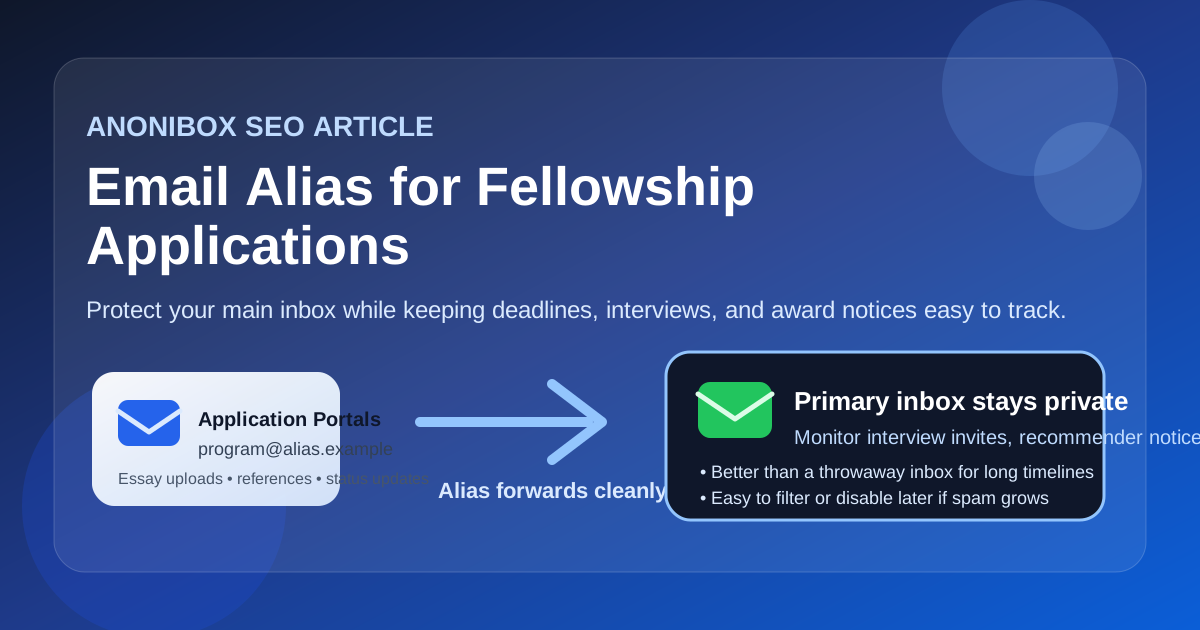
An email alias is an alternate address that routes mail into an inbox you already control. In practice, that means you can present a dedicated address for fellowship applications while still reading the messages in your main account.
That setup can be useful because it gives you:
- Privacy: you avoid exposing your main address everywhere.
- Organization: you can filter or label fellowship messages automatically.
- Flexibility: if a program or newsletter becomes noisy later, you can mute or retire the alias without changing your core inbox.
- Professional continuity: unlike a disposable inbox, a good alias can stay alive for the full application cycle.
For many applicants, that is the sweet spot.
When an alias is a good choice
An alias usually makes sense when you want to stay reachable but reduce exposure. That is especially true if you are applying to several programs at once or using a mix of university portals, nonprofit forms, and direct coordinator contact.
It is a strong option when:
- You want one fellowship-facing address without giving every program your everyday inbox.
- You expect a long timeline and need the address to remain stable.
- You want to sort fellowship traffic into its own label or folder automatically.
- You may later disable the address if it starts attracting spam or broad mailing-list traffic.
- You are comfortable managing forwarding rules and checking your inbox carefully.
In other words, an alias works best when you want separation without fragility.
When an alias may not be enough
An alias is not always the right answer. Sometimes a fully separate inbox is better, and sometimes using your main professional address is simplest.
You may want a separate mailbox instead of an alias if:
- You are applying under two very different identities or projects and want total separation.
- You share an inbox with a team, mentor, or administrator and do not want overlap.
- You need completely different security settings, recovery methods, or notification rules.
You may also want to avoid an alias if the forwarding system is flaky, confusing, or hard to audit. Fellowship communication is too important to trust to a setup you barely understand.
Why a temporary email is usually riskier for real fellowship submissions
This is where people often blur together three different tools: a temporary inbox, an alias, and a separate mailbox. They are not interchangeable.
A temporary email can be useful for low-stakes browsing, gated downloads, or one-off forms where you mainly want to avoid future inbox clutter. A fellowship application is different. Programs may send reference reminders, portal corrections, interview scheduling notes, waitlist updates, and final award messages long after your first submission.
If the address disappears, you may miss something you cannot easily recreate. That is why an alias is usually a safer privacy tool than a disposable inbox for actual fellowship applications. If you do use a temporary inbox for early research — for example, to access a mailing list or a preliminary information session form — a service like Anonibox can help keep that early-stage interest separate. But once you move into the real application process, reliability should matter more than pure throwaway convenience.
How to set up an alias for fellowship applications the smart way
1. Choose a professional-looking address
Keep it simple and readable. Something based on your name is usually better than something clever. The goal is to look organized, not mysterious.
2. Test forwarding before you use it
Send a few messages to the alias from different accounts and confirm they arrive correctly. Check subject lines, sender names, attachments, and spam placement. Do this before you submit anything important.
3. Create filters or labels immediately
Once the alias is active, set up rules so fellowship email is easy to review. A dedicated label, folder, or star system makes a big difference when deadlines stack up.
4. Keep a record of which programs use which address
If you use more than one alias, track it in a simple note or spreadsheet. That prevents confusion later when a coordinator writes back to a specific address you barely remember creating.
5. Make sure you can reply from the same address if needed
Receiving through an alias is not always the same as replying from it. If your setup makes replies look inconsistent, fix that before the first live conversation.
Practical benefits during the fellowship process
Where an alias really shines is in the middle of a messy application season.
- Recommendation management: faculty or mentors may get reminder messages connected to your application timeline, and you may get copies or status notices. Keeping those messages organized matters.
- Interview logistics: time-sensitive scheduling emails are easier to spot when they are routed through a dedicated identity.
- Portal follow-up: some systems send multiple confirmation and revision notices that are annoying in a crowded everyday inbox.
- Long-tail updates: finalists, alternates, and award recipients may all hear back at different times. A stable alias helps you preserve continuity.
It also makes post-cycle cleanup easier. If the applications are over and a program keeps sending generic updates, you can adjust that alias without disrupting your personal address everywhere else.
Common mistakes to avoid
- Using an alias you never test: if forwarding breaks silently, you may miss a critical message.
- Choosing an unprofessional address: fellowship communication should feel straightforward and credible.
- Ignoring spam or promotions tabs: automated portal messages sometimes land in odd places.
- Using too many aliases without tracking them: over-optimizing can make you less organized, not more.
- Assuming privacy equals invisibility: an alias reduces exposure, but it is not a magic shield against every form of tracking or data sharing.
Alias vs separate inbox vs temporary inbox
If you want a simple rule of thumb, use this:
- Email alias: best when you want privacy and organization without losing continuity.
- Separate inbox: best when you want deep separation and do not mind managing a second mailbox.
- Temporary inbox: best for low-stakes research or sign-up friction, not for the core fellowship application itself.
For most serious fellowship applicants, the alias option is the most balanced. It is lighter than a full second account and safer than a disposable address.
A quick checklist before you submit
- Can you receive and reply from the alias reliably?
- Have you tested it with attachments and external senders?
- Have you created filters, labels, or folders for fellowship mail?
- Will the alias remain active for the entire application cycle?
- Do you know where interview and award emails will surface in your inbox?
If the answer to those questions is yes, the alias is probably ready.
Final answer
Yes, you can absolutely use an email alias for fellowship applications, and for many people it is the smartest privacy-conscious option. It helps you separate application traffic from everyday email, keeps your main address less exposed, and still gives you a reliable way to receive important messages.
The real requirement is dependability. Fellowship timelines are too important for a setup that expires, forwards unpredictably, or gets ignored. If your alias is stable and monitored, it is often a better fit than a throwaway inbox. If you need deeper separation, use a full second mailbox instead. Either way, the goal is the same: stay organized, stay reachable, and keep privacy decisions from creating new application risks.