Yes — an email alias can be a smart choice for graduate school applications if you want more privacy without risking missed messages. A good alias hides your primary address from every university form while still delivering important mail into an inbox you already monitor.
But it only works if the alias is stable for the full admissions cycle. Graduate school applications can stretch from inquiries and test registrations to interviews, funding offers, waitlists, and enrollment paperwork, so a short-lived disposable address is usually the wrong tool.
What an email alias actually does
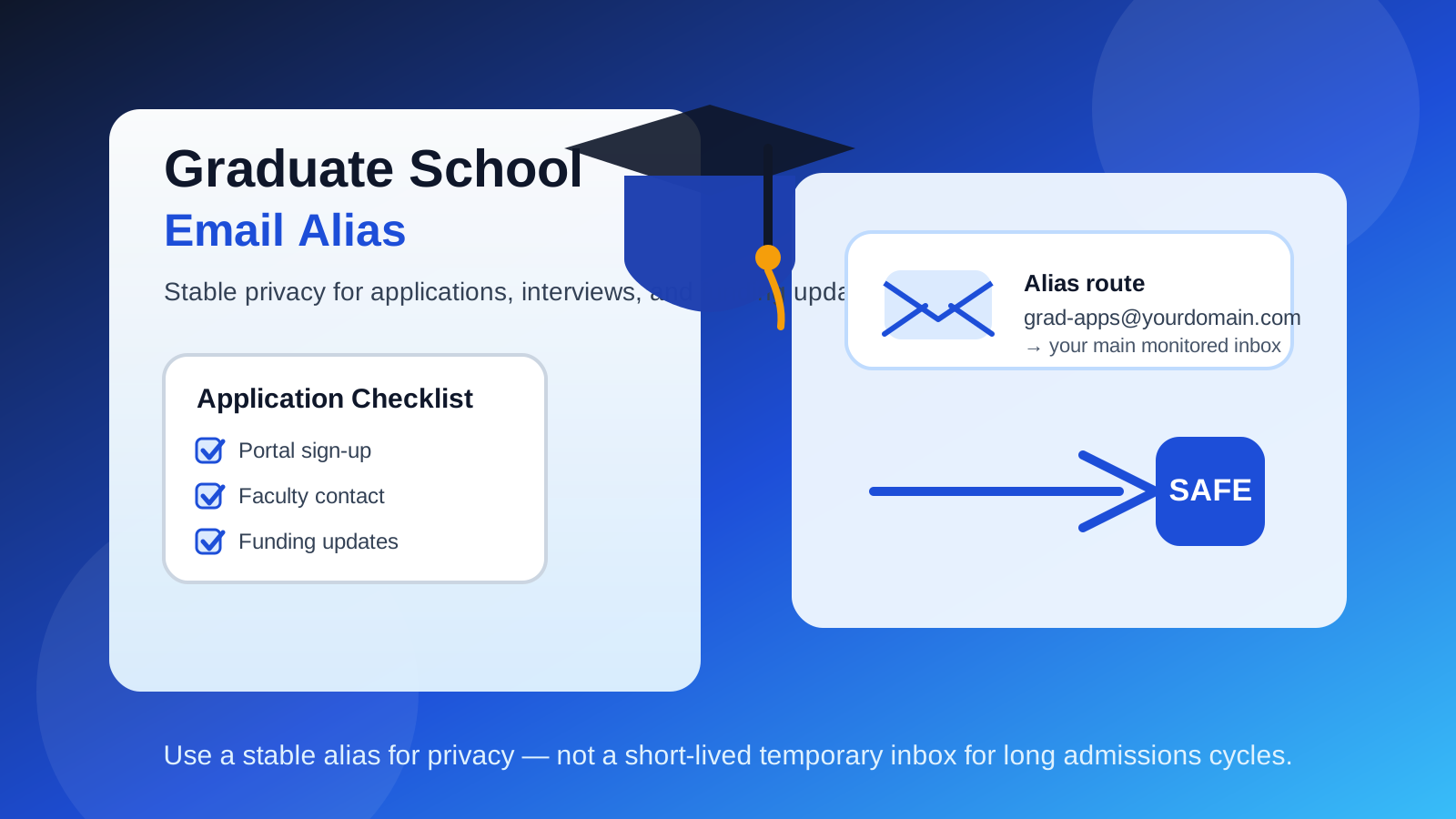
An email alias is not the same thing as a temporary inbox. It is usually an additional address that forwards mail to your real inbox or works as another sending and receiving identity inside an account you control. That distinction matters a lot for graduate applications.
Admissions timelines are slow and messy. You may hear from a department coordinator in October, a faculty member in November, an interview committee in January, and a funding office in March. You need continuity. An alias can give you privacy and organization without creating the fragility that comes with a throwaway address.
Why an alias is often a better fit than a burner for graduate school
Graduate school is not a one-click signup. It is a long process with documents, reminders, status changes, and occasional surprises. That is why an email alias for graduate school applications is often more practical than a burner address.
- It stays reachable: if a school sends a late request for a transcript, writing sample, or interview slot, the message still lands in a mailbox you actively watch.
- It protects your main address: list brokers, third-party scholarship sites, and inquiry forms do not automatically get your primary contact email.
- It keeps your search organized: you can filter, label, and search one admissions stream instead of mixing it with work, shopping, and personal mail.
- It looks professional: unlike a random throwaway address, a clean alias can still look normal to admissions staff and faculty.
When using an alias makes the most sense
An alias works especially well when you are applying to several programs at once and want a clean layer between your daily inbox and your admissions activity. It is useful for:
- department inquiry forms before you decide where to apply
- application portal registrations across multiple universities
- faculty outreach when you want a dedicated academic-contact channel
- scholarship, assistantship, and fellowship-related follow-up tied to the same application season
- keeping test-related and admissions-related mail in one place without exposing your oldest personal address everywhere
If you already have a stable email account you trust, an alias can be the best middle ground between convenience and privacy.
When a separate full inbox may be even better
An alias is good, but it is not always the best answer. If you are applying broadly, managing dozens of deadlines, or coordinating recommenders, a separate dedicated inbox can be better than an alias because it gives you stronger separation.
For example, a full admissions inbox may make more sense if:
- you are applying to many programs in one cycle and expect heavy email volume
- you want to avoid accidentally overlooking graduate-school mail inside your main account
- you need a fresh, long-term identity specifically for academic and research communication
- you plan to reuse the same address later for admitted-student logistics, housing, financial aid, and cohort communication
That is the key trade-off: an alias is lighter and easier, while a separate inbox gives cleaner separation. Both are usually safer than relying on a temporary address for something as important as graduate admissions.
Why temporary email is risky for actual applications
Temporary email tools can help with low-stakes signups, but real graduate applications are rarely low stakes. You may need the same contact address for months. If the inbox expires, gets purged, or looks suspicious to a portal, you can create real problems for yourself.
That does not mean services like Anonibox never have a role. They can be useful for one-off information requests, mailing-list signups, or early browsing when you do not yet want outreach flowing into your long-term inbox. But once you create a real application account or begin serious conversations with a program, stability matters more than short-term privacy.
Graduate-school-specific situations to think about
Faculty outreach
In research-focused programs, you may email professors before you apply. A sensible alias can help you keep those conversations separate and searchable. If a professor replies months later, you still want the thread intact and attached to a monitored account.
Recommendation and portal reminders
Many graduate systems send automatic reminders about recommendation letters, missing materials, and status changes. Those notices are easy to miss if they land in an inbox you barely check or one that no longer exists.
Funding and assistantship updates
Admissions is only part of the process. Assistantships, fellowships, travel grants, and admitted-student events may come later and sometimes from different offices. A stable alias is much safer than a short-lived address when those follow-up messages arrive.
Waitlists and delayed decisions
Graduate decisions are not always fast. Some programs move slowly or send waitlist updates long after the original deadline. If you disappear behind an expired inbox, you may miss a narrow response window.
How to set up an alias the right way
- Choose an address you can keep active for the full cycle. Think in months, not days.
- Make it look normal and readable. Something simple is better than something gimmicky.
- Route it to an inbox you already monitor daily. Privacy is pointless if you miss an interview invitation.
- Create filters and labels. Put every admissions email into one folder so deadlines do not get buried.
- Test sending and receiving before you apply. Confirm the alias can accept messages, forward correctly, and send replies if needed.
- Keep the same address across the process. Switching addresses mid-cycle can confuse portals and staff.
Best practices once you start using the alias
- Check it every day during peak season. Graduate offices are not always flexible about missed time slots.
- Whitelist key domains if possible. University messages can sometimes land in promotions or spam folders.
- Use the same address on portals, forms, and follow-up messages. Consistency reduces confusion.
- Save important emails offline or star them. Do not rely on search alone when deadlines are close.
- Review your alias setup before interviews and decision season. Make sure forwarding still works exactly as expected.
Red flags and mistakes to avoid
- Using a disposable inbox that may vanish before decisions arrive
- Choosing an alias that looks unserious or spammy
- Forwarding into an inbox you rarely open
- Replying from a different address and confusing the program
- Switching contact emails after submitting applications unless absolutely necessary
None of these issues are fatal on their own, but together they create avoidable friction in an already stressful process.
So, should you use an email alias for graduate school applications?
Usually, yes — if the alias is stable, professional, and tied to an inbox you reliably monitor. For many applicants, it is a smart privacy layer that reduces inbox clutter without sacrificing reachability.
What you should not do is treat graduate applications like disposable trial signups. The process lasts too long and matters too much. If you want privacy, use a durable alias or a separate dedicated inbox. If you only need anonymous browsing at the very beginning, a temporary tool can help for that narrow stage, but your real application workflow should live on an address you control for the full cycle.
That balance is the practical answer: use privacy tools where they fit, but keep your admissions contact channel stable enough for deadlines, interviews, funding decisions, and every important message that comes after you hit submit.