Yes — using a separate email for nursing school applications is usually a smart idea because the process is long, deadline-heavy, and full of status updates that are easy to lose in a busy personal inbox.
For most applicants, a dedicated long-term address is a better fit than a burner or throwaway inbox because nursing school admissions often involve portal logins, interview scheduling, reference requests, scholarship notices, and compliance reminders that can continue for months.
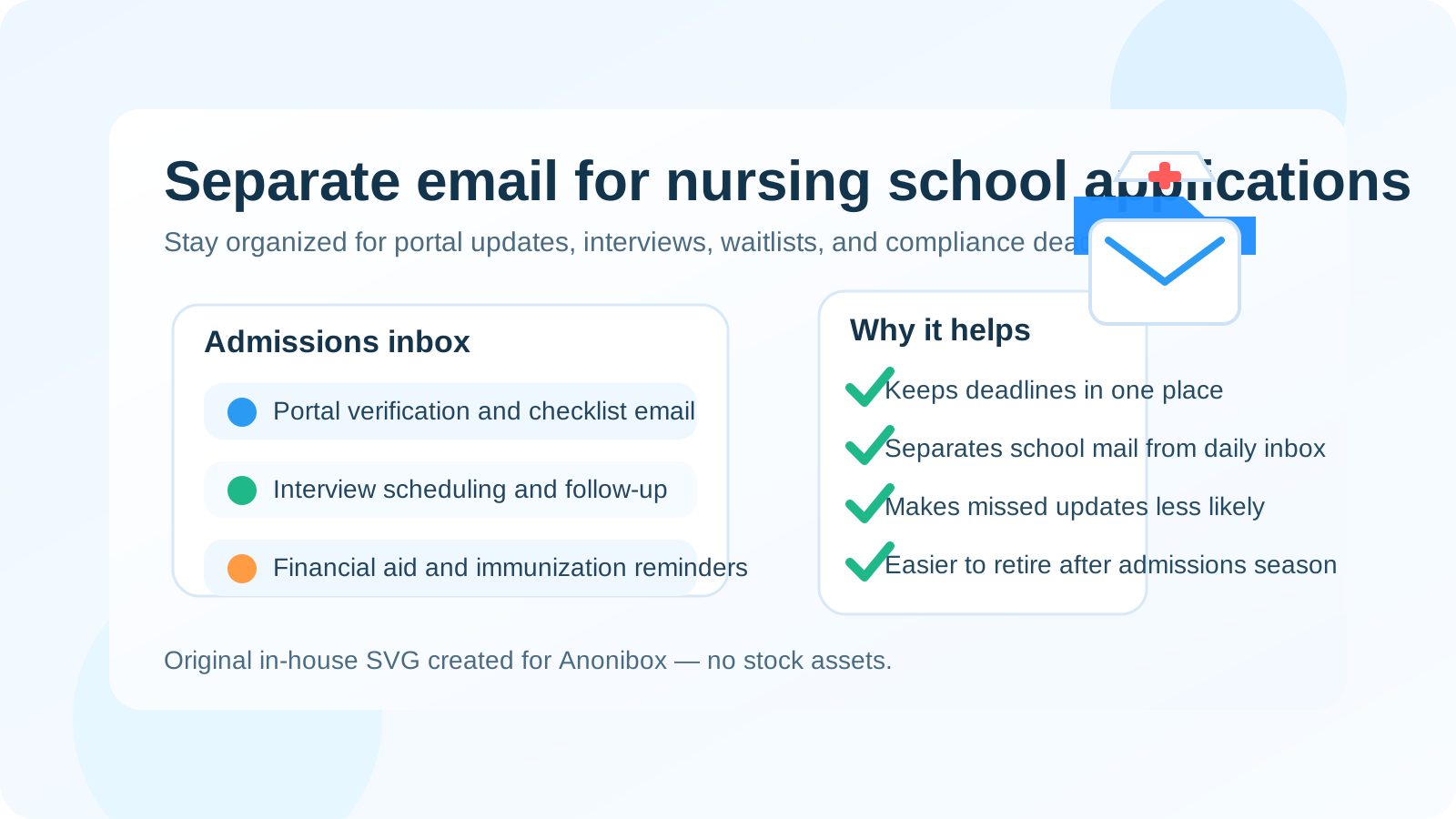
Why this question matters more than people think
Nursing school applications are not usually a one-email-and-done process. Even after you hit submit, programs may continue contacting you about missing documents, prerequisite verification, transcripts, interview invitations, waitlist movement, financial aid, admitted-student events, and post-acceptance requirements. If those messages are mixed into your everyday inbox with shopping receipts, newsletters, job alerts, and personal conversations, it becomes much easier to miss something important.
That is why many applicants end up asking whether they should create a separate address just for admissions. In most cases, the answer is yes. A dedicated inbox gives you a cleaner system for a high-stakes process without forcing you to expose your oldest personal email address everywhere.
Why a separate email works well for nursing school applications
A separate admissions inbox gives you three practical advantages: organization, privacy, and control.
1. It keeps the application process organized
Nursing programs often contact applicants in waves. One school may ask for a transcript correction, another may send a portal reminder, and another may release interview dates with a short response window. A separate inbox makes those messages easier to find, star, sort, and review.
You do not have to remember whether an update landed in your school email, your old personal Gmail account, or the address you use for everything else. It is all in one place.
2. It reduces long-term inbox clutter
Before and after applications, schools and related services may send newsletters, open-house invites, exam prep offers, financing information, housing promotions, and event reminders. Some of that is useful. Some of it is just noise. A separate inbox lets you contain that stream instead of letting it spill into the account you rely on for daily life.
3. It gives you a little more privacy
Your main personal email often has years of history attached to it. It may be tied to shopping accounts, banking alerts, family communication, and other personal services. A dedicated admissions email does not create perfect anonymity, but it does create cleaner separation. That can be especially helpful if you plan to apply to multiple schools, attend webinars, download admissions guides, or sign up for third-party nursing resources during research.
Why a separate email is usually better than a burner email here
This is the key distinction. A separate email is not the same thing as a temporary inbox. Nursing school admissions can stretch over months, and sometimes longer when waitlists, prerequisite updates, or deferred enrollment conversations are involved. That makes reliability more important than short-term convenience.
A burner or disposable address can be useful for very early research, such as checking a gated webinar, downloading a brochure, or testing whether a student community immediately triggers promotional mail. But for actual applications, a stable inbox is much safer. You do not want to lose access to an address that holds status-checker links, interview instructions, or acceptance paperwork.
If you use Anonibox or another temporary inbox during the early research stage, that is fine. Just treat it as a scouting tool, not as your primary admissions address once you begin real applications.
When a separate email makes the most sense
A dedicated nursing-school inbox is especially useful if any of the following apply:
- You are applying to several programs at once.
- You expect a long admissions cycle with interviews, updates, and waitlists.
- You are also applying for scholarships, housing, or financial aid.
- You want to keep admissions traffic out of your everyday personal inbox.
- You plan to sign up for a lot of research-stage resources before you decide where to apply.
In other words, the more moving parts your application season has, the more helpful a separate address becomes.
What kind of email should you use?
The best address for nursing school applications is usually a normal, professional, long-term inbox that you control. It does not have to be fancy. It just has to be stable, easy to access, and appropriate to put on applications.
A good setup usually means:
- a mainstream provider or another reliable mailbox you expect to keep active,
- a simple address based on your real name when possible,
- strong password hygiene and two-factor authentication,
- clear folders or labels for each school, and
- notifications turned on during critical admissions windows.
What you should usually avoid is anything that looks throwaway, expires quickly, or feels casual enough that an admissions office might question it. The goal is privacy and organization, not looking hard to reach.
What to use the inbox for
If you create a separate address, use it consistently across the parts of the process that actually matter. That usually includes:
- application forms and school portals,
- transcript and document follow-up,
- reference or recommendation logistics,
- interview scheduling,
- financial aid and scholarship communication,
- waitlist and acceptance notices,
- post-admission compliance reminders such as health or onboarding paperwork.
Using one consistent address across those touchpoints makes it much easier to search your history later if something gets confusing.
What can go wrong if you do not separate it?
Some applicants are fine using their regular personal email. But the risks are real enough that a separate inbox is often worth the tiny setup effort.
Missed deadlines
If admissions mail is mixed into a high-volume personal inbox, small but important messages can disappear. That is the biggest practical risk.
More spam and marketing clutter
Once your address is shared across program sites, webinar signups, prep resources, and student-interest forms, it may attract more follow-up than you expected. A separate inbox makes that manageable.
Harder post-season cleanup
After admissions season ends, it is much easier to archive or retire a dedicated inbox workflow than to untangle school-related messages from your main account history.
Separate email vs. alias vs. temporary inbox
These options sound similar, but they solve different problems.
Separate email
Best for most applicants. It is stable, organized, and easy to manage over a long application cycle.
Email alias
Also a strong option if you already use an email service that supports reliable aliases. An alias can give you separation without making you manage a completely different mailbox. The trade-off is that some people prefer a fully separate inbox so admissions mail never lands in their everyday account at all.
Temporary or burner inbox
Best only for very early research-stage signups, not for primary application communication. It is too fragile for something as important as nursing school admissions.
A simple setup that works
If you want to do this without overthinking it, keep the setup boring and dependable:
- Create one professional long-term email address just for applications.
- Use a clear folder or label for each program.
- Star or flag messages that involve deadlines, interviews, or missing materials.
- Add admissions dates to your calendar as soon as they arrive.
- Check the inbox daily during active parts of the cycle.
That system is simple, but it solves most of the real problems applicants run into.
Best practices so the inbox actually helps
- Check spam and promotions folders: some portal emails land there by mistake.
- Reply promptly to real requests: a clean inbox only helps if you stay responsive.
- Use the same address everywhere in the process: switching midstream can create confusion.
- Do not let the account go inactive: keep it healthy and secure until the admissions season is fully over.
- Save key emails locally if needed: interview instructions and acceptance details are worth preserving.
When you might not need a separate email
If you are applying to only one program, keep a very tidy personal inbox, and do not mind using your main address for everything, then a separate email may not be essential. It is a helpful system, not a legal requirement. But even in a simple application cycle, many people still find the extra separation worth it because it removes friction and makes searching easier.
Final answer
For most people, using a separate email for nursing school applications is a smart move. It gives you a stable place for deadlines, interviews, portal notices, scholarship messages, and post-acceptance follow-up without mixing them into your normal inbox.
The best version of that strategy is a reliable long-term address that looks professional and stays active for the full admissions cycle. Temporary inboxes still have a place for early research and low-stakes signups, and a tool like Anonibox can be useful there, but actual nursing school applications are usually important enough to deserve a dedicated inbox you control from start to finish.