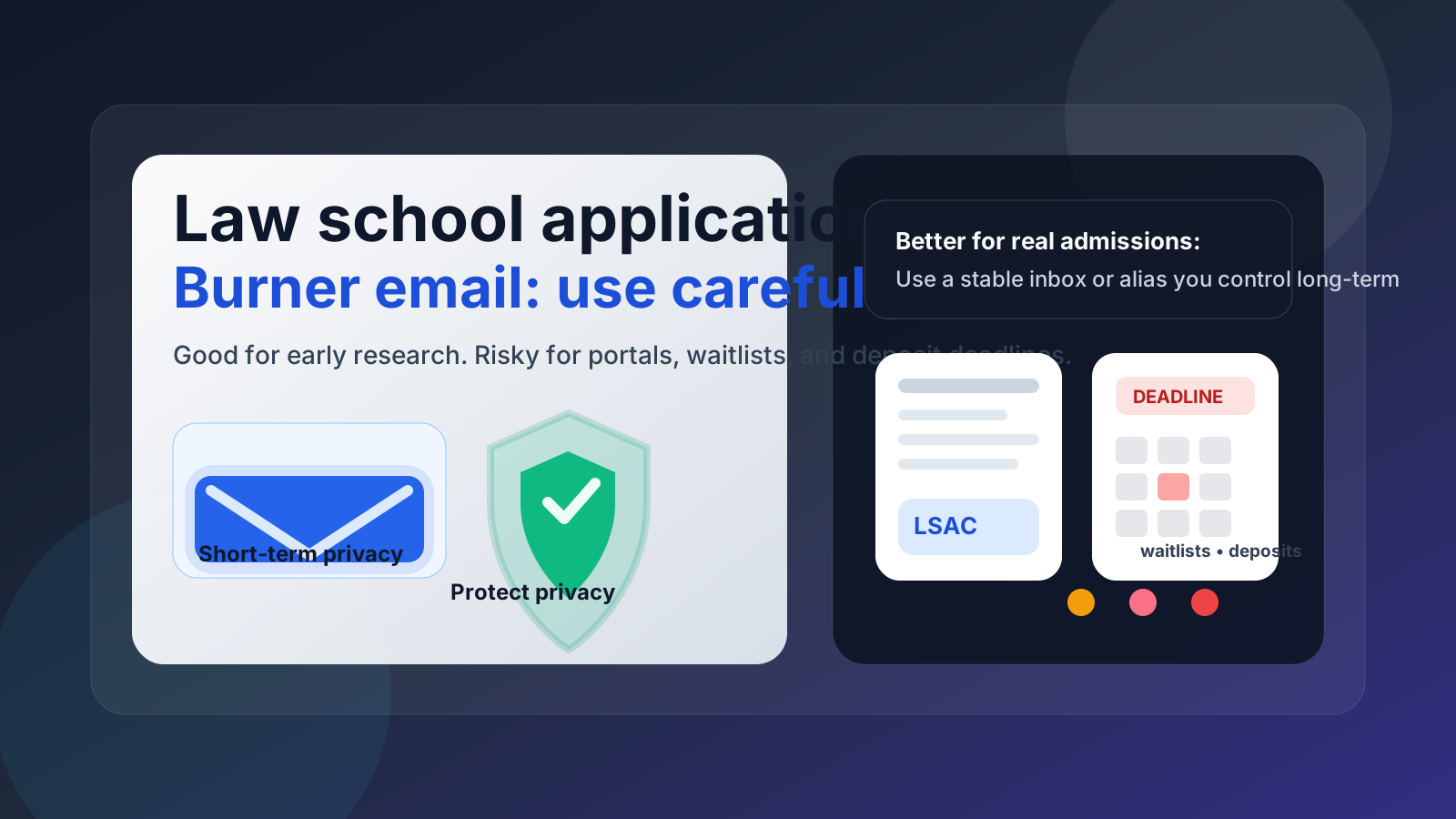
A burner email can be useful for very early law school research, but it is usually not the best primary inbox for actual law school applications. Most applicants are better off with a stable address that will stay active through LSAC notices, application-status checkers, interview invites, waitlists, scholarship messages, and seat-deposit deadlines.
If you want more privacy, the smarter setup is usually a separate long-term inbox or a reliable email alias rather than a throwaway address that may expire at the wrong time. A burner address has a place, but that place is earlier and narrower than many applicants assume.
Why applicants even consider a burner email
The question is not irrational. Law school applicants hand out contact information all over the place: school inquiry forms, webinar registrations, LSAC-adjacent resources, scholarship newsletters, admitted-student events, test-prep offers, and third-party lead forms that promise comparisons or admissions help. That can create a lot of email fast.
Using a burner email feels like a simple privacy fix. It can keep your personal inbox cleaner, reduce long-term marketing clutter, and help you test which schools or services are worth engaging with before you expose your everyday address. For very early research, that is often a reasonable instinct.
The problem is that actual law school applications are not a one-day signup flow. They are a long, deadline-heavy process. Messages can matter weeks or months after you first hit submit.
What counts as a burner email here?
In this context, a burner email is a short-life or low-commitment address you use mainly to avoid exposing your main inbox. That could be a disposable inbox, a temporary address, or a secondary mailbox you do not plan to keep for the full admissions cycle.
That last distinction matters. A dedicated long-term application inbox is not really the same thing as a disposable burner address. If the mailbox is stable, monitored, recoverable, and yours for the full cycle, it behaves more like a serious application inbox than a throwaway one.
When a burner email can actually help
There are a few situations where a burner email can be practical for aspiring law students:
- Early-stage research: signing up for school brochures, rankings tools, event reminders, or general admissions newsletters before you know which schools you care about.
- One-off webinars or fairs: especially when the form feels more like lead capture than a true application workflow.
- Low-trust third-party resources: if you want to download a checklist, guide, or comparison PDF without giving out your main address immediately.
- Spam control: when you expect aggressive follow-up from vendors, test-prep companies, or list-building sites.
If that is the stage you are in, a tool like Anonibox can be useful. It lets you receive the first confirmation email or event reminder without turning your personal inbox into a long-term admissions marketing bucket.
Where burner emails become risky for real law school applications
Once you move from browsing into actual applying, the trade-off changes. Law school admissions is full of long-tail communication, and a burner inbox can fail at exactly the wrong moment.
1. Application status checkers and follow-up notices
After you submit, schools may send portal setup links, status-checker instructions, missing-item notices, decision updates, and reminders that are not repeated often. If the inbox is gone, filtered badly, or left unchecked, you may miss something important.
2. Interview invitations and scheduling
Some schools or scholarship programs may use email for interview invites, scheduling windows, or event logistics. Those messages are time-sensitive. A throwaway address is a poor fit if you might need to respond quickly days or weeks later.
3. Scholarship and financial-aid communication
Even when the main application process runs through a portal, follow-up offers, clarification requests, and event invitations can still arrive by email. Losing that inbox can mean losing context at exactly the stage where deadlines start stacking up.
4. Waitlists and seat deposits
Law school admissions can drag on. Applicants may deal with late offers, waitlist movement, admitted-student communication, and seat-deposit reminders long after the original application was filed. A burner inbox that felt fine in September can become a liability in March, April, or even summer.
5. Account recovery and continuity
If you ever need to reset a password, confirm a new device, or re-open an account tied to an old email address, a disposable inbox creates friction. Admissions is not the stage where you want to discover that a “temporary” solution quietly became permanent infrastructure.
Why a burner email is usually worse than an alias or separate inbox
Applicants often group these options together, but they solve different problems.
- Burner email: best for short-term privacy and low-commitment signups.
- Email alias: good when you want privacy and filtering, but still need messages delivered to a real long-term inbox you control.
- Separate application inbox: best when you want a clean boundary and full reliability across the entire cycle.
For most law school applicants, the best answer is either an alias or a separate dedicated inbox. Both give you organization and privacy without the core risk of expiry. A burner address is usually too fragile for a process this long.
A practical rule: use a burner for research, then switch before you apply
If you like the privacy benefits of burner emails, you do not have to avoid them completely. Just use them at the right stage.
- Use a burner address for early browsing. School brochures, general interest forms, event registrations, and low-trust third-party resources are the safest places for it.
- Create a stable law-school inbox before real applications begin. Do this before you submit anything through LSAC, school portals, or scholarship workflows that may generate long-term follow-up.
- Move serious communication to that stable inbox. Once a school is on your real shortlist, do not keep the relationship on a throwaway address just because it was convenient at the start.
- Check the stable inbox daily. During admissions season, reliability matters more than inbox minimalism.
That workflow gives you the privacy upside of a burner address without making your actual admissions process dependent on one.
Best practices if you want privacy without missing deadlines
Choose a naming scheme you can trust
If you open a separate inbox, make it simple and professional. You do not need something clever. You need something you will still be comfortable using when schools send formal admissions or scholarship communication.
Keep one source of truth
Avoid scattering important law school communication across too many mailboxes. If you use a burner for early research, that is fine. But once you start applying, consolidate around one stable inbox so you always know where decisions and action items will land.
Archive key emails outside the inbox
Save portal links, interview details, admitted-student instructions, and deposit deadlines somewhere organized. Even a reliable inbox is easier to manage when the most important details also live in your own tracker or application spreadsheet.
Be cautious with third-party lead forms
Not every “law school help” site is malicious, but not every one deserves your primary contact details either. If the form is vague, overly promotional, or built mainly to collect leads, using a privacy-first address first is sensible.
Do not treat privacy tools like guarantees
A burner email can reduce clutter and limit how widely your main address spreads, but it does not make you invisible. If a form asks for a name, phone number, or other identifying information, the privacy benefit may be partial rather than complete.
Signs you should not use a burner for this specific school or workflow
- The form is part of an actual application or status-checker setup.
- You may need account recovery later.
- The school is likely to send interview, scholarship, or deadline communication by email.
- You are already on the shortlist and know the school matters to you.
- You would be genuinely harmed if you lost access to the mailbox in a few weeks.
If any of those apply, a burner address is the wrong tool. Move to a stable inbox now, not later.
What about using a burner email for LSAC-related steps?
The safe default is simple: for anything tied to your real application identity, use a long-term inbox you control. LSAC accounts, credential assembly steps, school portals, and official admissions workflows are not good places to experiment with short-life email setups.
Even if a burner inbox works on day one, the issue is not whether the first verification email arrives. The issue is whether the address is still working when an update you care about arrives months later.
A quick decision checklist
Before entering an email address on a law school form, ask yourself:
- Is this just research, or is this part of a real application path?
- Will I need this inbox months from now?
- Could this generate status-checker, interview, waitlist, or deposit messages?
- Would an alias or separate inbox solve the same privacy problem more safely?
- Am I protecting my inbox, or accidentally creating a deadline risk?
If the form could lead to serious admissions follow-up, the answer is usually to use a stable address.
Final verdict
So, should you use a burner email for law school applications? Usually no — at least not as your primary admissions inbox. A burner address is best for early exploration, brochure requests, webinar signups, and other low-stakes research tasks where inbox privacy matters more than long-term continuity.
For actual law school applications, a reliable long-term setup is safer. If you want privacy, use a dedicated inbox or an email alias that stays active through the full cycle. That gives you the organizational benefit you want without risking missed notices when interviews, scholarships, waitlists, or seat deposits suddenly become very real.