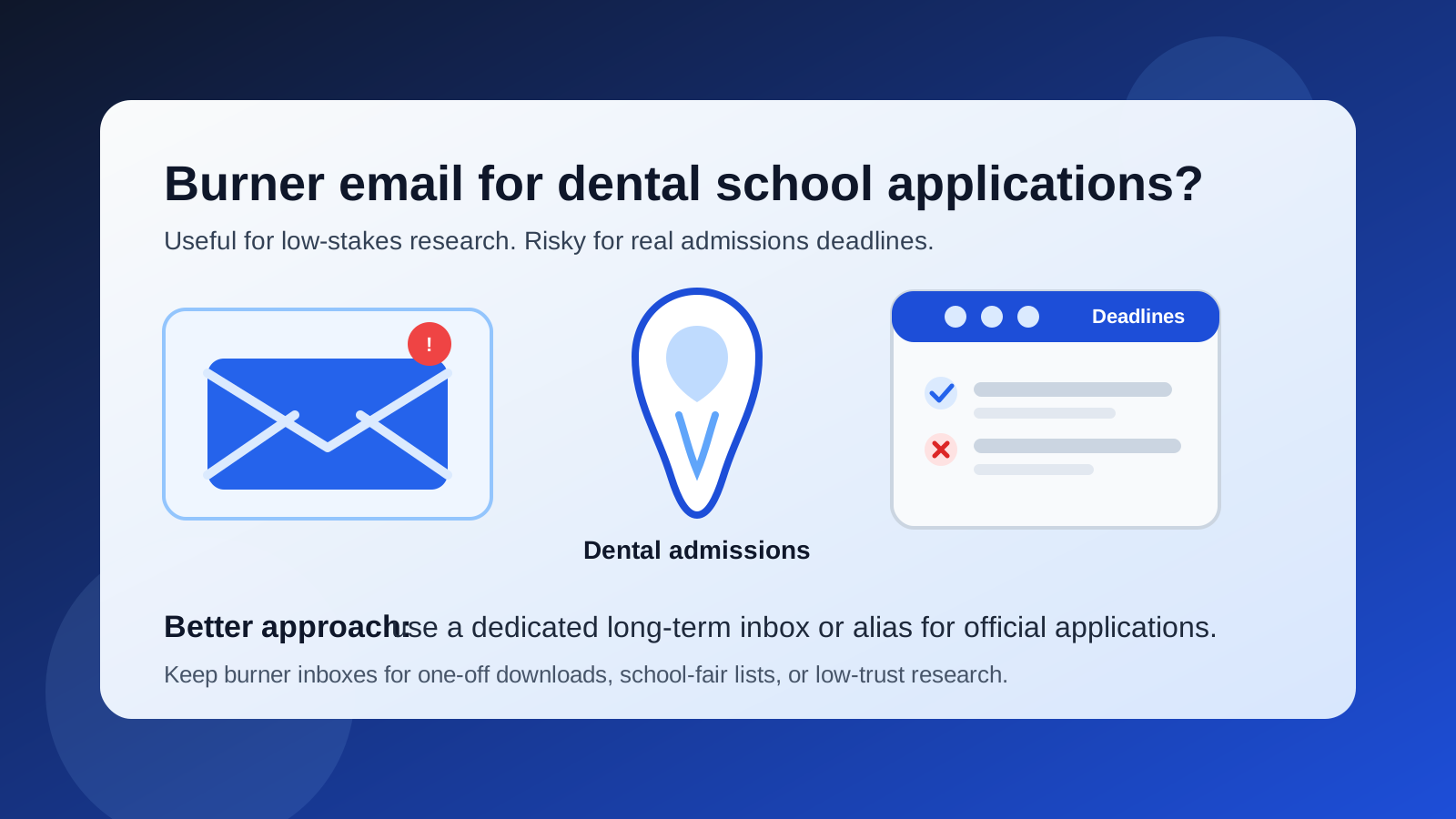
Usually, no — a true burner email is not the best long-term address for dental school applications. It can help for low-trust research, mailing-list signups, or early comparison shopping, but once you are dealing with official AADSAS steps, supplemental applications, interview invites, and financial-aid notices, a stable inbox is much safer.
The better rule is simple: use a burner inbox only for short-lived, low-stakes interactions, and switch to a dedicated long-term application email before anything important starts arriving. Dental school admissions move slowly, involve multiple deadlines, and often rely on follow-up messages you cannot afford to lose.
Why applicants even consider a burner email
The question makes sense. Dental school applicants often sign up for test-prep resources, school mailing lists, virtual open houses, fee-waiver updates, admissions webinars, and pre-application guides long before they submit official applications. That early research stage can create a lot of email noise. Some of it is useful. A lot of it is promotional.
It is reasonable to want separation between your real inbox and that flood of messages. A burner email can feel like a neat privacy solution: you get the download, confirm the signup, and avoid months of follow-up from every vendor or mailing list you touched during research.
That instinct is not wrong. The mistake is using the same short-lived approach for the official application stage, where continuity matters much more than privacy convenience.
When a burner email can make sense
A burner email can be useful in a narrow set of dental-school-related situations:
- Signing up for a one-time downloadable guide from a DAT prep company
- Checking a webinar or virtual event registration flow before deciding whether it is worth attending
- Joining a low-priority mailing list from a school fair or conference booth
- Testing whether a resource center, forum, or scholarship directory looks legitimate
- Shielding your main inbox from broad admissions-marketing campaigns during early research
In other words, burner email works best when the interaction is temporary, low-risk, and easy to abandon. If losing that inbox tomorrow would not hurt your application plans, it may be good enough for the task.
Why a burner email is risky for actual dental school applications
Once you move from research into real applications, the trade-off changes. Dental school admissions is exactly the kind of process where missing one message can cause real damage.
1. The timeline is long
Dental school applications do not resolve in a weekend. There are primary applications, school-specific supplemental steps, interview scheduling, portal updates, transcript questions, recommendation reminders, waitlist communication, and eventual enrollment paperwork. A burner inbox that expires, becomes inaccessible, or gets buried under disposable usage is a bad fit for a months-long process.
2. Important messages may not be repeated
Schools do not always chase applicants repeatedly. If you miss an interview scheduling email, a supplemental deadline reminder, or a request to correct part of your file, you may not get a second clean chance.
3. Some messages arrive from different systems
One school may email through its main admissions office. Another may use an application portal notification system. Another may send financial-aid messages from a separate address. A disposable inbox might technically receive some of these, but it is not the ideal place to manage a fragmented communication trail over time.
4. Professionalism matters
Admissions teams mostly care that they can reach you reliably, not whether your email is glamorous. Still, a throwaway-looking address can create unnecessary friction if it looks random, unstable, or hard to identify. You do not need a fancy address, but you do want one that looks deliberate and dependable.
5. Recovery can become messy
If you lose access to the inbox tied to a school portal, changing it later can be annoying. You may need to contact admissions, verify identity, or update multiple systems. That is avoidable if you start with the right inbox.
What works better than a burner email?
For most applicants, the best solution is not your everyday personal inbox and not a true burner inbox either. It is a dedicated, long-term application inbox that you control.
That can look like:
- A separate email address used only for dental school applications and related admissions tasks
- An email alias that routes into a reliable main account while keeping the admissions stream separate
- A privacy-first address you intend to keep active for the full admissions cycle and beyond
This gives you the organization benefits people want from burner email without the fragility that makes burner inboxes risky. You can keep admissions messages separate, build filters, search your history, and still be reachable months later when schools send follow-up notices.
A practical way to split the process
If you want both privacy and reliability, split the process into two phases.
Phase 1: research and exploration
Use a temporary or burner-style inbox for low-stakes signups, especially when you are just collecting information. If you want to try this approach, a service like Anonibox can be useful for screening early vendor emails, webinar confirmations, or marketing-heavy resource downloads without exposing the inbox you use for serious admissions communication.
Phase 2: official applications and school communication
Before you submit anything that could affect your candidacy, move to a stable inbox you plan to monitor for the whole cycle. That means your AADSAS-related communication, school-specific portals, supplemental materials, interview scheduling, and financial-aid follow-up should all point to an address you can keep and check consistently.
This approach gives you the best of both worlds: less spam during research, but fewer risks once deadlines and decisions matter.
Situations where a burner email is especially risky
A burner email is a poor choice if any of the following apply:
- You are already submitting official applications
- You expect interview invites soon
- You are communicating with multiple schools at once
- You are waiting on recommendation follow-up or transcript issues
- You need to track financial-aid messages, scholarship notices, or enrollment paperwork
- You are likely to be on waitlists and need to respond quickly later
Dental admissions is full of delayed but important messages. That is exactly where disposable thinking stops being helpful.
If you already used a burner email, what should you do?
If you have already used a burner email for some dental-school-related signups, do not panic. The main goal is to separate harmless research activity from official admissions communication as early as possible.
- Make a stable inbox now that you are willing to keep active through the full cycle.
- Update your contact email anywhere that matters: primary application accounts, school portals, supplemental forms, interview systems, and financial-aid dashboards.
- Save or forward any important messages still sitting in the burner inbox.
- Check whether schools require you to confirm the change inside their portal rather than by email alone.
- Keep monitoring the old inbox for a short transition period in case something still lands there.
The earlier you switch, the easier it is. Doing it before interview season or supplemental deadlines is ideal.
Best practices for email privacy during dental school applications
If your goal is privacy without losing important messages, these habits work better than relying on a disposable address alone:
- Use one dedicated admissions inbox: keep all official application activity in one reliable place.
- Turn on alerts for important schools and portals: starred senders, filters, and notifications help.
- Check spam and promotions folders: interview invites and system notices can land there.
- Keep a simple log: note which schools use which portals and where messages arrive from.
- Do not ignore sender changes: a school may email from a different subdomain or vendor.
- Protect account access: use a strong password and two-factor authentication on the inbox that matters.
Those habits solve the real problem: staying organized and secure over a long admissions cycle.
So, should you use a burner email for dental school applications?
For the official application process, usually no. A burner email is fine for low-stakes research, promo-heavy signups, or one-off downloads, but dental school admissions is too deadline-sensitive and too long-running to trust to a disposable inbox.
If you want privacy, do not default to your everyday personal address everywhere. Instead, create a dedicated long-term inbox or alias that keeps your admissions traffic separate while staying reliable for months. That gives you the privacy benefit people want from a burner email without the bigger risk of missing interview invites, supplemental requests, or final decision updates.
The safest strategy is simple: disposable for browsing, dependable for applying.