Usually only for low-trust signups and early browsing — not as the main address for active job-board accounts.
A burner email can reduce spam and protect your main inbox, but it can also make you miss recruiter replies, password resets, and job alerts if you treat it as disposable too soon.
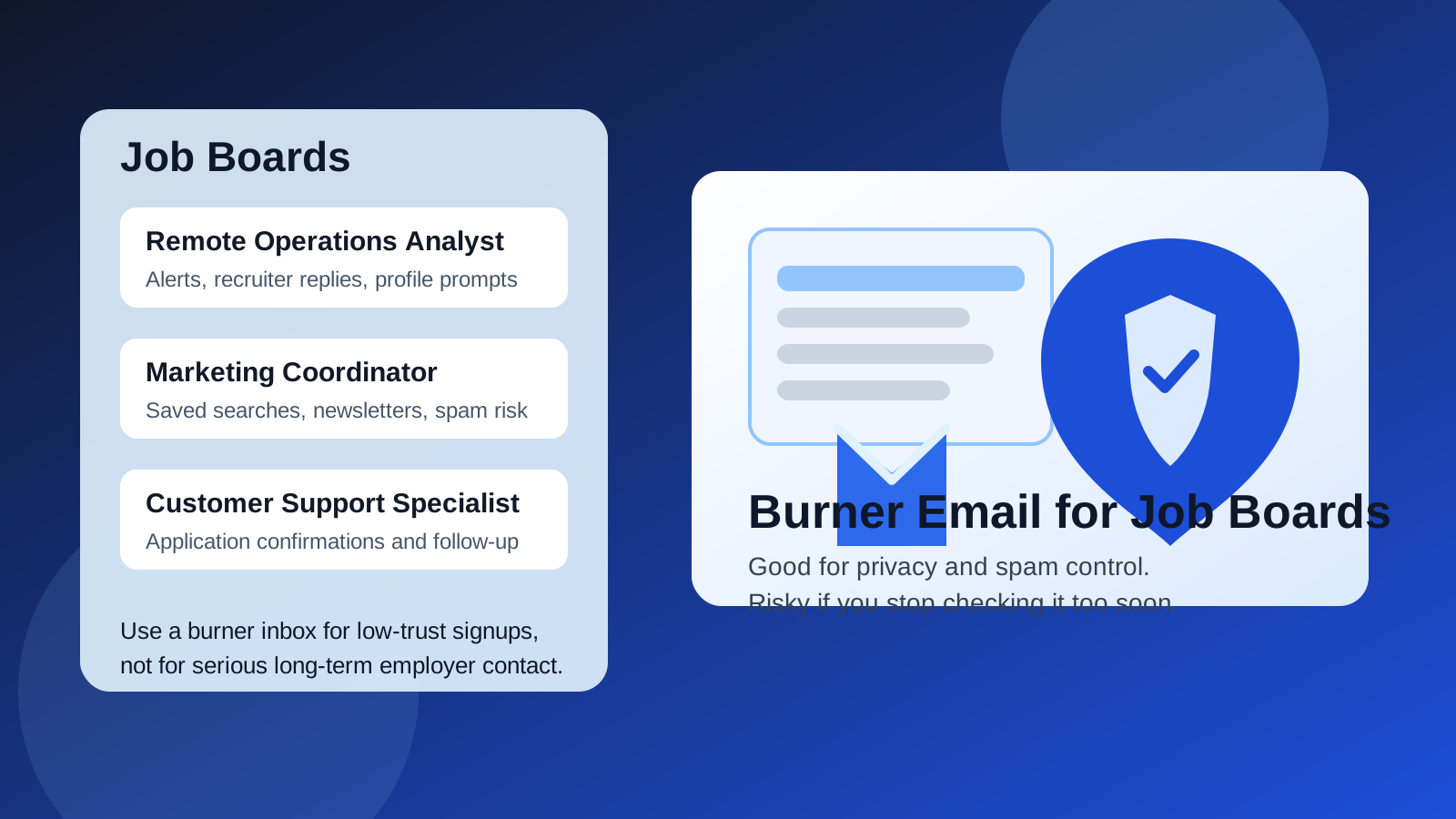
Job boards are one of the fastest ways to spread your contact details around the internet. One profile can trigger daily alerts, resume prompts, recruiter messages, suggested jobs, sponsored listings, webinar invites, and a long tail of “we found new matches for you” email that keeps showing up long after you stop looking. That is why so many people wonder whether a burner email for job boards is the smart move.
Sometimes it is. A burner address can be a practical privacy tool when you want to explore a board, compare listings, or avoid giving your primary inbox to every platform immediately. But job boards are not just one-time sign-up forms. They often become long-running channels for real applications, saved searches, account recovery, and recruiter follow-up. If the burner inbox is too disposable, it can work against you.
Short answer: a burner email can help, but it is rarely the best long-term setup
If you are testing a new board, browsing low-trust listings, or signing up for alerts you are not sure you want to keep, a burner email can be useful. It gives you distance between your main inbox and a noisy part of the job-search ecosystem.
If you are actively applying, expecting recruiter replies, or relying on saved job alerts over several weeks, a burner email becomes riskier. In that stage, an alias or separate inbox is usually better because it still protects your privacy without making the account fragile.
Why job boards create so much inbox noise
Direct applications and job boards behave differently. A direct application usually goes to one employer for one role. A job board often works like a marketing engine layered on top of search, resumes, and messaging. Once you create an account, your email can be used for:
- daily or weekly job alerts
- profile-completion reminders
- recruiter outreach
- resume database notifications
- salary reports and career-content emails
- reactivation prompts after you stop using the site
- third-party employer messages routed through the platform
That volume is exactly why burner-email thinking makes sense here. The problem is not paranoia. The problem is that job boards can create more clutter and more exposure than people expect.
What a burner email means in this context
People use the phrase “burner email” in different ways. Sometimes they mean a truly throwaway address they may abandon quickly. Sometimes they mean a separate inbox created for one purpose and retired later. Those are not the same thing.
For job boards, the second version is usually safer. A short-lived mailbox that disappears after a day or two can be fine for casual browsing, but it is not a great place for anything that could turn into a real conversation with a recruiter. A burner inbox you control for the length of your search is more realistic.
When a burner email helps
1. You are testing a board you do not fully trust yet
If you want to see whether a platform has real listings before giving it your long-term address, a burner email is a reasonable first step. This is especially true for smaller boards, niche aggregators, and sites that gate content behind signup walls.
2. You want spam control during early research
Maybe you are not actively applying yet. Maybe you are comparing industries, checking salary ranges, or browsing what is out there. In that stage, a burner inbox can keep exploratory activity away from your main address.
3. You expect one-way noise more than two-way communication
Some job-board accounts mainly produce alerts and marketing email rather than meaningful recruiter contact. If that is the goal, a burner address can do the job without exposing your primary inbox.
When a burner email hurts
1. You are uploading a resume and hoping employers reply
Once your email becomes the path back to you, reliability matters more than short-term privacy. A recruiter reply that lands in an abandoned burner inbox is worse than spam in a monitored inbox.
2. You need password resets and account recovery
Job boards are not always smooth. You may need to log back in to update a profile, resend an application, confirm your identity, or recover an account weeks later. If the burner inbox is gone or forgotten, that becomes a headache.
3. Your job search is stretching over time
Many searches last longer than people plan for. A burner email that feels practical during week one can become a liability by week four, especially if you are juggling interviews, saved searches, and follow-up messages.
Burner email vs temporary email vs alias vs separate inbox
This is where people often mix things up.
- Temporary email: best for one-off access, low-trust signups, and very early browsing. Weak for long-term reliability.
- Burner email: useful if you want a compartmented inbox you can retire later, but only if you keep it monitored during the full search.
- Email alias: strong choice when you want privacy plus continuity. Good for boards that may produce real employer replies.
- Separate inbox: usually the safest long-term option for heavy job-board use because it is stable, organized, and easy to manage.
In other words, a burner inbox sits in the middle. It is more durable than a truly temporary address, but less dependable than a dedicated long-term inbox if you do not manage it carefully.
Best practice: treat the burner as a stage, not the final answer
The smartest way to use a burner email for job boards is to treat it as part of a process.
- Use the burner address when signing up for boards you want to test.
- Watch the quality of the alerts, listings, and recruiter messages.
- If the board proves useful, switch the account to a more stable address you control for the rest of the search.
- Keep the burner active until you are sure nothing important is still landing there.
That approach gets you the privacy benefits without gambling on a mailbox you stop checking too early.
A practical setup that works well
If you want a clean system, use three levels of trust:
- Low trust: temporary email or a burner inbox for unknown boards, gated salary tools, or exploratory signups.
- Medium trust: a burner or alias for boards you may use for a while but do not want tied directly to your main address.
- High trust: a separate stable inbox for direct applications, serious recruiter conversations, and interview scheduling.
This layered approach is much more practical than trying to use one address for everything.
How Anonibox fits naturally
If your goal is early-stage privacy, a tool like Anonibox can be useful for browsing, testing gated content, or checking whether a job board is worth your time before you commit a long-term inbox. The key is knowing when to stop treating the relationship as disposable. Once real applications and real people are involved, reliability matters more than pure throwaway convenience.
Red flags that justify more caution
A burner email makes more sense when the board or listing environment already feels noisy or questionable. For example:
- the board is packed with vague duplicate listings
- you cannot tell who actually posted the role
- the platform pushes aggressive marketing immediately after signup
- the recruiter wants to move you to text or messaging apps right away
- the job details look copied, generic, or inconsistent
In those cases, protecting your primary inbox is reasonable. Just do not confuse caution with invisibility. If a real employer might reply, you still need a channel you reliably monitor.
Simple checklist before you use a burner email on a job board
- Am I only browsing, or am I actively applying?
- Will I need this account again in two weeks?
- Could a recruiter or hiring manager reply through this address?
- Do I have a plan to switch to a stable inbox if the board becomes useful?
- Will I actually keep checking this burner inbox?
If the honest answer to the last question is no, do not use a burner email for anything tied to real opportunities.
Final answer
A burner email for job boards can be a smart privacy move for low-trust signups, early browsing, and spam control. It is much less smart as the main address for an active search where saved alerts, recruiter replies, and password resets actually matter.
If you use one, use it deliberately: keep it monitored, move important accounts to a more stable address when the search becomes real, and retire it only after you are sure nothing valuable is still arriving there. That way you get the privacy upside without accidentally ghosting your own job search.