Usually yes — an email alias can work very well for trade school applications if it forwards reliably to an inbox you already monitor.
It gives you more privacy and better organization than using your everyday address everywhere, without the risk of relying on a short-lived temporary inbox for admissions updates, interview scheduling, financial-aid follow-up, and enrollment details.
Why trade school applications create more email than people expect
Trade school applications often look simpler than four-year college admissions, but the inbox traffic can still pile up quickly. One program inquiry can trigger brochures, admissions follow-up, tuition information, FAFSA reminders, placement questions, campus-tour invites, deadline nudges, and “are you still interested?” messages. If you are comparing electrician, HVAC, welding, cosmetology, dental assisting, CDL, or medical technician programs at the same time, those messages can blur together fast.
That is why many applicants start looking for a cleaner setup. They want to protect their main inbox from noise, but they also cannot afford to miss an interview request, a transcript reminder, or an acceptance packet. An email alias sits in the middle: more private than handing out your primary address everywhere, but more stable than a disposable inbox that may not be around when an important message arrives.
What an email alias actually is
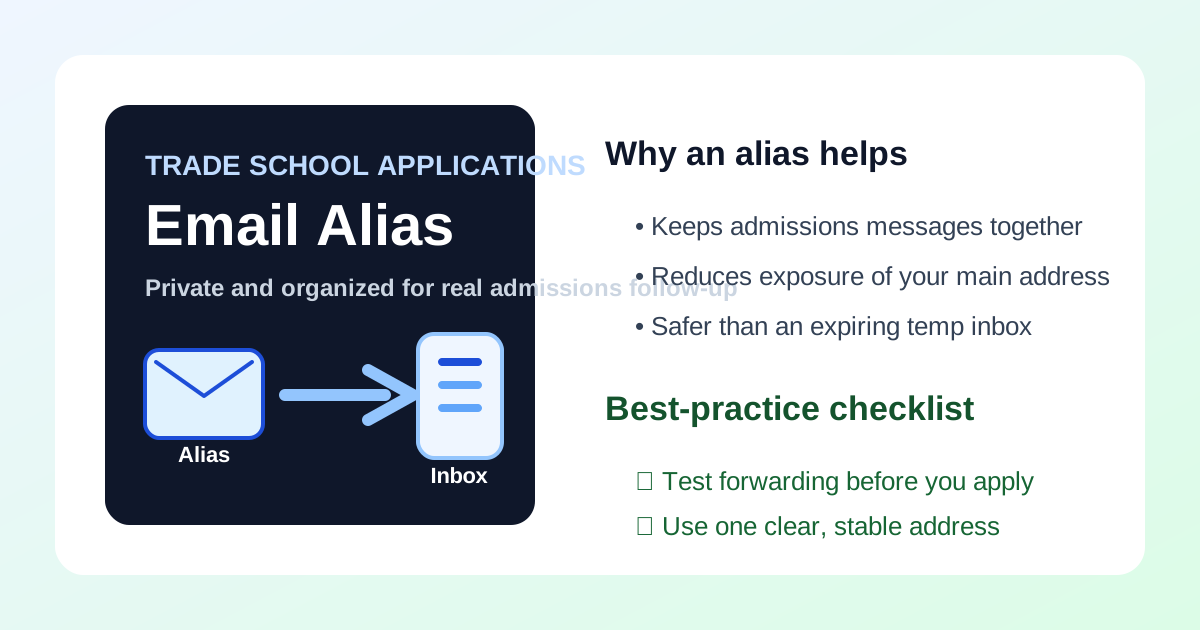
An email alias is an alternate address that forwards into an inbox you already control. Instead of creating a completely separate mailbox from scratch, you give schools the alias and let the messages arrive in your main account behind the scenes. In practice, that can make organization easier because everything still lands in one place, but you do not have to expose your main address on every form.
That is different from a temporary or burner email. A temporary inbox is useful for low-stakes signups, free downloads, or early research where you mainly need a verification email and nothing else. A trade school application is usually not low stakes. It can involve weeks or months of follow-up, login resets, schedule updates, financial-aid communication, and next-step instructions. For that reason, a stable alias is often a better fit than a short-lived disposable inbox.
When an email alias is a good choice for trade school applications
An alias is often a strong option when you want privacy but still need a dependable channel for a real admissions cycle. It makes the most sense when:
- You are applying to multiple programs and want all school-related email separated from your everyday personal inbox.
- You already have a reliable main mailbox that you check frequently.
- You want to filter, label, or search admissions messages more easily.
- You prefer not to give every school, lead form, and information-request page your main address directly.
- You expect the process to stretch across several weeks or months.
That last point matters. Trade school applications may move faster than some university processes, but they still involve enough back-and-forth that consistency matters. If a school sends placement-test instructions, orientation details, or missing-document reminders, you want those messages landing somewhere dependable.
When an alias may not be enough on its own
An alias is useful, but it is not automatically the best answer for everyone. There are situations where a separate dedicated mailbox may be better:
- You want a completely separate login and inbox for school-related communication.
- You are worried you will overlook forwarded messages inside a busy personal account.
- You share the main destination inbox with anyone else.
- You have had forwarding or deliverability problems with aliases before.
- You want a cleaner break between school applications, work, and everyday life.
If any of those sound familiar, a separate email account may be the safer choice. The point is not to force an alias into every situation. The point is to match the tool to the amount of privacy, reliability, and separation you actually need.
Benefits of using an email alias for trade school applications
1. Better privacy
When you use an alias, your main address does not need to appear on every request-information form, portal signup, or contact form. That can reduce long-term clutter and help limit how broadly your everyday address spreads.
2. Easier organization
Aliases make it easier to filter admissions messages automatically. You can send them to a folder, add a label, star them, or set alerts for them. That is especially helpful when you are comparing several programs and do not want scholarship reminders mixed in with grocery receipts or work threads.
3. One inbox to monitor
Some people do not want the hassle of logging into a second mailbox every day. An alias keeps the communication pipeline focused while still letting you manage everything from the inbox you already use.
4. Cleaner recordkeeping
When every school-related message comes through the same alias, it becomes easier to search for application confirmations, orientation instructions, portal links, or financial-aid notices later.
Risks and mistakes to avoid
Forwarding failure
The biggest risk with an alias is simple: if forwarding breaks, you could miss something important. Before you rely on an alias for real applications, test it. Send messages to it from another address, confirm they arrive quickly, and make sure replies behave the way you expect.
Using a confusing address
If your alias looks random, sloppy, or hard to recognize, it may not create the best impression. A clean format such as your name plus a school-related tag is usually better than something cluttered or joke-like.
Switching contact details mid-process
Try not to use one email for inquiry forms, another for portal creation, and another for later follow-up unless you absolutely have to. Inconsistent contact information can make admissions communication messier than it needs to be.
Assuming a temporary inbox is “close enough”
This is where people sometimes get themselves in trouble. A disposable inbox and an alias are not the same thing. A tool like Anonibox is useful when you are protecting your inbox during early-stage research, mailing-list signups, or low-stakes information requests. But once you are sending a real trade school application, you usually want a stable address that you control for the full process.
How to set up an alias for trade school applications the right way
1. Pick the destination inbox first
Choose the mailbox where you actually want admissions messages to land. It should be stable, easy to access, and something you check often.
2. Create a simple, professional alias
Keep it readable. Something clear and straightforward is better than something overly clever. If an admissions office needs to reference it over the phone, you want it to be easy to repeat and easy to type.
3. Test delivery before applying anywhere
Do not wait for a school to become your test message. Send a few emails to the alias from different accounts and make sure they land properly. If your provider allows it, also test replying from the alias so you understand what recipients will see.
4. Add filters or labels
Create a rule that catches all alias traffic and routes it into a dedicated folder or label. That way you get the organizational benefit without needing a second full mailbox.
5. Save key messages outside the inbox if needed
Important links, interview confirmations, financial-aid steps, and accepted-student instructions should not live only in your memory. Star them, move them into a folder, or keep a simple checklist so nothing important gets buried.
6. Stay consistent once you start applying
If you begin the process with one alias, keep using it unless there is a real problem. Consistency helps schools match records and reduces the chance of missed communication.
Email alias vs separate inbox vs temporary email
If you are deciding between options, the easiest way to think about it is by reliability and purpose.
- Email alias: best when you want privacy and organization, but still want messages flowing into one inbox you already trust.
- Separate email account: best when you want maximum separation and a completely dedicated application mailbox.
- Temporary email: best for low-stakes signups, one-off research, or protecting your inbox before you are ready to commit to ongoing contact.
For most real trade school applications, an alias or separate inbox is safer than a disposable address. The process may include interviews, admission decisions, aid documents, and enrollment steps that you do not want tied to an expiring or lightly monitored inbox.
A quick decision checklist
Before you use an alias for trade school applications, ask yourself:
- Does the alias forward reliably every time?
- Will I notice forwarded messages quickly enough?
- Am I applying to enough programs that inbox separation will help?
- Do I want one organized mailbox, or a completely separate login?
- Am I past the casual research stage and into a real application process?
If the answer to those questions points toward stability and organization, an alias is usually a very reasonable choice.
Final answer
Yes — an email alias is often a smart option for trade school applications because it gives you privacy and organization without the fragility of a disposable inbox. It works especially well if it forwards into an account you already monitor carefully and if you set up filters so school messages do not get lost.
Still, the best setup depends on how you work. If you want full separation, a dedicated application mailbox may be even better. If you are only gathering brochures or testing low-stakes forms, a temporary inbox can still be useful. But for actual applications, deadlines, admissions replies, and enrollment follow-up, a stable alias usually hits the right balance between convenience and control.