Yes — using a separate email for physician assistant school applications is usually a smart move. It helps you stay organized and protect your privacy without risking the missed updates that can come with a throwaway inbox.
For most applicants, a dedicated application email is a better fit than using a personal inbox for everything or relying on a temporary address that may disappear before interviews, waitlist updates, or deposit reminders arrive.
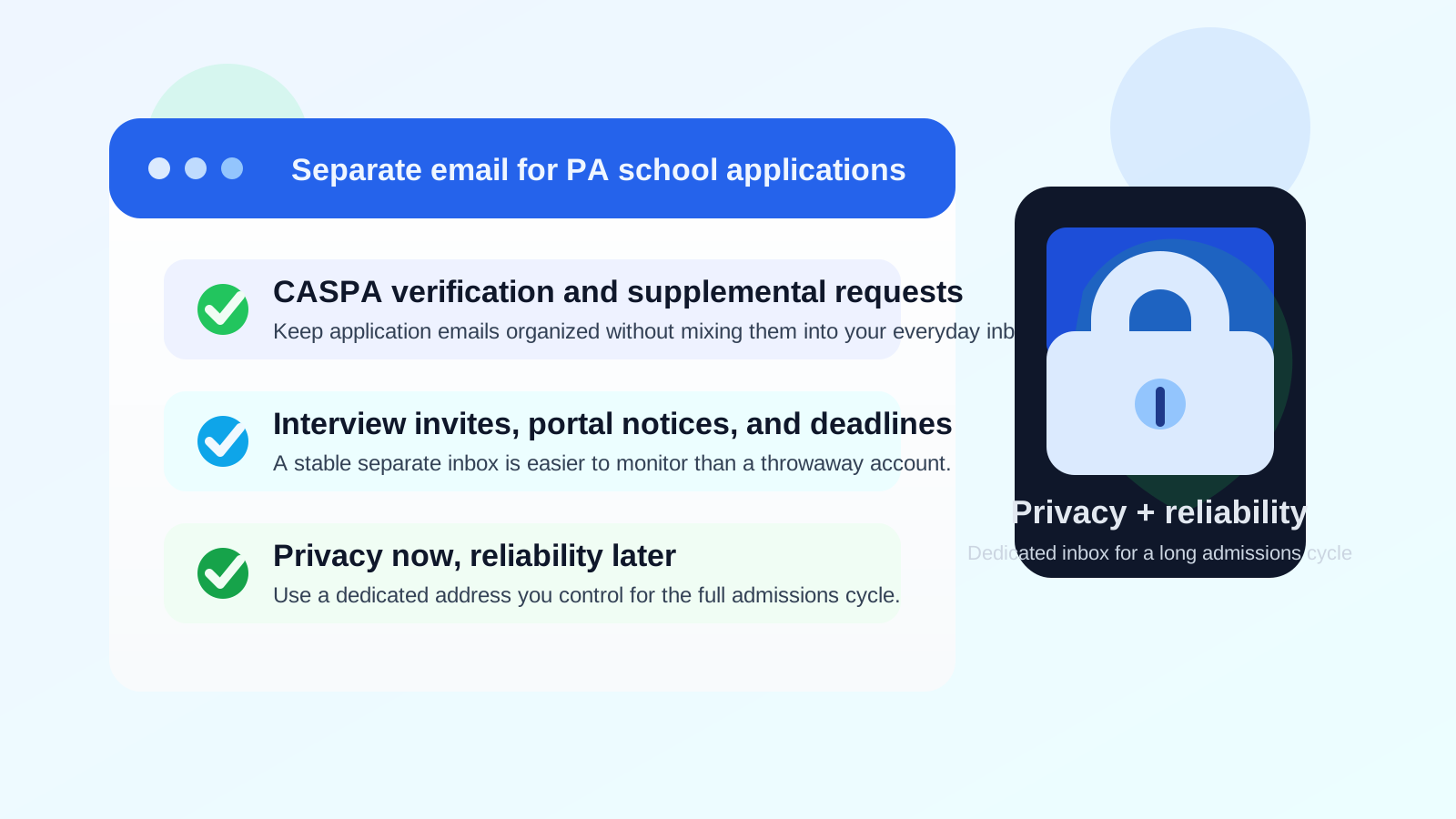
Why a separate email makes sense for PA school applications
Physician assistant admissions can stretch over months. You may be tracking CASPA submissions, transcript questions, supplemental applications, interview invitations, recommendation follow-up, portal logins, financial documents, and final decision notices across several programs at once. That creates a lot of email traffic, and not all of it arrives on the same schedule.
A separate inbox gives that process its own lane. Instead of mixing program emails into your everyday account — where bills, receipts, social notifications, newsletters, and random spam already compete for attention — you create one place where every PA-school-related message is easy to find.
That matters because application stress is not usually caused by one giant mistake. It is often caused by small misses: a supplemental request buried in promotions, an interview scheduling email opened too late, or a message from an admissions office lost in a crowded personal inbox.
Short answer: yes, but make it a stable inbox you control
If you are wondering whether the answer is really yes, the practical answer is yes for most people. A dedicated email address for PA school applications is usually worth it.
The key is that separate does not mean disposable. You want an address that is separate from your daily life, but still stable enough to keep for the entire admissions cycle. That way you get the privacy and organization benefits without making yourself harder to reach.
What a separate application email actually helps with
1. Keeping CASPA and school-specific messages together
Many applicants begin with CASPA and then move into program-specific follow-up. Some schools send next steps quickly. Others follow up later with supplemental forms, fee reminders, portal instructions, or requests to clarify prerequisite details. When all of those messages land in one dedicated inbox, the process becomes easier to manage.
You can search one folder for school names, flag deadlines, and immediately see which programs have replied and which have not. That is much harder when admissions emails are mixed into your normal account activity.
2. Reducing clutter in your personal inbox
Admissions-related email volume can grow fast. Even legitimate schools and centralized systems may send confirmations, policy updates, status notices, reminders, and event invitations. A separate address lets you keep that traffic out of your primary inbox without missing anything important.
This can also make your main email more usable during a stressful season. Instead of checking the same account for family plans, work messages, bills, and PA school updates, you know exactly where your admissions messages live.
3. Protecting your long-term privacy a little better
Your primary email often connects to banking, shopping, subscriptions, personal contacts, and years of online history. You do not need to hide your identity from legitimate schools, but you also do not have to route every application-related interaction through your oldest and most exposed account.
A separate address limits that exposure. It gives schools and application systems a reliable way to reach you without tying the entire process to the inbox you use for everything else.
4. Making post-application cleanup easier
Once the cycle is over, you may still want to keep important records, but you probably do not want every old admissions message mixed into your permanent everyday email forever. A dedicated inbox is easier to archive, sort, or retain as a record of the cycle.
When a separate email is better than a temporary or burner inbox
Anonibox and similar tools make sense in some privacy-first workflows, especially when you want to avoid exposing your main email too early. But physician assistant school applications are usually not a good place for a truly short-lived address. The timeline is too long and the messages are too important.
A temporary inbox can be useful for low-stakes signups, quick research, or one-time access checks. PA school admissions are different. Schools may email you weeks or months after you first apply. Waitlist movement can happen later than expected. Interview availability may require quick responses. If the inbox expires or becomes hard to monitor, the cost of that convenience can be real.
That is why the best setup is often a separate but durable inbox: something created specifically for applications, but stable enough to use through submissions, interviews, decisions, and deposits.
What email setup usually works best
For most applicants, the most practical option looks like this:
- Create one dedicated email address used only for physician assistant school applications and related admissions tasks.
- Use it consistently across CASPA, school portals, supplemental forms, and interview scheduling unless a school requires an update.
- Turn on strong password hygiene and any available security protections.
- Check it daily during active parts of the cycle and more frequently when interviews or deadlines are close.
- Archive messages by school name, stage, or urgency so you can find documents quickly.
The goal is not to build a complicated system. It is to make important messages easier to notice and easier to act on.
What to avoid
Do not use an inbox you rarely check
A separate email only works if you actually monitor it. If you create a dedicated account and then forget it exists for a week at a time, you lose the benefit.
Do not switch addresses mid-cycle unless necessary
Changing contact information after you submit applications can create confusion. If you decide to use a separate inbox, set it up before applications go out and keep it consistent whenever possible.
Do not depend on a throwaway address for critical deadlines
If the account might disappear, lock you out, or become unreliable, it is the wrong tool for admissions. This is one of the clearest cases where a stable inbox matters more than maximum short-term anonymity.
Do not ignore spam and promotions folders
Even legitimate admissions emails can end up filtered strangely. During important parts of the cycle, check every folder that might catch a message you care about.
A simple checklist for choosing your PA-school application email
- Use one address only for applications: keep the process separate from daily life.
- Make sure it is long-term: expect to keep it through interviews and final decisions.
- Pick a professional format: use a normal name-based address rather than something random or jokey.
- Monitor it consistently: especially when schools are sending interview invites or follow-up requests.
- Store related records nearby: pairing that inbox with an organized folder system makes life easier.
Will schools think a separate email looks suspicious?
In most cases, no. Admissions offices are used to applicants having different email habits. What matters is that your address looks professional, works reliably, and matches the information you use across forms and portals. A dedicated inbox for applications is normal behavior, especially for applicants who want better organization.
What would create problems is using an address that looks unserious, becomes inaccessible, or changes repeatedly during the cycle. The issue is not that the inbox is separate. The issue is whether it is dependable.
How often should you check it?
During active application windows, checking at least once a day is reasonable. Around interview season, decision periods, or major deadlines, more frequent checks are smart. You do not need to stare at the inbox all day, but you do want to respond fast enough that scheduling and document requests do not slip.
If notifications help you, use them. If notifications create stress, set specific check times. Either approach can work as long as the inbox stays actively monitored.
What about using your personal email instead?
You can absolutely use your personal email if it is organized, professional, and easy for you to monitor. A separate address is not a hard requirement. It is a best practice for many applicants because the admissions cycle is busy, deadline-driven, and easy to clutter.
If your personal inbox is already calm and you trust your filing system, you may not need a dedicated account. But for applicants whose main inbox is chaotic, full of subscriptions, or tied to years of everyday noise, a separate email is usually the safer operational choice.
Best practices once you create the inbox
- Create folders or labels by school. That makes transcripts, supplemental requirements, and interview notes easier to track.
- Star or flag messages with deadlines. Separate inboxes help, but visual prioritization helps too.
- Save portal credentials securely. Many delays happen because applicants lose track of which portal belongs to which program.
- Keep the same signature and contact details. Consistency makes your communication look polished.
- Archive, do not delete, until the cycle is fully over. Old emails may matter later if you need to confirm a date, document, or instruction.
Final answer
Yes, you should usually use a separate email for physician assistant school applications. It is one of the easiest ways to keep your admissions process organized, reduce clutter, and limit how much of your everyday digital identity you expose during a long application cycle.
Just make sure the inbox is a dedicated address you control for the full process — not a temporary inbox that might vanish before an interview invitation, waitlist update, or final admissions message arrives. For PA school applications, reliability matters as much as privacy, and a stable separate inbox gives you both of those advantages more cleanly than using your main email for everything.