Yes — an email alias for contractor applications can be a smart choice if it forwards reliably to an inbox you already monitor and lets you reply consistently from the same identity.
It usually gives you better privacy than your main email and better long-term stability than a temporary inbox, although a fully separate email account can still be the safest setup if your contractor search becomes busy or complicated.
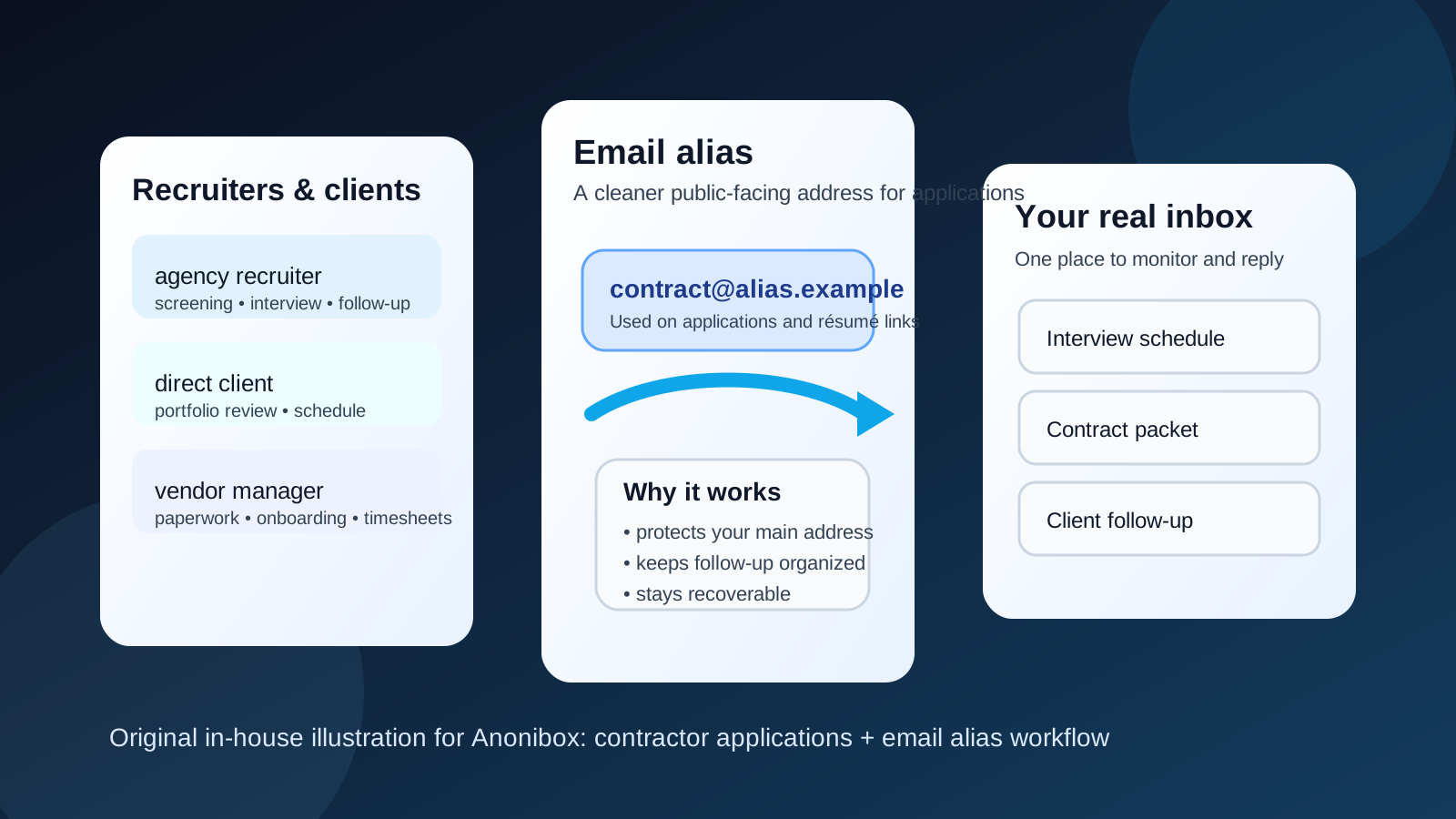
That middle ground is what makes this topic worth thinking about. Contractor hiring often moves faster than traditional hiring, and it can involve more participants: staffing agencies, direct clients, procurement teams, background-check vendors, scheduling coordinators, and onboarding systems. You may want privacy and cleaner inbox boundaries, but you also need a setup that can survive real follow-up.
An email alias can do that well when it is set up correctly. It can give you a professional public-facing address for applications while still routing every message into an inbox you control. But it is only a good solution if it actually works in practice. If the alias creates reply confusion, hides messages inside a crowded inbox, or breaks when you need paperwork later, it stops being helpful.
Why contractor applications create more email friction than people expect
People often assume contractor applications are just like normal job applications with a different pay structure. In reality, the communication pattern can be messier.
- Multiple contacts: you may hear from a recruiter first, then a client contact, then an onboarding or compliance team.
- Fast bursts of activity: a role can stay quiet for days and then suddenly require same-day replies, calendar coordination, or document turnaround.
- More documents and follow-up: contractor roles often involve rate discussions, work authorization checks, vendor forms, background screening, statements of work, or timesheet instructions.
- Repeated outreach from agencies: once your details start circulating, similar roles and recycled follow-ups can pile up quickly.
That is why many people look for more controlled contact methods in the first place. They want to stay reachable without giving every recruiter, agency, and client-facing form direct access to the inbox they use for everything else.
What an email alias does well for contractor applications
An alias is often appealing because it solves a real problem without creating a whole second inbox to manage.
It protects your main address
If you use a unique alias for contract work, agencies and clients do not need your primary everyday address. That gives you a layer of separation, and it can make future filtering, tracking, or shutdown easier if the alias starts attracting too much noise.
It keeps messages in one inbox you already trust
The biggest advantage over a temporary inbox is continuity. If the alias forwards to an inbox you already monitor well, you do not have to remember one more mailbox password or wonder whether a message expired before you saw it.
It can help you track where recruiter traffic is coming from
If you use a dedicated alias for contractor applications, it becomes easier to identify which messages belong to that search. Some people even use separate aliases for staffing agencies, direct clients, or specific job boards. That can make filtering and triage much simpler.
It is often more professional than a throwaway address
A temporary inbox may protect privacy, but it can look fragile and may fail later when replies matter most. A stable alias looks and behaves more like a real long-term address, which fits contractor communication much better.
When an email alias is usually a good fit
An alias works especially well when you want privacy and organization without the weight of a completely separate account.
1. You are applying through several staffing agencies at once
This is one of the best use cases. Agency-heavy searches can create a lot of repeated outreach, résumé requests, interview confirmations, and “similar role” follow-ups. An alias gives you a contractor-specific lane without making your main inbox the public point of contact.
2. You are doing contract work alongside a broader job search
If you are balancing full-time applications, freelance conversations, and short-term contract roles at the same time, an alias can help you separate the contractor stream from everything else while still centralizing the mail into one reliable inbox.
3. You want a cleaner public-facing address on forms and résumés
Some people prefer not to expose the same personal email everywhere. A well-named alias can be a practical way to appear organized while keeping a bit of distance between your contractor search and your everyday identity.
4. You already have a solid inbox system
If your main inbox has filters, folders, or labels that you actually use, an alias can drop neatly into that system. In that case, you get separation without much extra admin work.
When an alias is not enough
An alias is useful, but it is not automatically the perfect answer for everyone.
Your reply workflow is clumsy
The most important question is simple: can you reliably reply from the alias address, or at least from a way that does not confuse recruiters and clients? If forwarded mail comes in, but your replies go out from a different visible address, you may create friction just when the conversation starts moving quickly.
Your contractor search is producing heavy email volume
If you are interviewing aggressively, working with multiple agencies, and processing a lot of onboarding traffic, a separate full inbox may be cleaner than an alias. Too much forwarding into one busy inbox can still become messy even if the alias itself is fine.
You need a long-term contract-work identity
If contracting is not a short phase but a major part of how you work, a complete separate email account may be a better long-term foundation. That gives you deeper separation for contracts, invoices, scheduling, and client communication without depending on forwarding rules alone.
Your alias provider is unreliable
This should be obvious, but it gets ignored. A privacy tool is only helpful if it is dependable. If forwarding is delayed, attachments disappear, or replies behave inconsistently, the risk is not worth it for real hiring conversations.
Email alias vs temporary email vs separate email account
The easiest way to decide is to compare the trade-offs directly.
Email alias
Usually the best middle ground when you want privacy, simplicity, and a professional-looking contact point without managing a full extra mailbox.
Temporary email
Best reserved for low-stakes research, gated downloads, or one-off resource access. It is usually too fragile for real contractor follow-up, especially when interviews, onboarding links, or contract paperwork may arrive later.
Separate email account
Usually the safest option for a serious contractor search. It takes more setup, but it gives you the strongest separation, clearer organization, and fewer reply-path surprises.
If you want a practical rule, use a temporary inbox only for low-trust or low-stakes steps, use an alias for a moderate and organized contractor search, and use a separate inbox if contracting is a major workflow rather than a side stream.
How to set up an email alias for contractor applications the right way
Choose a professional alias name
Keep it simple and boring in a good way. Something based on your name or contract-work lane is usually better than a nickname or joke handle. You want the address to feel stable, not disposable.
Test forwarding before you use it publicly
Do not assume it works. Send yourself a few tests from different providers, check whether attachments arrive cleanly, and confirm that messages do not land in spam or promotions folders.
Make sure replies stay consistent
This is the step people skip. If someone writes to the alias, your reply path should feel coherent. If your setup makes recruiters wonder whether they are corresponding with the same person, fix that before you start sending applications.
Build filters around the alias
Create rules so contractor mail lands in a clear folder, label, or category. That way the alias does not just add privacy; it also improves visibility and triage.
Keep it active past the interview stage
Contractor communication often continues after the “yes” moment. You may still receive onboarding forms, policy acknowledgments, scheduling notes, timesheet guidance, or re-engagement messages later. Do not retire the alias too early.
Use Anonibox only where it makes sense
If you use Anonibox, the safest role is usually limited: screening low-trust forms, unlocking a gated resource, or testing whether a platform is worth engaging with. For the main contractor application address itself, a stable alias is usually more practical than a fully temporary inbox.
Two real-world examples
Example 1: agency-heavy IT contract search
A developer applying for six-month and twelve-month contracts through multiple staffing firms may receive résumé requests, interview scheduling, RTR forms, onboarding links, and repeated “similar role” follow-up. A dedicated alias can keep all of that out of the main inbox while still routing everything into one monitored account.
Example 2: direct client consulting inquiries
A designer or marketing consultant may want a cleaner public-facing contact address on proposal forms, portfolio pages, or contract applications. An alias works well here because it looks stable and professional while giving the consultant some distance from their personal inbox.
Common mistakes to avoid
- Using an alias you never actually monitor. Separation is useless if you miss the messages.
- Assuming forwarding alone solves organization. You still need filters and a review habit.
- Replying from a different visible address without thinking about it. That can create confusion during fast-moving recruiter communication.
- Turning off the alias too soon. Contractor workflows often continue after interviews.
- Treating all roles as equally trustworthy. Some early-stage forms may still be better handled with more caution than a stable application alias.
Quick checklist before you decide
- Do I want privacy without managing a whole second inbox?
- Will the alias forward reliably and stay active long enough?
- Can I reply in a way that feels consistent and professional?
- Is my contractor search moderate enough that one filtered inbox still works?
- Would a full separate email account actually be cleaner for my situation?
If most of those answers are yes, an alias is probably a sensible fit. If several answers are no, a separate account is safer.
Final answer
An email alias for contractor applications is often a smart middle-ground choice. It protects your main address, keeps recruiter and client follow-up more organized, and avoids many of the reliability problems that come with temporary inboxes.
It works best when the alias forwards cleanly, supports consistent replies, and stays active through the full hiring and onboarding timeline. If your search is heavy, long-running, or central to your business, a separate email account may still be the better long-term system. But for many real contractor searches, a stable alias is a practical privacy-first setup that does not get in your way.