Yes — a separate email for contractor applications is usually the smartest setup if you want privacy without risking missed follow-up.
Unlike a temporary inbox, a separate long-term address can stay active for recruiter replies, client screening, contract paperwork, onboarding links, and later schedule changes.
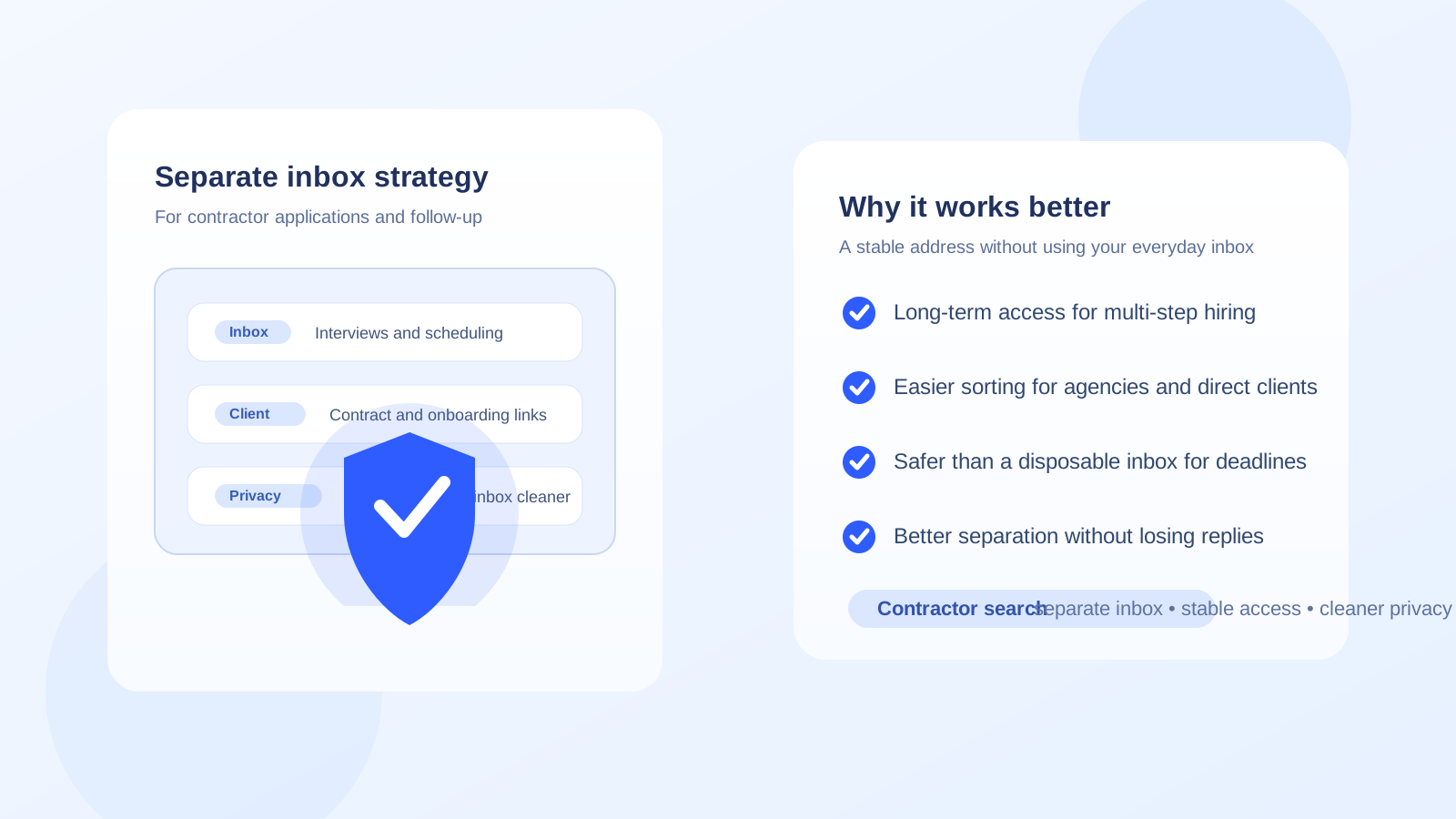
That is the practical answer behind this question. Contractor roles often move faster than traditional full-time hiring, and they can involve more moving pieces: staffing firms, direct clients, vendor portals, background checks, availability questions, rate discussions, contract documents, and sudden starts. If all of that hits your main personal inbox, the process gets noisy fast. If you use a disposable inbox for everything, you can lose important messages at exactly the wrong time.
A separate email account gives you a middle ground. It keeps contractor-search traffic away from your everyday inbox, but it still gives you a stable address you control for the full application and onboarding timeline. For most real contractor opportunities, that balance is better than using a burner or temporary address as your main point of contact.
Why contractor applications create inbox problems
Contractor hiring tends to generate more scattered communication than many people expect. One role may involve a recruiter, an agency coordinator, a hiring manager, and a client contact. Another may start on a job board, move to a vendor management system, and then shift into direct email. Even before you know whether the role is a good fit, you may start receiving:
- interview scheduling messages
- availability checks for short notice calls
- skills tests or portfolio requests
- background screening or right-to-work instructions
- rate confirmation and contract documents
- future-role alerts from recruiters or staffing firms
That mix is exactly why many people start looking for better email hygiene during a contractor search. The goal is usually not secrecy. It is control. You want an address that is easy to monitor, easy to search, and easier to retire from active use later without exposing your main personal inbox to every recruiter and platform you touched during the search.
When a separate email makes the most sense
A separate email is a strong choice when you are applying for real contractor roles and expect the process to continue beyond the first message. That includes situations like:
- Agency-heavy searches: when multiple recruiters may contact you about similar roles.
- Short-term consulting or freelance contracts: where new outreach can pile up quickly.
- Platform-based applications: when you are signing up on job boards, staffing portals, and client systems at the same time.
- Confidential job searches: when you want more distance between your search and your everyday inbox.
- High-volume application periods: when you need cleaner sorting, filtering, and follow-up.
In these cases, the separate address works because it stays alive long enough to support the real-world flow of contractor hiring. A recruiter may revisit your profile weeks later. A client may ask a follow-up question after an initial pause. An onboarding link may arrive after you thought the process had gone quiet. A stable address handles that better than a disposable inbox.
Why a temporary email is usually the wrong main tool
The attraction of a temporary inbox is easy to understand. It limits spam, creates distance, and keeps your personal address out of low-trust forms. But contractor applications are rarely one-and-done. They often stretch across several days or weeks, and important messages do not always arrive on a predictable schedule.
If the inbox expires, stops forwarding, or becomes hard to monitor, you may miss the message that actually mattered: the interview confirmation, the statement of work, the background check step, the updated start date, or the client’s request for a quick reply. That is why a temporary inbox is better reserved for low-stakes browsing, gated downloads, or early research rather than as the primary address for serious contractor applications.
If you use a service like Anonibox, the safest role for it in this workflow is usually limited and intentional: screening low-trust signups, checking a gated resource, or testing whether a platform is worth deeper engagement. Once a role becomes real, a separate long-term inbox you control is usually the better home for the actual application and follow-up.
Separate email vs alias vs burner email
These options sound similar, but they solve slightly different problems.
Separate email account
This is usually the most practical choice for contractor applications. It gives you a dedicated inbox, its own folders and filters, and a long enough lifespan for real hiring timelines. It is also easier to keep professional if you want a clean address just for contract work.
Email alias
An alias can also work well, especially if it forwards into a mailbox you already monitor closely. The catch is that your setup has to be reliable. You need to know whether replies come from the same alias cleanly, whether forwarding is stable, and whether your sending identity stays consistent. If you are comfortable managing that, an alias can be a solid option. If not, a separate account is simpler.
Burner email
A burner address can be useful for low-trust situations, but it is riskier for the full contractor process. If the address is hard to maintain, difficult to search, or easy to abandon, it may not be the best tool for roles that involve paperwork, credential checks, and follow-up over time.
How to set up a separate email for contractor applications
- Create an address you can keep for the full search. Choose something simple and professional, ideally based on your name rather than a nickname or joke handle.
- Use it only for contractor and freelance opportunities. The more focused the inbox is, the easier it becomes to scan and prioritize.
- Build a small folder system. For example: New Leads, Interviewing, Paperwork, Active Contracts, and Archived.
- Add filters for agencies and job boards. This keeps alert traffic from burying personal follow-up from real humans.
- Turn on notifications during active search periods. Contractor timelines can move quickly, especially when a client wants availability immediately.
- Check the inbox every day. A separate address only works if it remains a monitored address.
This setup gives you the privacy benefits people want from a disposable email approach, but without the fragility. You stay reachable, organized, and in control.
Best practices once you start using it
- Keep your name consistent across your résumé, LinkedIn profile, and email signature.
- Use a short professional signature with your name, role focus, and preferred contact method.
- Save important messages locally or in a dedicated folder so contracts, screening instructions, and onboarding links do not get lost.
- Reply promptly when real people reach out, because contractor decisions often move faster than permanent hiring.
- Be selective about where you share the address once you have a strong pipeline, so it does not become another spam sink.
When a separate email may not be enough on its own
A dedicated inbox helps a lot, but it does not solve every privacy issue automatically. If you are posting your résumé publicly, uploading it to several job boards, and replying to every cold recruiter message, you can still attract spam and low-quality outreach. The separate inbox makes that manageable; it does not eliminate the need for judgment.
You still need to watch for scam patterns, vague client details, rushed off-platform requests, and suspicious links. A separate email protects organization and reduces spillover into your main inbox, but you should still verify who you are dealing with before sharing sensitive information.
Common mistakes to avoid
- Using a temporary inbox for real applications: fine for low-stakes research, risky for actual hiring follow-up.
- Forgetting to monitor the separate inbox: separation only helps if the account is checked consistently.
- Using an unprofessional address: the inbox should help you look organized, not casual or unreliable.
- Mixing contractor search with everything else again: if newsletters, shopping receipts, and personal mail flood the same inbox, you lose the benefit.
- Assuming every recruiter deserves full trust immediately: keep some distance until the opportunity is clearly legitimate.
Final answer
Yes — for most real contractor searches, a separate email for contractor applications is the safest and most practical choice. It gives you privacy and organization without sacrificing the reliability you need for interviews, client follow-up, contract paperwork, onboarding, and later scheduling.
If you want the short version, use a temporary inbox only for low-stakes research and sign-up friction. For actual contractor opportunities, use a separate long-term email you can monitor every day. That approach keeps your main inbox cleaner while still making you easy to reach when a real role moves forward.