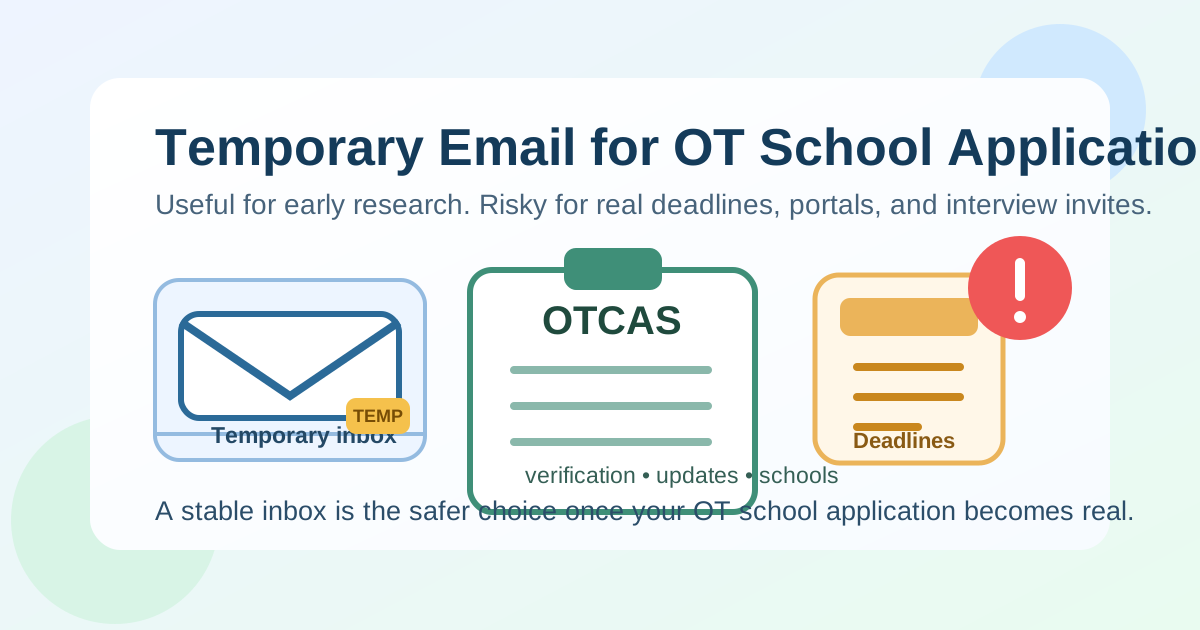
Usually no — a temporary email is too risky as your main inbox for occupational therapy school applications.
It can be useful for low-stakes research like brochure downloads or webinar signups, but OTCAS updates, supplemental application requests, interview invites, and admissions deadlines belong in a stable email account you can monitor for months.
Why applicants even consider a temporary email
Occupational therapy school applications create a surprising amount of email. Before you submit anything, you may sign up for virtual information sessions, request brochures, join mailing lists, or compare several programs at once. That can quickly turn into a pile of promotional messages, reminders, and general admissions content. It is completely reasonable to want some distance between that traffic and your everyday inbox.
That is where temporary email tools start to look attractive. They offer quick sign-up privacy, fewer long-term marketing emails, and a simple way to avoid giving your main address to every form you touch. For low-stakes browsing, that logic makes sense. The problem is that occupational therapy admissions is not a one-click signup. Once you begin a real application cycle, reliability matters more than short-term inbox protection.
Short answer: fine for early research, risky for real OT school applications
If you are still in the browsing stage, a temporary email can be useful for one-off actions that do not matter later. But if you are creating an OTCAS account, submitting materials, waiting on transcript status, responding to supplemental requests, or hoping for interview invitations, a temporary address is usually the wrong tool.
That does not mean privacy concerns are overblown. It means the safer answer is usually a dedicated long-term admissions inbox or a stable email alias rather than a disposable inbox that may expire, get ignored, or become hard to track over time.
What messages OT school applicants actually need to keep
Occupational therapy admissions is full of messages that matter long after the moment they arrive. Depending on the cycle and the schools on your list, you may need to keep track of:
- OTCAS account notices for setup, password resets, verification updates, and support messages.
- Transcript or recommendation reminders if application materials are incomplete.
- School-specific supplemental instructions from individual programs using their own portals and deadlines.
- Interview scheduling emails that may need a fast reply.
- Deposit, scholarship, and financial-aid messages after decisions begin coming in.
- Status changes and waitlist updates that may arrive weeks or months after you submitted.
These are not throwaway messages. Missing one can create real consequences, especially if a school expects a response inside a short window.
Why temporary email becomes a weak fit once the process is real
1. Occupational therapy admissions lasts much longer than a temp inbox is designed for
A disposable inbox is built for short-lived interactions. OT school applications are not short-lived. You may spend months moving through OTCAS submission, verification, school follow-up, interviews, waitlists, and enrollment tasks. An inbox that feels convenient at the start can become fragile when you still need it later.
2. The risk of missing one email is too high
If you miss a marketing newsletter, nothing important happens. If you miss an email about a missing prerequisite, supplemental essay, interview slot, payment, or document deadline, that can directly affect your application. Admissions workflows are unforgiving in a way that casual signups are not.
3. Communication often comes from multiple systems
Applicants sometimes assume everything will flow from one clean sender. In reality, messages may come from OTCAS, a school-specific portal, an admissions staff member, a financial-aid office, or an interview scheduling system. When communication is fragmented, the safest strategy is consistency, not disposability.
4. Temporary email can make your recordkeeping worse
The whole appeal of temporary email is keeping things separate. But if you split your OT school trail across several short-lived inboxes, your recordkeeping can get messy fast. Confirmations, receipts, portal links, interview details, and admissions responses are much easier to manage when they live in one place.
When a temporary email can still make sense
Temporary email is not useless here. It just belongs earlier in the funnel. Reasonable use cases include:
- downloading a brochure from a program you are only casually considering,
- registering for a general webinar or open house,
- testing whether a school sends useful updates before you commit to ongoing contact,
- reading one-time admissions marketing without exposing your main address immediately.
That is the sweet spot. A tool like Anonibox can help you protect your main inbox while you explore broadly. But once you move from research into real applications, you should switch to a dependable email account that you plan to keep and check regularly.
Better options than a temporary email
Use a dedicated long-term admissions inbox
For most applicants, this is the strongest option. A separate email account for OT school applications keeps your admissions workflow organized without the reliability problems of a disposable inbox. It also makes searching easier later because every confirmation, reminder, and portal notice is in one place.
Use a stable email alias
If your provider supports aliases, that can be a nice middle ground. You get privacy and organization without creating a separate fragile mailbox. The important part is that the alias forwards into an inbox you already trust and actually check every day.
Use temporary email only for top-of-funnel research
If you like the privacy benefits of disposable inboxes, use them at the research stage only. Once you create real application accounts or request anything that could lead to a deadline, interview, or school-specific follow-up, switch to your stable address.
A practical workflow that balances privacy and reliability
- Start broad with a temporary inbox if you want: use it for brochures, event signups, or low-stakes program research.
- Create one serious admissions address: this becomes your OT school application inbox.
- Use that stable address for OTCAS and every real application: do not scatter serious messages across throwaway inboxes.
- Set up labels or folders: separate OTCAS, supplemental applications, interview invites, and financial-aid messages.
- Check the account daily during the cycle: more often when deadlines or interview scheduling are active.
- Keep a backup tracking system: a spreadsheet or checklist helps you pair each school with its dates, portal links, and next steps.
This approach gives you the privacy benefit you want at the beginning without turning your real application process into a scavenger hunt.
Common mistakes to avoid
- Using a temporary inbox for OTCAS itself: that creates unnecessary long-term risk.
- Switching email addresses mid-cycle: schools and systems may continue using the first one you gave them.
- Assuming all messages are low-stakes: some admissions emails are operational, not promotional.
- Checking the inbox only occasionally: even a good address fails if you ignore it.
- Treating privacy and reliability like opposites: a separate stable inbox usually gives you both.
What OT applicants should prioritize most
The best email setup for occupational therapy school applications is the one that keeps you reachable, organized, and calm. Privacy matters, but so does continuity. You want one address that can handle months of communication without disappearing, confusing staff, or forcing you to hunt through old signups when a deadline appears.
That is why a temporary inbox works best as a shield for early browsing, not as the operating system for your entire application cycle. Once a school becomes a serious possibility, you should move that contact into a long-term mailbox you control.
Final answer
A temporary email can be useful for early occupational therapy school research, but it is usually too risky for real applications. OT admissions involves OTCAS updates, school-specific instructions, interview logistics, and deadline-heavy follow-up that can stretch across months.
If you want privacy without making the process fragile, use a dedicated admissions email or a stable alias instead. Save temporary inboxes for one-off research tasks, and keep your actual application workflow in an email account you trust enough to bet a deadline on.