An email alias can be a smart choice for social work school applications if it forwards to an inbox you control and check often. Yes — for many applicants, an alias is a practical middle ground between privacy and reliability.
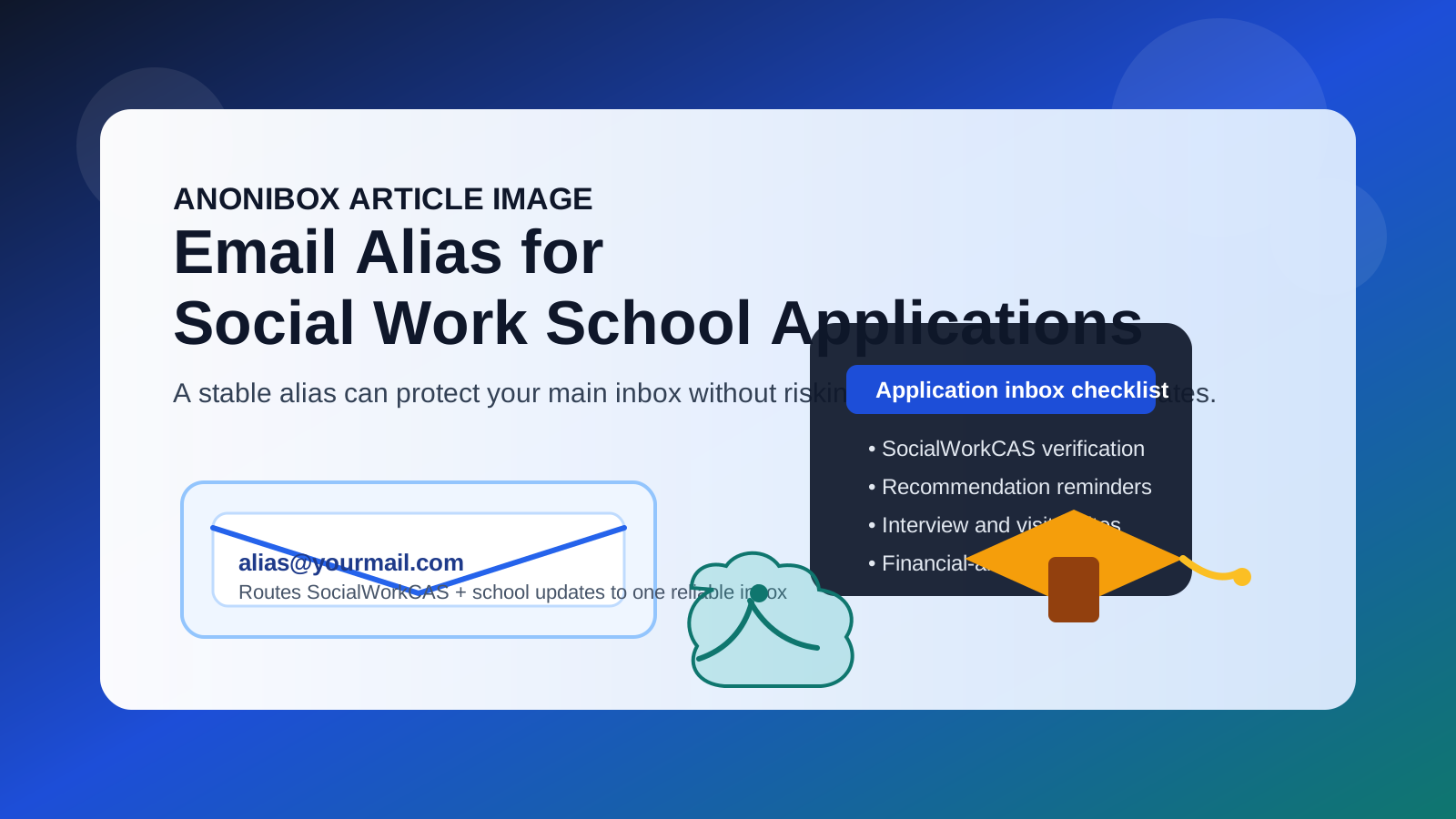
It can help you keep SocialWorkCAS updates, program deadlines, recommendation reminders, interview invites, and financial-aid notices organized without handing your primary personal address to every school form and event signup.
Why this question matters for social work applicants
Social work school applications tend to create more inbox traffic than people expect. Even if you only apply to a few MSW, BSW, advanced-standing, or related programs, you may end up getting messages from a centralized service such as SocialWorkCAS, from each school directly, from admissions staff, from financial-aid offices, and from event or student-support teams. Some of those emails are essential. Others are reminders, marketing follow-ups, webinar invites, or broad “still interested?” campaigns that make the important messages harder to spot.
That is why applicants start looking for privacy tools. They want a way to stay reachable without turning their everyday email into a long-term admissions dumping ground. An email alias is attractive because it can give you separation without the risks that come with a fully temporary inbox.
What an email alias actually is
An email alias is not a throwaway inbox in the usual sense. It is another address that forwards mail into a real mailbox you already own and monitor. In practice, that means you can give schools an address created specifically for applications while still reading everything in your main account or in a dedicated admissions mailbox.
That setup matters because social work admissions often unfold over months rather than days. You might verify an account today, receive a transcript reminder next week, get a status update a month later, and then hear about interviews, scholarships, deposits, or next-step paperwork well after that. An alias can work well precisely because it keeps continuity.
Short answer: an alias is often a good middle ground
If you want more privacy but still need dependable long-term access, an alias is usually a solid option. It is often better than using your everyday address everywhere, and it is much safer than relying on a disposable inbox for the full application process.
The key condition is simple: the alias has to route into a mailbox you actually check. If the alias forwards into an overloaded account you ignore, the privacy benefit does not help much. Reliability still matters more than clever setup.
When an email alias works especially well
1. You want one admissions identity without exposing your main address
An alias lets you keep a cleaner boundary between normal life and admissions. That can be useful if your main address is tied to work, family, old subscriptions, or other personal activity you do not want mixed with school communication.
2. You are applying to multiple programs at once
Social work applicants often compare several schools, deadlines, and formats at the same time. One alias dedicated to applications makes it easier to filter, search, and label those messages. Instead of wondering where a missing update went, you know which address schools should be using.
3. You want to reduce list growth later
After you finish applying, you may still get admissions marketing, alumni outreach, event promotions, and general school newsletters. Using an alias makes it easier to filter or retire that stream later without touching your everyday address.
4. You need something more stable than a temporary inbox
A temporary email can be fine for low-stakes research such as downloading a brochure, joining an info session, or comparing schools before you decide to apply. A service like Anonibox can help during that early phase. But once you are inside the real admissions workflow, a stable alias is usually the safer privacy tool because it keeps access consistent.
When a separate mailbox may be even better than an alias
An alias is useful, but it is not always the best answer. Some applicants do better with a completely separate admissions mailbox rather than an alias that forwards into their normal account.
A dedicated mailbox may be better if:
- your main inbox is already chaotic and easy to miss messages in,
- you want stronger separation between personal life and school applications,
- you plan to save a lot of attachments, interview instructions, and aid documents, or
- you want every admissions message in one place without blending into other mail at all.
In other words, an alias is great when you trust your current mailbox discipline. A separate mailbox is better when you want a harder wall.
Why a fully temporary or burner inbox is riskier here
Social work school admissions are not a one-click signup flow. Programs may contact you at irregular intervals, and some of the most important messages arrive after long gaps. If an inbox expires, gets ignored, or becomes inaccessible, you can miss a recommendation reminder, a missing-material notice, a field-related update, or an interview invitation.
That does not mean temporary inboxes are useless. They can be fine for early research, list downloads, or public event registrations. The problem starts when applicants use them for real submissions and then treat them like a stable admissions home. For actual applications, an alias or separate long-term inbox is usually safer.
What kinds of messages you should expect
Part of choosing the right email setup is understanding what you are signing up to receive. Common social work school application emails include:
- account verification and password-reset emails,
- transcript or recommendation reminders,
- supplemental application instructions,
- deadline warnings and incomplete-application notices,
- open-house or admitted-student event invitations,
- financial-aid and scholarship follow-up,
- interview scheduling or visit logistics, and
- decision, deposit, and enrollment next-step messages.
That mix is exactly why reliability matters. You are not just protecting privacy. You are also building a system that can handle bursts of important communication without losing track of them.
How to set up an alias for social work school applications
Pick a professional alias format
Use something simple and credible, such as a variation of your name plus “grad,” “apply,” or “school.” Avoid anything gimmicky or overly anonymous. Admissions teams do not need your address to sound flashy. They need it to look stable and professional.
Route it into a mailbox you already manage well
If your alias forwards into a mailbox you ignore, the system breaks immediately. The destination inbox should be one you can check daily during the admissions cycle.
Set up labels or filters early
Create rules for SocialWorkCAS, each program, and high-priority senders. A little structure at the beginning makes deadline-heavy weeks much easier later.
Save key messages outside the inbox when needed
If a school sends interview instructions, a scholarship checklist, or deposit details, save a copy where you can find it quickly. Email search is helpful, but backup organization reduces stress.
A quick decision checklist
- Do you want privacy without risking access to long-cycle admissions messages?
- Will the alias forward into a mailbox you check consistently?
- Are you applying to enough schools that better organization would help?
- Do you want the option to retire or filter the address after admissions season?
- Would a full separate mailbox be better because your main inbox is already messy?
If most of those answers point toward control, continuity, and privacy, an alias is probably a good fit.
Final verdict
Yes — an email alias is often a smart option for social work school applications, as long as it routes into a reliable inbox you monitor closely. It gives you more privacy than handing out your main address everywhere, while avoiding the fragility of a short-lived temporary inbox.
For brochure downloads and low-stakes research, temporary email can still be useful. But for real SocialWorkCAS activity, program deadlines, recommendation tracking, interviews, aid notices, and enrollment follow-up, a stable alias or dedicated mailbox is the safer long-term move. If your goal is to stay organized without inviting unnecessary inbox clutter, an alias is a practical middle ground that fits the way social work admissions actually works.