Yes — an email alias is usually a smart choice for public health school applications if it routes to a stable inbox you check every day.
It helps you separate SOPHAS notices, school follow-up, interview scheduling, and financial-aid messages from your everyday mail without depending on a disposable address that might disappear.
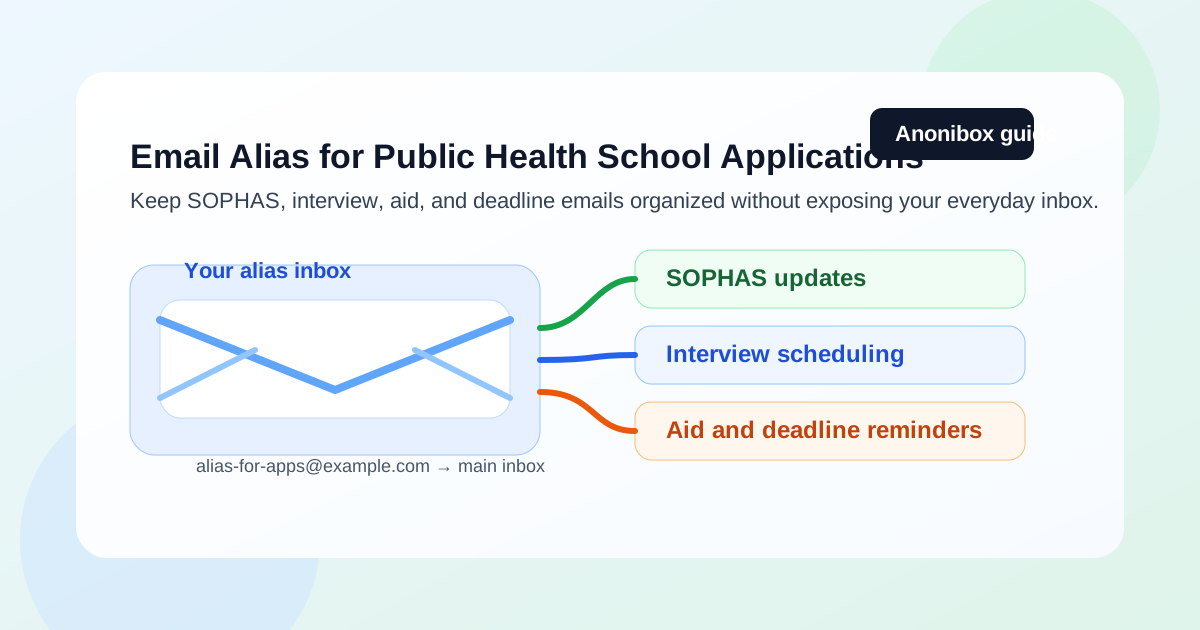
That is the practical answer behind searches for email alias for public health school applications. Public health admissions can look straightforward at first, but the communication flow gets busy fast. You may receive messages from SOPHAS, individual schools, program coordinators, faculty interviewers, scholarship teams, and graduate admissions offices, all on slightly different timelines. An alias can keep that traffic organized without forcing you to build a whole new inbox from scratch.
For many applicants, an alias is the middle ground between two extremes. It is more durable and realistic than a temporary email, but lighter and easier to manage than opening a completely separate mailbox if you already trust your current email provider. The key is using an alias that forwards reliably to an inbox you control long term.
Why public health school applications generate so much email
Public health applicants often apply to multiple programs, and the messages do not all come from one place. One update might come from SOPHAS about submission or verification. Another may come from a school about prerequisites, transcripts, recommendations, scholarship forms, interview scheduling, or admitted-student events. Even when every message is legitimate, the volume alone can make your regular inbox harder to manage.
This matters because public health admissions is not a one-day signup flow. It is a months-long process with status changes, follow-up requests, reminders, and decision emails. Missing one deadline-heavy message because it got buried under newsletters, receipts, work mail, and random promotions is exactly the problem applicants are trying to avoid.
What an email alias actually means here
An email alias is another address that points to your real inbox. Instead of logging into a second mailbox, you receive the messages through the address you already use. For example, you might create a dedicated alias for admissions while keeping everything routed to a secure primary account you monitor daily.
That setup can work well for school applications because it gives you separation without adding much friction. You get a cleaner boundary for admissions mail, but you do not have to remember another password, switch between multiple inboxes all day, or worry about abandoning an account you forgot to check.
Why an alias can be a better fit than a disposable address
A lot of privacy-minded applicants are tempted to use a temporary or burner inbox everywhere. That can make sense for low-stakes browsing, but real applications are different. If an address expires, stops receiving messages, or gets blocked by a school system, the downside is not minor annoyance. You could miss a verification notice, interview invitation, supplemental request, or scholarship deadline.
An alias is better suited to the public health admissions timeline because it stays tied to a real account you control. It still gives you some separation from your everyday inbox, but it avoids the fragility of true throwaway email. If you want to use a tool like Anonibox, the safer use case is early research — for example, signing up for a generic webinar, brochure download, or one-off information session before you are ready to share your long-term address. Once you are opening real applicant accounts or waiting for decisions, a stable alias is usually the smarter move.
When an alias is the best choice
An alias is especially useful when you want organization and privacy, but you do not want the hassle of managing a separate mailbox from scratch. It is often the best option if:
- you are applying to several MPH or related public health programs at the same time
- you already have a secure main inbox you trust and check often
- you want admissions messages separated without juggling another full account
- your email provider lets you reply from the alias cleanly
- you want to filter SOPHAS, interview, scholarship, and decision emails into one lane
For many applicants, this is the sweet spot. It creates structure without turning application season into an inbox-management project of its own.
When a separate inbox may be better than an alias
An alias is not always the perfect answer. Sometimes a completely separate inbox is still the better call. That may be true if your current account is already overloaded, your provider handles aliases poorly, or you want stronger separation between personal life and admissions. A standalone application inbox can also be better if multiple family members or devices already share the main account in messy ways.
The real test is reliability. If your alias setup feels confusing, breaks reply behavior, or makes it harder to find messages quickly, the convenience is not worth it. Public health school applications reward simple systems that work every day.
How to set up an email alias for public health school applications
1. Use a provider you trust
Start with an email account you already control well. Use strong authentication, keep recovery options current, and make sure you are comfortable receiving important admissions traffic there for months. The alias is only as dependable as the underlying inbox.
2. Pick a clear, professional alias
Choose something plain and readable. You do not need anything clever. A straightforward admissions-focused alias based on your name is usually best because it looks normal if a school sees it, and it is easy for you to recognize in filters and search results.
3. Confirm that you can receive and reply correctly
This step matters more than people expect. Some alias setups receive mail just fine but reply from the main address by default. Before you use the alias for real applications, test it. Make sure incoming mail lands where you expect, and confirm what address schools will see if you reply.
4. Build simple labels or folders
Once the alias is active, create basic organization rules. You do not need an elaborate system. A few labels usually cover most of the process:
- SOPHAS
- school-specific follow-up
- interviews
- financial aid and scholarships
- decisions and enrollment
That structure makes it much easier to scan what still needs attention.
5. Add the inbox to your normal routine
The point of an alias is organization, not distance. You still need to check the underlying inbox consistently. Add it to your phone, keep notifications sensible, and make a daily habit of scanning for application updates during active parts of the cycle.
Common mistakes to avoid
- Using a temporary email as the primary application address: fine for low-stakes research, risky for real admissions timelines.
- Choosing an alias you rarely monitor: organization only helps if you actually see the messages.
- Assuming reply behavior is automatic: always test whether your replies preserve the alias.
- Changing addresses mid-cycle without a good reason: consistency reduces confusion across schools and systems.
- Ignoring spam or promotions folders: admissions mail does not always land where you expect.
- Using a current work address: that can create privacy issues and may look awkward if you are job searching or changing roles at the same time.
Alias vs separate email vs temporary email
If you are deciding between these three options, the simplest comparison looks like this:
- Email alias: best when you want a stable, low-friction way to separate admissions mail while keeping everything tied to one trusted account.
- Separate inbox: best when you want maximum organization and stronger separation from your personal inbox, and you do not mind managing another account.
- Temporary email: best only for very early, low-stakes research where losing future access would not hurt you.
For most real public health applications, the alias and separate-inbox options are the safe long-term choices. Temporary inboxes are better reserved for exploratory clicks before you have started the true application process.
A quick checklist before you use the alias
- Does the alias forward to an inbox you check every day?
- Can you reply from the alias cleanly if a school emails back?
- Have you tested the setup with a sample message?
- Have you created simple labels for SOPHAS, interviews, aid, and decisions?
- Will you keep this setup active through the full admissions cycle?
If the answer is yes to those questions, an alias is probably a strong fit for your application workflow.
Final answer
Yes — using an email alias for public health school applications is usually a smart move when the alias points to a stable inbox you monitor closely. It gives you cleaner organization for SOPHAS notices, school requests, interview logistics, and scholarship follow-up without the fragility of a disposable address.
The main goal is not to hide from admissions offices. It is to stay organized, reduce inbox clutter, and keep control over your personal address exposure during a deadline-heavy process. If your alias setup is reliable and easy to manage, it can be one of the simplest ways to make public health application season less chaotic.