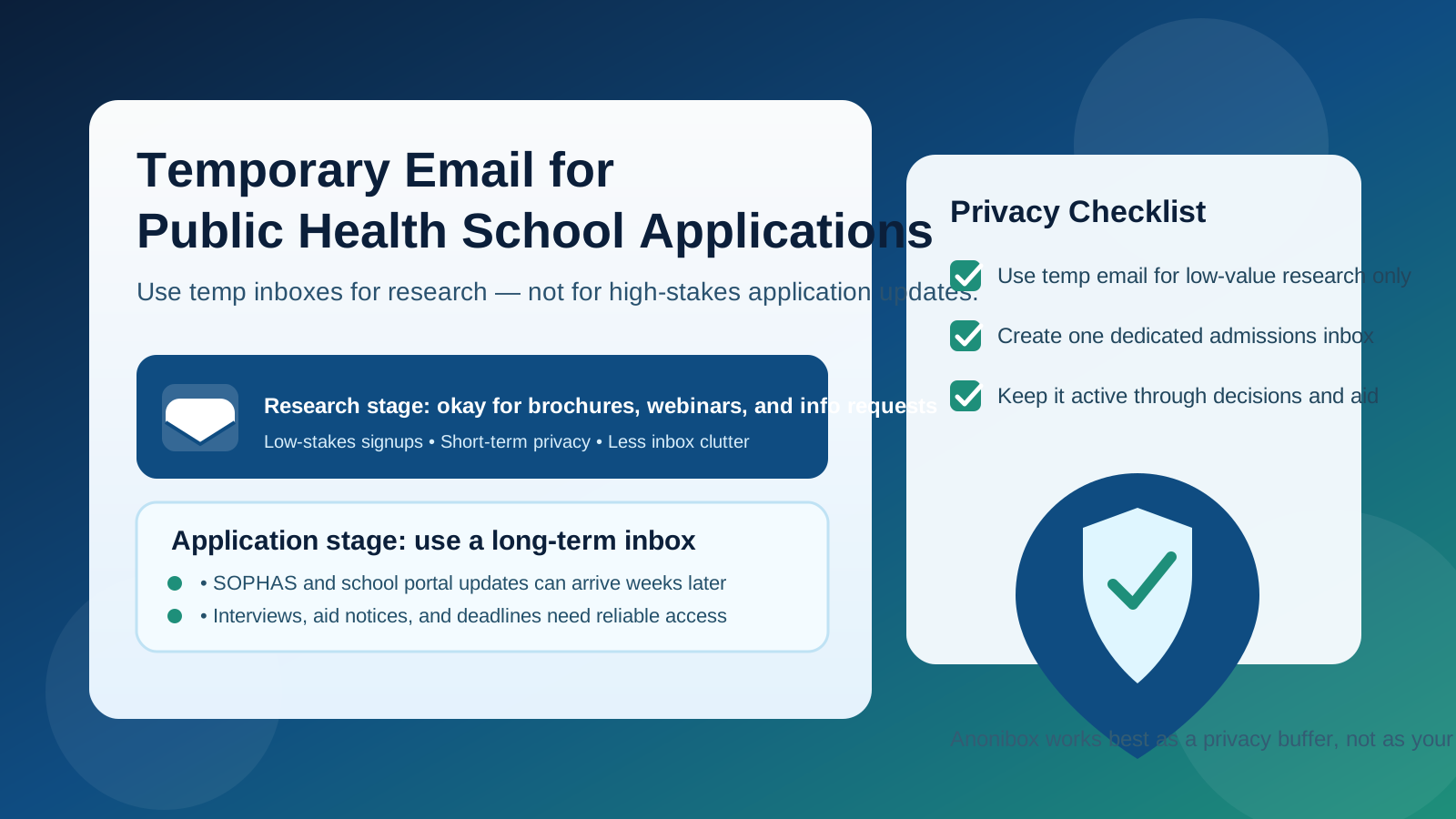
Usually, no—you should not rely on a temporary email as your main inbox for public health school applications. It can help with early research or low-stakes signups, but most applicants need a long-lasting email for SOPHAS updates, school messages, interviews, and deadline-sensitive follow-up.
The safer approach is to use a temporary inbox only for early browsing and switch to a dedicated long-term application email before you submit anything important.
That distinction matters because public health applications often stretch across weeks or months. You may be downloading brochures, joining virtual info sessions, checking program requirements, comparing concentrations, and then eventually moving into the real application workflow. At the casual research stage, a disposable inbox can be useful. Once you are dealing with SOPHAS, supplemental applications, recommendation logistics, interview invites, fee-waiver messages, or scholarship deadlines, a short-lived inbox becomes much riskier.
If you want privacy and reliability, the best move is usually a layered setup: use a temporary inbox for low-value marketing signups, then use one clean application email for everything tied to actual admissions progress. A service like Anonibox can help during that first research phase, but it should not be the single inbox you trust for the full admissions cycle.
Why this question matters for public health school applicants
Public health programs do not always move on a simple one-email, one-deadline schedule. Many applicants apply to multiple schools, compare MPH concentrations, attend webinars, request information, and manage messages from both centralized systems and individual programs. That creates two competing needs:
- Privacy: you may not want every school, vendor, webinar form, and mailing list to have your personal inbox.
- Reliability: you cannot afford to miss an application-status email, portal setup notice, interview request, or funding update.
A temporary address solves the first problem well. It solves the second problem badly. That is why the answer is not a blanket yes or no. It depends on which part of the process you are in.
When a temporary email can help
A temporary email can be practical during the very earliest stage of public health school research, especially when you are trying to avoid long-term inbox clutter.
Good low-risk uses
- Downloading a brochure or program guide
- Signing up for one-time webinar access
- Checking whether a school sends useful follow-up or endless marketing
- Comparing several programs before deciding where to apply
- Testing whether a form immediately starts a heavy nurture sequence
In those situations, the stakes are usually low. If a school sends three reminder emails about an information session or a generic “apply now” sequence, missing those messages is not going to damage your application cycle. Using a temporary inbox here can keep your personal or work email out of a lot of promotional traffic.
This is where Anonibox fits naturally. If you are still exploring programs, trying to keep vendor-style education marketing under control, or separating casual research from serious applications, a temporary inbox can save your main account from a lot of noise.
Where a temporary email starts to become risky
Once you move from browsing into real admissions workflow, a temporary email becomes a weak foundation. Public health school applications often involve multiple touchpoints over time, and some of them do not arrive right away.
1. Centralized application updates may arrive later than you expect
If you use SOPHAS or another structured admissions process, some important messages are not instant. Verification progress, missing-item notices, school follow-up, and account-related alerts can arrive days or weeks after you first create the account. If your temporary inbox expires or becomes inaccessible, you may lose the trail.
2. Individual schools may email from different systems
Even if you begin with one application platform, the schools themselves may send messages from separate domains, CRMs, portal systems, interview schedulers, or student-services tools. That makes long-term inbox access more important than many applicants expect.
3. Deadline-heavy communication does not mix well with expiring inboxes
Public health programs can involve rolling admissions, supplemental requirements, scholarship opportunities, or interview scheduling windows. Missing one message because you used a short-lived inbox is not a small inconvenience. It can change the outcome of the cycle.
4. You may need continuity for months
Applications are rarely finished when you hit submit. There can be waitlist movement, admitted-student communications, follow-up questions, and funding discussions long after your original sign-up. A disposable inbox is built for short-term access, not long-cycle continuity.
So what is the better setup?
For most people, the best setup is not “temporary email or personal email.” It is:
- One dedicated long-term application email for actual admissions activity
- Optional temporary inboxes for early browsing, webinar signups, and low-value info requests
That dedicated application inbox should be something you control for the entire cycle. It does not need to be your oldest personal address. In fact, many applicants prefer creating a separate mailbox just for applications so their main inbox stays cleaner. That gives you privacy without sacrificing reliability.
An email alias can also work well if you already use a provider that supports aliases cleanly, but the central idea stays the same: anything tied to a real application should go to an inbox that will still exist when schools contact you later.
A practical step-by-step workflow
Step 1: Use temporary email only during the research stage
If you are still asking basic questions—Which programs interest me? Which concentrations fit? Which schools send useful materials?—a temporary inbox is fine for low-stakes forms and webinar registrations.
Step 2: Create a dedicated admissions inbox before opening real application accounts
Before you create a SOPHAS account, request recommendation instructions, or begin submitting actual materials, switch to a long-term address. Make that your official application inbox across every serious touchpoint.
Step 3: Keep your application email organized
Create folders or labels for:
- SOPHAS or centralized application messages
- Each school you apply to
- Interviews
- Financial aid and scholarships
- Admitted-student follow-up
This gives you the same organizational benefit people often chase with temporary email, but without the risk of losing access.
Step 4: Move important accounts off any temporary inbox quickly
If you already used a temporary address for an early sign-up and then decide the program matters, change the email on that account as soon as possible. Do not wait until a deadline week to realize key messages are still going to an expiring inbox.
Step 5: Keep the admissions inbox active until the cycle is truly over
Do not abandon it right after submitting. Keep checking it through decisions, scholarships, deposits, and any late follow-up. Public health school timelines can stretch longer than applicants initially assume.
When a temporary email is the wrong choice
A temporary email is usually the wrong tool if you are doing any of the following:
- Creating a real application account
- Submitting forms that may trigger status updates later
- Scheduling interviews or visit days
- Waiting on school-specific portal access
- Managing scholarship, assistantship, or funding communication
- Handling deadlines where one missed email could matter
In those scenarios, privacy still matters, but continuity matters more.
Common mistakes to avoid
Using one temporary inbox for everything
This sounds tidy at first, but it creates a single fragile point of failure. If the inbox expires, several application threads can disappear at once.
Assuming every important message comes immediately
Admissions processes are full of delayed communication. Just because the account-verification email arrived quickly does not mean all future messages will.
Forgetting that schools use multiple systems
You may hear from application platforms, schools, departments, event systems, and student-services tools. A long-term address handles that complexity better.
Over-prioritizing spam control over admissions reliability
Inbox hygiene is useful, but not if it causes you to miss a time-sensitive opportunity. The goal is controlled exposure, not total disappearance.
Quick checklist before you decide
- Am I just requesting information, or am I starting a real application?
- Will I need this inbox weeks or months from now?
- Could I miss interview, portal, or funding updates if this address disappears?
- Would a separate long-term application email solve the privacy problem better?
- Can I switch the address later if I started with a temporary one?
If the message flow could affect your admissions outcome, a dedicated long-term inbox is the safer answer.
Final answer
So, should you use a temporary email for public health school applications? Only for the early, low-stakes parts of the process. It can be useful for brochure downloads, webinar registrations, and casual program research, especially if you want to protect your main inbox from marketing clutter.
But for real public health applications, a temporary address is usually too fragile. A better system is to use a clean, separate long-term inbox for admissions and keep temporary email for research-only tasks. That gives you privacy without gambling with SOPHAS notices, school follow-up, interviews, scholarships, or deadline-sensitive updates.
In other words: use temporary email as a filter, not as the foundation of your application cycle.