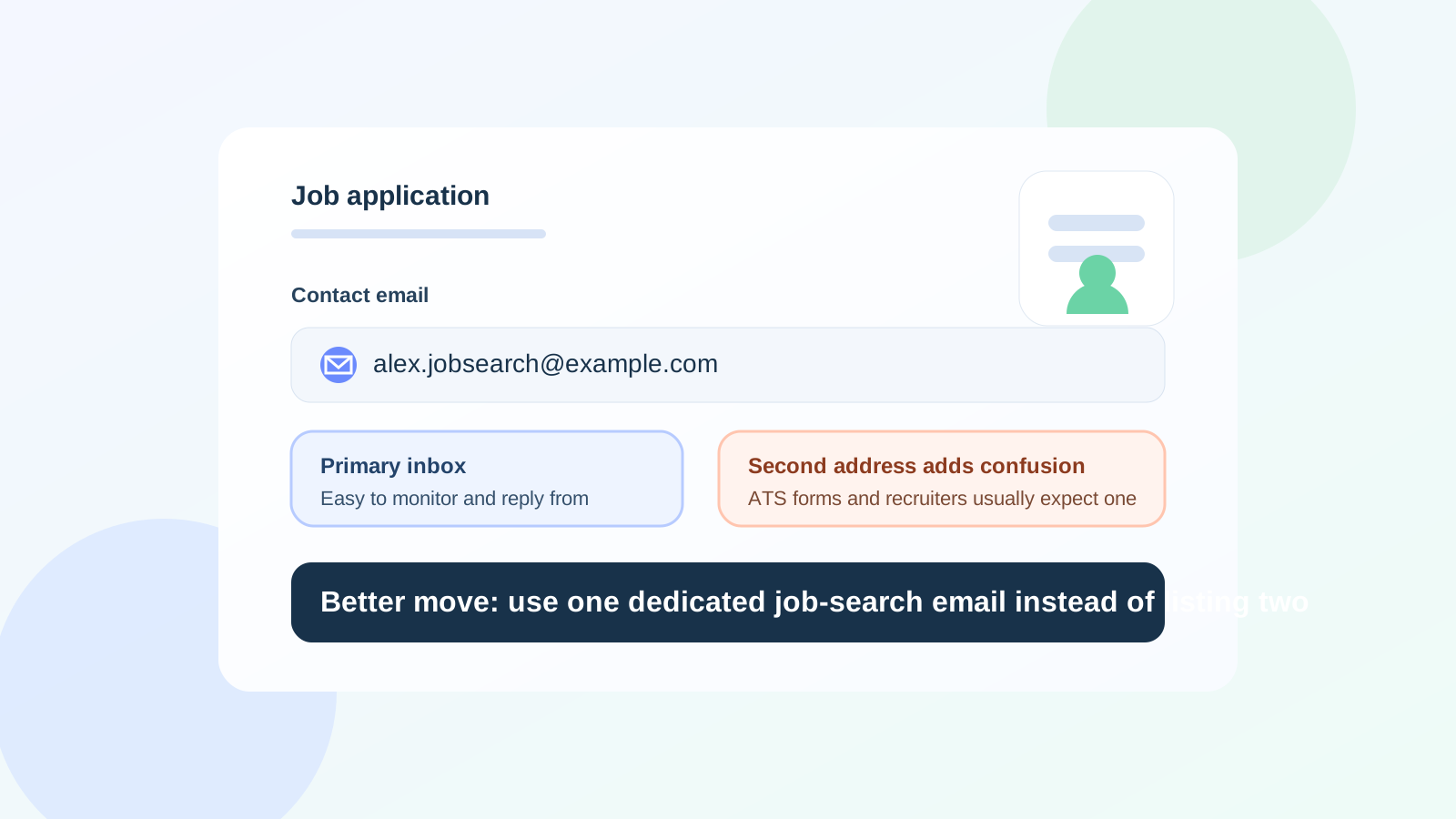
Usually no — most job applications should have one primary email address, not two. Listing two emails can confuse recruiters, break a clean follow-up trail, and create avoidable problems in applicant tracking systems that usually expect a single contact address.
If you want a backup, the better move is to use one dedicated job-search inbox that you actually monitor every day. That gives you the organization and privacy benefits people want from a second address without making your application look messy or making employers guess where to reply.
Why this question comes up
People usually think about adding two email addresses for good reasons. Maybe you want one personal inbox and one job-search inbox. Maybe you are worried about missing replies. Maybe you have an old address that still gets messages and a newer one that looks more professional. Or maybe you want a public-facing address for applications while keeping your main inbox private.
That instinct makes sense. Job searching can turn your inbox into chaos fast. Recruiters, applicant tracking systems, assessments, scheduling links, rejection notices, job alerts, and spammy follow-ups can pile up quickly. Wanting a backup or a buffer is normal.
The problem is that the application itself is usually the wrong place to express that strategy. Most employers are not looking for multiple ways to decide between your inboxes. They want one clear, reliable contact path.
Why two email addresses can create problems
1. Applicant tracking systems often expect one primary field
Many application forms are built around a single email field that becomes the record of contact. Even if a form gives you room elsewhere to mention another address, the system may still treat one email as the canonical one. That means messages may only go to one address anyway, while the second address adds clutter without adding reliability.
2. Recruiters may not know which one you prefer
If a recruiter sees two addresses, they may wonder which one you actually check most often. That is not a huge crisis, but it adds friction. Good application materials reduce uncertainty. You want the employer focused on your fit for the job, not on which inbox they should use.
3. You can split your communication history
If some messages land in one inbox and others land in another, your follow-up chain gets messy. Interview confirmations, assessment invites, or scheduling emails can become harder to track. That is especially annoying when you are applying to multiple roles at the same time.
4. It can look unfocused or overly complicated
Two email addresses do not automatically make you look unprofessional, but they can make a simple application feel busier than it needs to be. Most hiring teams prefer straightforward contact details: one name, one phone number if needed, one email, clear resume, done.
When two email addresses might make sense
There are a few narrow cases where using two addresses can be understandable, but even then it is usually better to handle the situation differently.
- You are transitioning away from an old address. If recruiters may still contact an older inbox from earlier applications, you might be tempted to list both.
- You have a domain-specific professional address and a broader fallback inbox. Maybe one is tied to your portfolio site and the other is your daily inbox.
- You are worried about deliverability. Some people want a second address in case one provider filters messages badly.
Even in those cases, the cleaner solution is usually to pick one primary inbox for current applications and forward or monitor the older one in the background. Employers do not need to manage that transition for you.
The better alternative: one dedicated job-search email
If your real goal is privacy, organization, or spam control, use one dedicated email address for job searching instead of listing two. That is the sweet spot for most people.
A dedicated job-search inbox gives you several advantages:
- You keep recruiter traffic separate from your personal inbox.
- You reduce the chance of missing interview messages in a crowded main account.
- You make follow-up easier because every application-related message lives in one place.
- You can filter job-board spam, newsletters, and automated alerts more cleanly.
- You keep one polished contact address across your resume, cover letter, and application forms.
This is where a privacy-oriented workflow helps. Instead of scattering two visible addresses across applications, you can use one purpose-built inbox or alias strategy and keep the rest of your email life separate. If you already use Anonibox or another controlled alias setup to segment signups, that kind of structure is far cleaner than asking every employer to choose between two addresses.
What employers usually expect instead
On most job applications, employers expect one address that meets three basic tests:
- It looks professional enough — not necessarily fancy, just not sloppy or joke-based.
- You actually monitor it — because hiring timelines can move quickly.
- You can reply from it consistently — so the conversation stays easy to follow.
If one email can do those three things, you are covered. You do not get extra points for giving a second option, and in many cases you only increase the odds of confusion.
Should you ever put the second address elsewhere?
If you truly need to mention a second email, do it carefully and only when there is a specific reason. For example, if you are corresponding directly with a recruiter and need to explain that an old inbox still receives mail, you can mention that in a follow-up message. That is different from putting two addresses front and center in every application.
Another option is to update your resume, cover letter, LinkedIn profile, and application forms so they all use the same current address. Consistency usually solves the problem before it starts.
What about using one main email plus an alias?
This is often a smarter approach than listing two separate inboxes. An alias lets you present one clean contact point while keeping better control behind the scenes. You still want the employer to see one stable email address, but your own system can stay more flexible.
For example, a job-search alias can help you:
- spot which messages are tied to applications,
- filter or label recruiting mail automatically,
- change your workflow later without changing the contact address you already gave out, and
- reduce exposure of your main personal inbox during a long search.
The key distinction is simple: an alias can support a one-address experience, while listing two visible addresses creates a two-destination problem for the employer.
Common situations and the best move
You have a personal inbox and a newer job-search inbox
Use the job-search inbox on current applications. Keep the personal inbox for older threads only if needed, and forward anything important so you do not have to check both constantly.
Your old email is still on past resumes online
Do not list both on new applications just because old versions may still exist somewhere. Update what you control and keep monitoring the older inbox during the transition period.
You worry about missing replies
Fix that with notifications, rules, forwarding, and daily checking habits — not by making employers choose between two email addresses.
You want privacy from job-board spam
Use one separate job-search email or alias instead of two public-facing addresses. That gives you more control with less mess.
What to do if an application form allows extra contact details
If a form includes optional notes or profile fields, resist the urge to over-explain. More detail is not always more helpful. Unless there is a clear reason, stick to one phone number and one email address. Application materials should reduce decision friction, not increase it.
If you absolutely must clarify a contact preference, keep it short. Something like “Preferred contact: alex.jobsearch@example.com” is cleaner than presenting two equal addresses without guidance.
A simple checklist before you submit
- Is the email professional and easy to read?
- Do you check it at least daily?
- Does it match the address on your resume and cover letter?
- Can you reply from it without exposing an inbox you would rather keep private?
- Have you set up filters or folders so recruiter mail does not get lost?
If the answer is yes, one address is enough.
Final answer
In most cases, you should not put two email addresses on job applications. One primary, well-managed address is clearer for employers, easier for applicant tracking systems, and better for your own follow-up.
If you want the benefits of a second address, build that on your side with a dedicated job-search inbox, forwarding, or an alias workflow — not by giving hiring teams two different inboxes to sort out. Clear contact details make applications easier for everyone, and they help you look organized without giving up control of your privacy.