Usually only if you will keep that college inbox active, accessible, and closely monitored through negotiation and onboarding. If there is any real chance you could lose access after graduation or simply stop checking it, use a personal inbox you control instead.
For most job offers, a stable personal address is safer than a school email. Offer letters, benefits forms, background-check links, and onboarding messages are too important to leave in an account that may expire, fill up, or get ignored once school life changes.
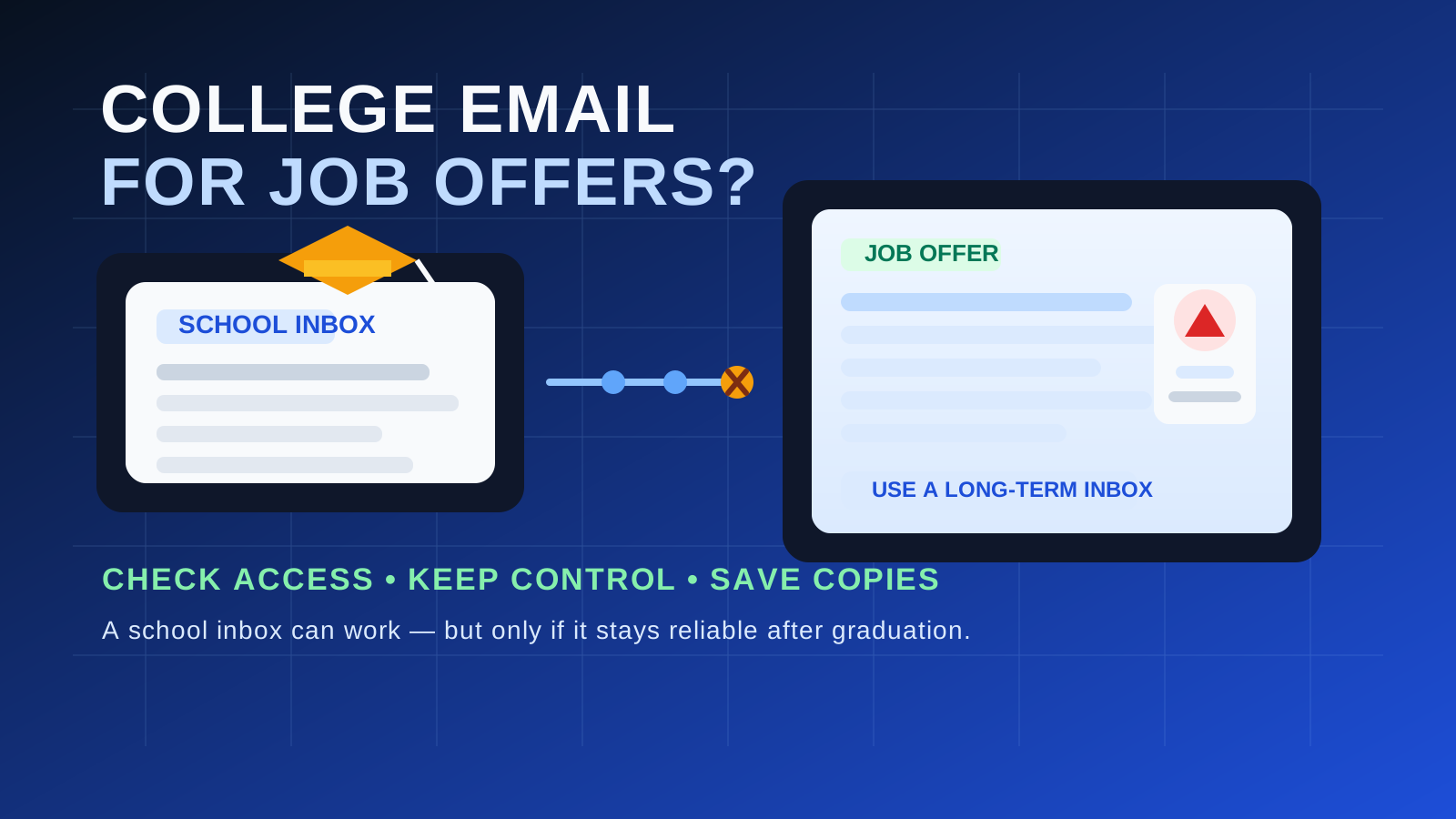
That is the real issue behind the question should you use your college email for job offers. A school address may feel official, tidy, and easy to trust. It can even make sense earlier in the process, especially for campus recruiting, student programs, and internship applications. But a job offer is not just another recruiter follow-up. It can trigger salary discussions, e-signature links, deadline reminders, tax paperwork, background-check instructions, and first-week onboarding messages. At that stage, continuity matters more than student branding.
In other words, the question is not whether a college email can receive a job offer. Of course it can. The question is whether it is the smartest place to anchor a high-stakes conversation that may stretch beyond graduation, finals, moving dates, or the point where you naturally stop living in your school inbox. For many people, the honest answer is no.
Why people consider using a college email for job offers
The idea is not irrational. A college inbox can feel safer or more professional than an older personal address, especially if you are still in school or recently graduated.
- It looks credible. A .edu or school domain can signal that you are a real student or recent graduate.
- It may already be tied to the application process. If you applied through campus recruiting, that may be the address the employer already has.
- It feels organized. Some students keep school and career messages together because they are checking that inbox anyway.
- It may seem more polished than an old personal address. If your personal inbox has an outdated username, the college address can look cleaner at first glance.
Those points are understandable, but job offers raise a different set of risks than applications, networking, or event signups. What matters now is not just whether the address looks acceptable. What matters is whether it will keep working smoothly when the stakes rise.
Why the offer stage is different
Earlier in a search, you can sometimes get away with a less-than-perfect inbox. A missed webinar invite or a noisy recruiting newsletter is annoying, but it is not catastrophic. Offer-stage email is different.
Once an employer decides they want to hire you, the inbox becomes part of a serious workflow. You may receive:
- formal offer letters or compensation summaries
- deadline reminders to accept or negotiate
- background-check instructions
- identity verification or onboarding links
- benefits enrollment details
- equipment shipping questions or start-date logistics
- messages from HR, recruiting, and your future manager all at once
That means your email needs to be reliable, durable, easy to monitor, and firmly under your own control. A school inbox does not always meet that standard, even when it worked fine earlier in the process.
When a college email can be okay for job offers
There are cases where a college address is perfectly workable.
- You know the account will stay active for years. Some schools give graduates long-term or permanent access.
- You still check it constantly. If it is part of your daily routine and you do not miss messages there, that lowers the risk.
- The employer already knows you through a campus program. In some university-linked hiring pipelines, the school address feels natural.
- You are prepared to transition later. You can receive the offer there and then move the conversation to a personal address before onboarding gets complicated.
If all of those conditions are true, a college email is not automatically a bad choice. The problem is that many people assume those conditions are true without checking them carefully.
The biggest risks of using a college email for job offers
1. You may lose access sooner than you expect
This is the biggest reason to be cautious. School email policies vary widely. Some universities let graduates keep their accounts indefinitely. Others reduce access after graduation, after a set number of months, or after inactivity. Even when the mailbox stays technically alive, forwarding rules, storage limits, or login expectations may change.
Job offers do not always move quickly. You might accept a role and then hear from HR weeks later. A background-check vendor may write after graduation. A start date may shift. If your school account changes right in the middle of that timeline, you have created a problem for no good reason.
2. School inboxes are often cluttered
College email is usually not a clean professional channel. It tends to collect club updates, campus announcements, learning-platform notifications, class logistics, financial-aid reminders, department newsletters, and a lot of low-priority noise.
That clutter matters because job-offer messages are easy to miss when they do not look dramatic at first glance. A routine subject line from HR can be much more important than it looks.
3. You do not fully control the environment
A school address feels personal because you use it personally, but it is still institution-managed. The university controls the account systems, the storage, the account-recovery path, and sometimes the security rules. That is very different from an inbox you opened and manage yourself.
When the messages involve salary, legal forms, and onboarding, depending on a third party’s account policy is not ideal.
4. It can tie your professional identity to a temporary phase
A college address signals something true about you: you are or recently were a student. That may be helpful early on. But a job offer is often the transition point out of that phase. A long-term professional inbox should move with you into your next role, not stay tied to a chapter that may be ending.
5. You may stop checking it once life changes
Even if the account remains active, behavior changes. After finals, graduation, relocation, or the start of a new job, many people naturally stop living in their school inbox. That is normal. It is also exactly why the offer stage should live in an inbox you expect to keep watching.
How this compares with other email choices
Personal inbox
For most people, this is the safest default. A clean personal address is easier to keep long term, easier to update across employers, and less likely to disappear during transitions.
Custom domain email
If you own the domain yourself and actually maintain it well, a custom-domain inbox can work nicely. It gives you control without tying you to a school or employer.
Temporary email
Temporary email has its place, but this is not it. A service like Anonibox can be useful for low-trust signups, gated downloads, or noisy early-stage research. It is not the right home for offer letters, onboarding steps, or benefits paperwork.
Work email
Using a current employer address for job offers is usually worse than using a school account. At least the college inbox is not owned by the company you may be leaving. Still, that does not make the school inbox the best option. It just means there are even worse ones.
A practical rule of thumb
If you would feel uneasy losing access to that mailbox tomorrow, do not use it for job offers.
That simple rule solves most of the debate. If the school could change the account, if you might ignore it after graduation, or if the whole setup feels temporary, move the conversation to a more durable address before it matters.
What to do if the employer already sent the offer to your college email
You do not need to panic or restart the process. If the offer is already in your school inbox, you can clean this up.
- Reply promptly. Do not create delay just because you want to change addresses.
- Share a new primary contact email. Keep it simple: say you would like future HR and onboarding communication sent to a different address.
- Forward or save important documents. Keep copies of the offer letter, attachments, and deadlines in your own files.
- Update any portals if possible. If the company uses an applicant or onboarding system, change your email there too.
Most recruiters and HR teams will not care which stable address you use, as long as the change is clear and early.
Best practices if you do use a college email temporarily
If you decide to keep using it for a short stretch, reduce the risk.
- Check your school’s account-retention policy now, not later.
- Turn on forwarding if your school allows it.
- Watch spam and clutter folders closely.
- Save documents outside the mailbox.
- Move the thread to a personal address before onboarding becomes busy.
Think of the college inbox as a temporary bridge at most, not your permanent offer-stage home.
When using a college email actually helps
There are a few scenarios where it can still be useful enough to justify.
- You are accepting an offer from a school-linked campus recruiting program.
- You are still an active student and the employer expects school affiliation to be visible.
- Your personal inbox is genuinely worse right now and you are actively migrating to a better one.
Even then, the smart move is usually to shift to a long-term address as soon as the offer becomes real.
Common mistakes to avoid
- Assuming all schools keep email forever. Many do not.
- Using the college address just because it looks more official. Official-looking is not the same as durable.
- Forgetting that onboarding can outlast graduation.
- Leaving everything in one crowded school inbox.
- Waiting until a problem happens before changing addresses.
Final answer
You can use your college email for job offers, but it is only a good idea when you truly control the timeline and trust the account to stay active. For most people, a stable personal inbox is the safer, cleaner choice.
Offer-stage communication is too important to leave in an address that may become inactive, cluttered, or irrelevant as soon as school life changes. If you want the easiest long-term setup, use a personal inbox you own, keep copies of key documents, and move away from the college address before onboarding gets complicated.