Usually not for the actual screening stage. A burner email can help you separate early recruiting traffic, but once a background check begins, you usually want a stable inbox you control and monitor closely.
The safest approach is to use an address that protects your privacy without disappearing mid-process. That can be a separate long-term inbox, an alias you control, or another reliable account reserved for job-search admin. A true throwaway or neglected burner address is where people get into trouble.
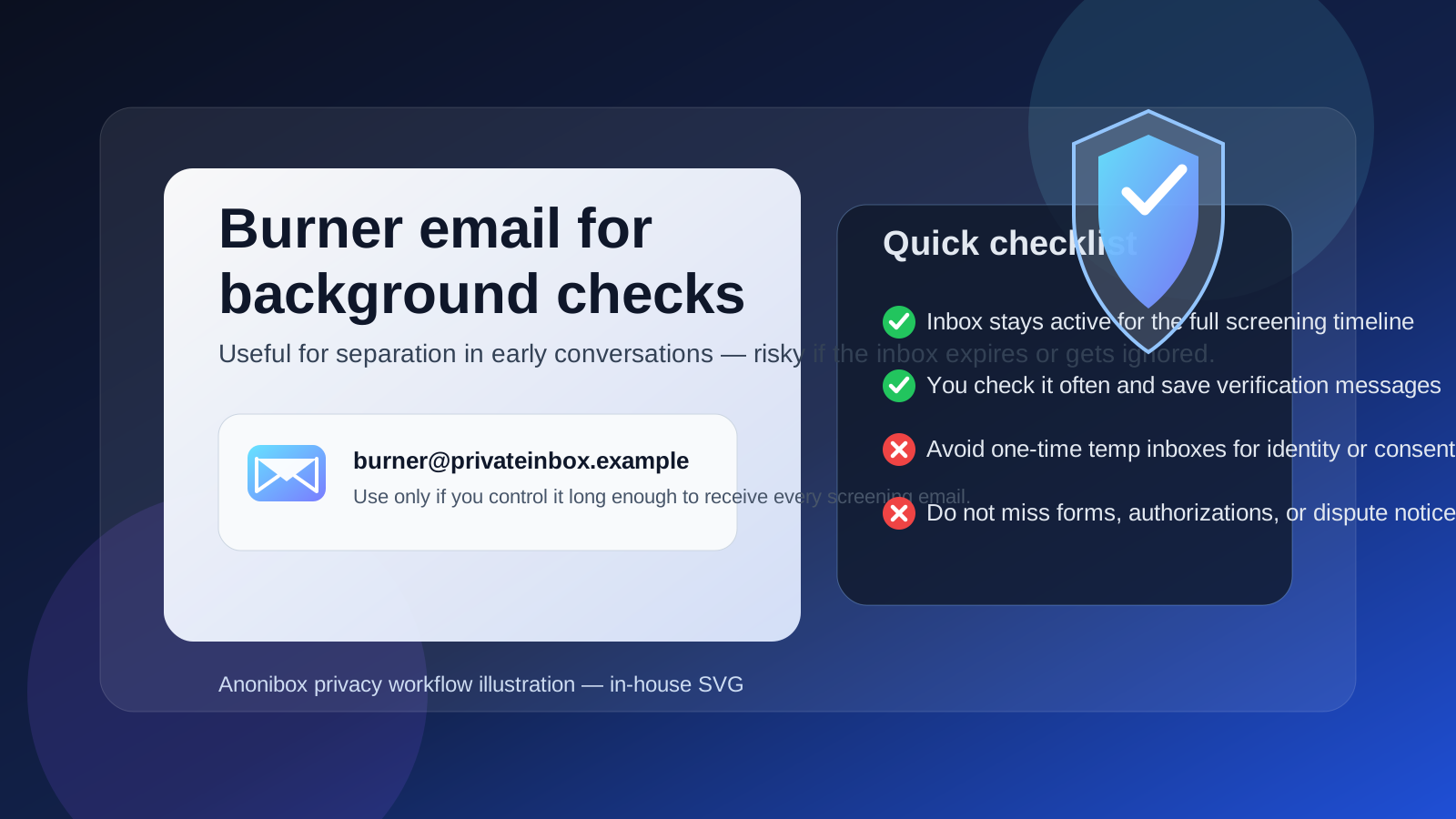
What people mean by a burner email in this context
“Burner email” can mean a few different things, and that difference matters.
- Temporary one-time inbox: useful for low-stakes signups, but risky for anything that may require follow-up over several days or weeks.
- Secondary long-term inbox: a separate address you intentionally keep for recruiting, hiring, or vendor communication.
- Alias or forwarding address: an extra address that routes into a main inbox you already manage.
For background checks, the first option is usually the weakest. The second and third can be perfectly reasonable if you stay organized and retain access for the full screening timeline.
Why background checks are different from early job applications
A background check usually happens later in the hiring process, when the stakes are higher and the workflow becomes more administrative. Instead of a simple “thanks for applying” email, you may receive:
- authorization forms, consent notices, and disclosure documents
- identity-verification instructions
- requests to confirm addresses, employers, or education history
- links to secure candidate portals
- follow-ups about missing information
- status updates or dispute instructions if something needs correction
If those messages land in an inbox you rarely check, stop forwarding correctly, or lose access to, the process can slow down fast. That is why a burner email can be a privacy tool in some cases, but it is not automatically a good background-check email.
When a burner email can make sense
A burner email can be reasonable if it is really a controlled secondary inbox, not an expiring one-time address. In practical terms, it may make sense when:
- you want to keep screening traffic out of your personal inbox
- you are job searching discreetly and do not want all hiring messages mixed with everyday mail
- you want one inbox dedicated to recruiting, onboarding, and verification admin
- you expect multiple third-party vendors to contact you during a search and want cleaner tracking
In that version of the workflow, the “burner” is really more like a compartmentalized workstream. It is private, intentional, and easy to monitor.
When a burner email becomes a bad idea
It becomes a bad idea when the inbox is disposable in the literal sense. Background checks often move slower than candidates expect. A form can arrive two hours after the offer call, then another request can arrive several business days later, then a clarification email may show up after that.
A burner inbox is risky if:
- it expires automatically or could disappear without warning
- you do not check it multiple times per day during active screening
- you cannot recover the account easily
- important messages are likely to be filtered, hidden, or lost
- you plan to abandon it before the employer and screening vendor are fully done
That is the core problem: background checks are less about one-time verification and more about continuity. Missed consent forms or identity steps do not just create inbox clutter. They can delay hiring.
Burner email vs temporary email vs separate email
These terms overlap, but they are not identical.
Temporary email
A temporary inbox is designed for quick, disposable access. That is why it is usually a poor fit for official screening steps. If the site or vendor sends a later follow-up, you may no longer have the address.
Burner email
A burner email can mean temporary, but many people use the phrase more loosely to mean “an inbox I do not use for my main life.” That version can work if you keep control of it.
Separate email
A separate email is often the best middle ground. It gives you privacy, segmentation, and cleaner record-keeping without the short-lifespan risk of a true disposable inbox.
If you like privacy-first workflows, this is usually where something like Anonibox fits naturally: not as a magical guarantee, but as part of a broader habit of separating low-stakes signups from the inboxes you depend on for real follow-up.
The practical risks candidates underestimate
1. Missing time-sensitive forms
Some vendors send consent links that you need to complete quickly. If you wait too long, the process may stall or the employer may assume you lost interest.
2. Losing your paper trail
Background checks can involve multiple parties: recruiter, employer, screening vendor, maybe even a document request portal. A burner inbox that you do not archive properly can make it harder to trace who asked for what and when.
3. Looking harder to reach
Most employers care more about responsiveness than about which privacy tool you used. But if your chosen inbox leads to missed emails, bounced replies, or confusion, that affects how smooth the process feels on their side.
4. Forgetting that disputes and corrections may arrive later
In some cases, you may need to review or correct information after the first screening email. If your burner inbox was only set up for the initial step, you may miss the part that actually matters.
A better workflow for privacy-conscious job seekers
If your goal is privacy without chaos, use this sequence instead:
- Use a separate job-search inbox early. Keep applications, recruiter outreach, and screening notices out of your main personal inbox.
- Make sure the inbox is long-term and recoverable. You should be able to access it throughout the full hiring cycle.
- Check it frequently during active screening. Morning, midday, and end of day is a practical baseline.
- Save important emails locally or star them immediately. Consent forms, portal links, and vendor contact details should never be left to chance.
- Use the same stable address once the formal process starts. Avoid switching inboxes mid-check unless you are clearly told it is fine.
This gives you most of the privacy benefit people want from a burner email, without the biggest operational risk.
What if a screening vendor already has your burner email?
If the process already started with that address, do not panic. The main question is whether the inbox is stable.
- If you still fully control it and will keep it active, you can usually continue using it.
- If it was truly disposable or you expect to stop checking it, move quickly and ask whether the contact email can be updated.
- If the employer is coordinating the process, tell them clearly and politely that you want to make sure you do not miss any screening messages.
The fix is usually straightforward when you handle it early. Problems grow when candidates realize too late that they no longer trust the inbox they provided.
Red flags to watch for
A privacy-conscious setup is smart, but it should not make you ignore warning signs. Be cautious if a supposed screening email:
- comes from a domain that does not match the employer or a recognizable vendor
- asks for unnecessary sensitive data directly over plain email
- pushes you to click rushed links without context
- contains poor formatting, generic language, or inconsistent company names
- demands payment for the background check
Using a burner or separate email does not protect you from every scam. You still need to verify who is contacting you and what they are asking you to do.
Bottom line
So, should you use a burner email for background checks? Usually no if “burner” means disposable, expiring, or easy to forget. Maybe yes if it really means a separate, stable inbox that you control from start to finish.
For most people, the best answer is not a one-time throwaway address. It is a reliable privacy buffer: an inbox that keeps background-check messages separate from daily life, stays accessible for the full process, and helps you respond quickly if a vendor needs anything else.