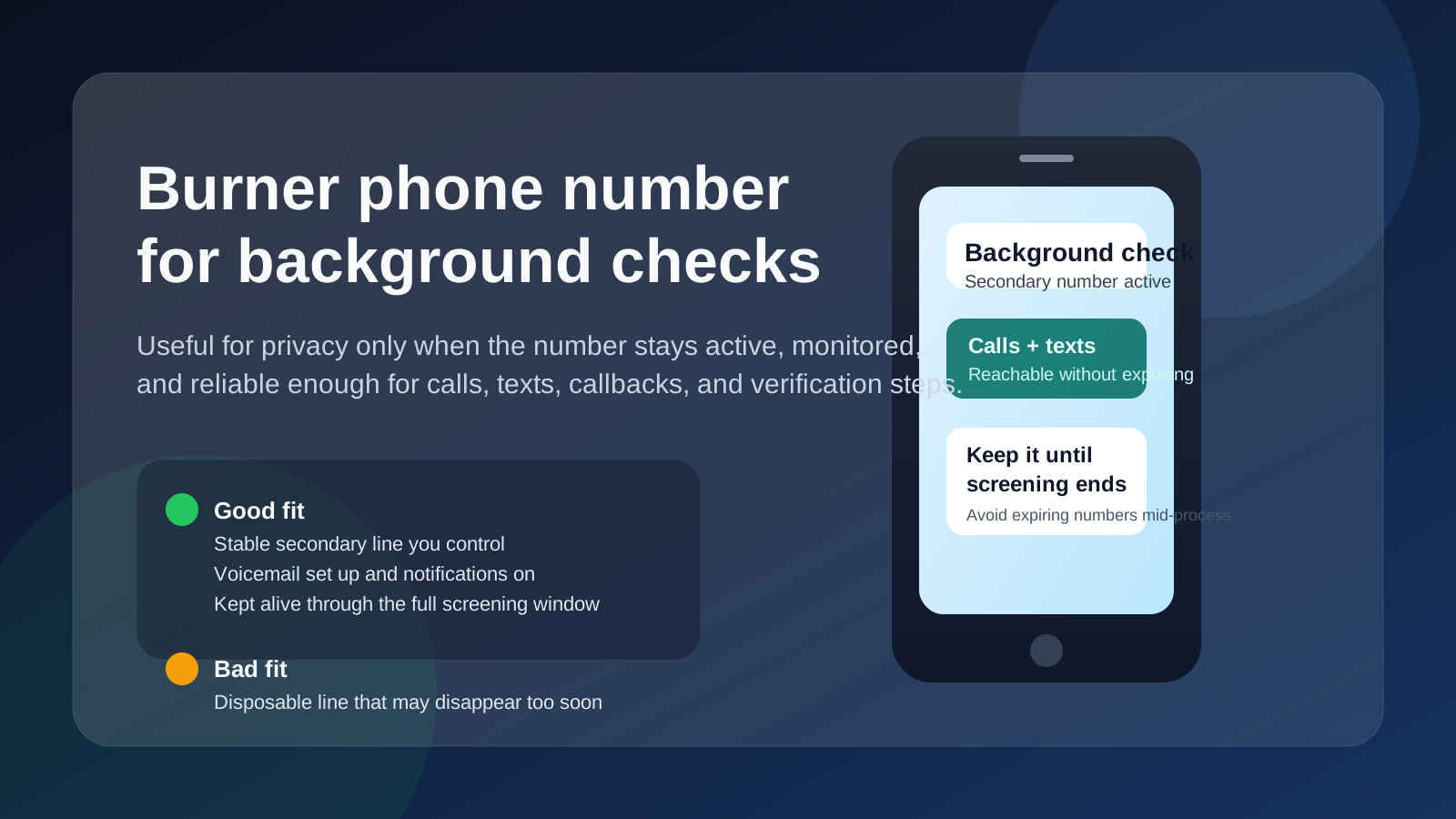
Yes—a burner phone number can be a smart privacy move for background checks if it stays active, receives calls and texts reliably, and is monitored every day until the screening process is over.
It becomes a bad idea when “burner” means disposable, short-lived, or easy to miss. Background checks often involve callbacks, verification links, scheduling questions, and follow-up from third-party screeners, so the number has to be dependable even if you do not want to share your main personal line.
That is the real answer to should you use a burner phone number for background checks. Privacy matters, especially when you are sharing personal details late in a hiring process. But reliability matters just as much. If your number expires, filters unknown callers too aggressively, or sits on a phone you rarely check, you can create exactly the kind of delay you were trying to avoid.
What people usually mean by a burner phone number
The phrase “burner phone number” covers a few different setups, and the distinction matters.
- Short-term disposable number: something you expect to use briefly and then abandon.
- Secondary line you control: a separate number on a second SIM, app, or service that is not your main everyday number.
- Privacy buffer number: a number used only for job-search activity so recruiters and screeners do not get your primary personal line.
For background checks, the second and third versions are usually fine. The first one is where trouble starts. A background check can feel like a quick final step, but in practice it may stretch across several days or longer if references are delayed, forms need correction, or the screening vendor reaches out again.
Why someone would want a burner number for background checks
The motivation is not weird at all. By the time background checks begin, you may already have shared your information with recruiters, interviewers, scheduling tools, and a screening company you have never dealt with before. Wanting a little separation is reasonable.
A burner or secondary number can help because it lets you:
- Protect your main personal number from being copied into more databases than necessary.
- Keep job-search traffic separate from family, friends, and day-to-day calls.
- Reduce long-term spam risk if the number later ends up in follow-up campaigns or recruiter outreach lists.
- Control voicemail and notifications with a job-search-specific setup.
- Retire the number later if it starts attracting junk calls after the hiring process is done.
That is the same logic many people use with email. A compartment can be useful. With email, a tool like Anonibox can help you keep early-stage signups and inbox clutter separate. With background-check phone contact, the principle is similar—but the key difference is that a phone number at this stage should not disappear before the process is finished.
Where a burner phone number can go wrong
This is the part people underestimate. Background checks are not just a single “we may contact you” form. Depending on the employer and screening vendor, you may get:
- calls from an unknown number to confirm details
- text messages with next-step reminders
- requests to correct a form or resend a document
- secure portal links that are easier to notice when alerts are working properly
- time-sensitive follow-up if something does not match the initial submission
If your burner number is unreliable, you can miss those moments. The biggest risks are:
1. The number expires too fast
A true throwaway number is the worst fit for background checks. If it is only meant to live for a day or two, you are building failure into the process.
2. You stop checking it after the first message
Some job seekers assume the important communication will happen by email only. Often it does not. Screeners may call or text, especially when they need something quickly.
3. Spam blocking gets overaggressive
If the app or device shunts unfamiliar calls into silence, you might miss a legitimate screening vendor. That does not mean you must answer every unknown number instantly, but you do need a system for reviewing missed calls and voicemail quickly.
4. The number looks reachable but is not
A line that technically exists but cannot receive short codes, voicemail, or call-backs cleanly is a headache. Background checks are a bad time to discover those limitations.
So should you use one?
Usually yes—if your burner number behaves like a stable secondary number, not a vanishing throwaway.
That is the most practical rule. If the number works normally, stays under your control, and is monitored closely, it can be a smart privacy layer. If it is flaky, temporary, or treated as disposable in the literal sense, your main number may actually be safer than an unreliable privacy workaround.
When a burner number is a good fit for background checks
- You want to avoid giving your primary personal number to a third-party screening vendor.
- You are still employed and do not want hiring-related calls mixed into your everyday line.
- You can keep the number active throughout the entire screening and onboarding window.
- You have tested that it can receive real calls, voicemail, and texts without issue.
- You are disciplined enough to monitor it daily, including missed calls and voicemails.
When it is a bad fit
- The number will expire soon or may be recycled quickly.
- You only plan to look at it once in a while.
- The service is known for poor call reliability or delayed text delivery.
- You are using it mainly because you do not trust the employer at all.
- You are deep in a time-sensitive hiring process and cannot afford communication gaps.
That last point matters. If you think the employer or screener is shady enough that you cannot trust them with a stable contact method, the bigger question may be whether you should continue at all—not whether a flimsier number solves the problem.
Best practices if you decide to use a burner number
Keep it active longer than you think you need to
Do not shut it down the minute you submit the screening form. Keep it live until the background check is closed and you are comfortably past any follow-up stage.
Set up voicemail immediately
A clean professional greeting matters. If a screener cannot reach you live, voicemail is often the backup that keeps things moving.
Test it before you use it
Call it, text it, leave a voicemail, and make sure alerts actually reach you. Testing takes five minutes and can prevent an absurd amount of frustration later.
Check it daily
Not just notifications—open the app or device and look manually. Some filtered or delayed messages do not surface the way you expect.
Use one stable contact strategy across the process
If your application, interview scheduling, and background-check paperwork all point to different numbers, confusion can creep in. It is often better to choose one dedicated job-search number and stick with it than to keep swapping.
Burner number vs. separate number vs. virtual number
These terms overlap, but they are not identical.
- Separate number: usually the safest framing. It emphasizes organization and control rather than disposability.
- Virtual number: can work well if it is stable and supported properly.
- Burner number: useful phrase for privacy, but risky if you interpret it too literally and make the number temporary.
For background checks, the ideal setup is basically a stable separate number that happens to function as a privacy buffer. That is why the separate-phone and virtual-phone answers are often similar in spirit, while the true disposable-burner version is more dangerous.
What not to do
- Do not use a number you may abandon mid-process.
- Do not ignore unknown callers for days and assume email will cover everything.
- Do not rely on a line that cannot take voicemail cleanly.
- Do not pair a fragile phone setup with a fragile email setup at the same time.
- Do not treat privacy tools as permission to become unreachable.
A simple decision checklist
Before you put a burner number on background-check paperwork, ask:
- Will this number still exist and work next week?
- Can it receive calls, texts, and voicemail reliably?
- Will I actually monitor it every day?
- Am I using it for smart compartmentalization or just because it sounds disposable?
- Would a steady separate number serve me better than a truly temporary one?
If your answers are solid, using a burner-style secondary number can make sense. If not, choose a more stable contact method.
Final answer
A burner phone number can be a good choice for background checks only when it is stable enough to behave like a serious contact point. The privacy upside is real: you keep your main line out of one more vendor workflow and maintain better separation during a sensitive stage of hiring.
But background checks are not the place for a disappearing number. If you use one, treat it like an active professional line until the screening is done—tested, monitored, voicemail-ready, and kept alive long enough to catch every legitimate follow-up. That balance gives you privacy without turning the last stage of hiring into an avoidable communications mess.