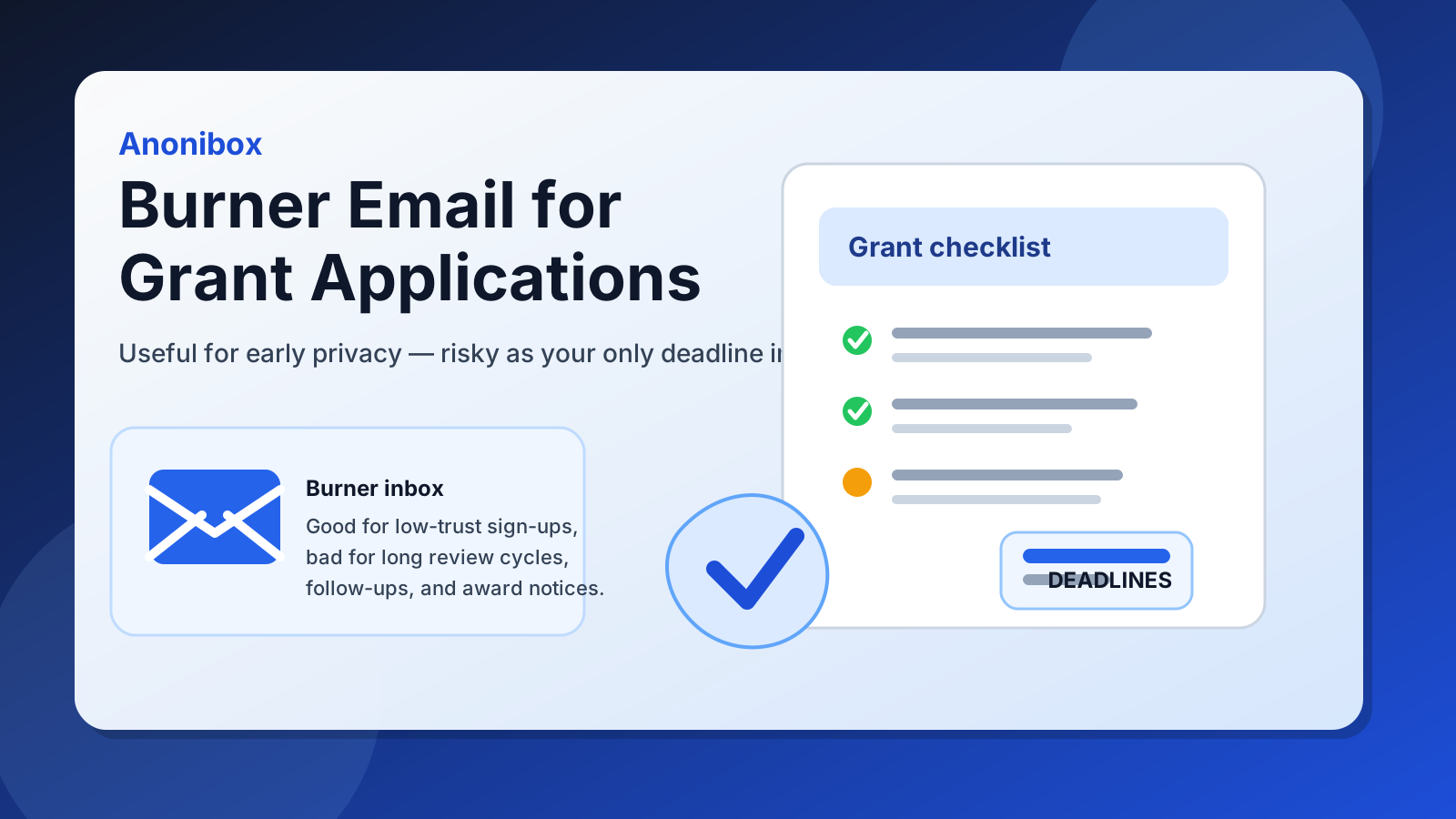
Usually, no — a burner email is not the best primary address for full grant applications. It can help with early research or low-trust sign-up forms, but most grant processes last too long and carry too many deadline-sensitive messages for a throwaway inbox to be your only contact point.
If you are asking should you use a burner email for grant applications, the practical answer is: use one only at the discovery stage if you need extra privacy, then switch to a stable inbox or alias before a real application, reviewer follow-up, interview, or award decision depends on it.
Why this question matters for grant applicants
Grant applications look simple from the outside, but the communication around them often stretches much longer than people expect. You may start with a quick eligibility check, then move into an information session, an account setup email, a portal invitation, clarification questions, deadline reminders, interview requests, revision requests, contract paperwork, and final award notifications. That is very different from a one-click newsletter sign-up.
Because of that, a burner address can solve one problem while creating another. It can reduce spam and keep your main inbox private, but it can also become a weak link if the address expires, stops receiving mail, or gets buried under too many short-term sign-ups. For grant work, missed messages are often far more expensive than unwanted marketing email.
What people usually mean by a burner email
A burner email is a short-lived address you use temporarily instead of your main inbox. People use burner inboxes for quick verifications, test registrations, download gates, and websites they do not fully trust yet. Services like Anonibox fit that early-stage use case because they help separate low-commitment sign-ups from the inbox you depend on every day.
That is not the same thing as a long-term application inbox. A stable secondary email or an email alias still gives you privacy, but it remains under your control for the full life of the process. In grant applications, that distinction matters a lot.
When a burner email can make sense
There are a few moments when a burner email can be useful around grant-related research.
1. Browsing funding databases and resource downloads
Some directories, webinars, playbooks, and prospecting tools ask for an email before they reveal lists of grants, application templates, or funding calendars. If you are only gathering information and you are not sure whether the source will market aggressively afterward, a burner address can be a sensible filter.
2. Testing a portal before you commit
Sometimes you want to see whether a platform is legitimate, whether the application workflow is clear, or what kinds of confirmation messages it sends before you tie it to your real working inbox. A temporary address can help for that first check.
3. Separating low-trust outreach from your real process
If a grant-related site looks useful but not especially polished, or if you are exploring a lot of third-party funding newsletters at once, a burner address can keep your primary inbox from becoming a long-term marketing target.
Those are all valid uses. The common theme is that they happen before the application becomes serious.
Why a burner email is risky for real grant applications
Once you move from research into an actual application, the case for a burner email gets much weaker.
Grant timelines are longer than people expect
Many grant cycles are not over in a day or a week. They can stretch across pre-submission questions, rolling clarifications, panel reviews, award decisions, revisions, contracting, and reporting setup. Even if the initial form only takes 20 minutes, the communication window can last for months.
You may need to respond quickly
Funders sometimes ask for one missing document, one corrected attachment, one budget clarification, or one eligibility confirmation with a short deadline. If that message lands in an inbox you no longer monitor closely, you can lose the opportunity for a preventable reason.
Account recovery matters
Application portals often depend on email for password resets, multi-step verification, or access links. If the inbox is disposable, expired, or hard to revisit later, a simple login problem can turn into a serious blocker near the deadline.
Collaborative applications add complexity
Some grants involve multiple people: founders, finance staff, nonprofit administrators, researchers, or program partners. A burner inbox is usually a poor foundation when more than one person may need continuity or when handoffs could happen.
Award and compliance emails are too important to gamble on
If you are selected, the follow-up can include legal terms, bank-verification steps, tax paperwork, reporting expectations, or onboarding calls. That is not the moment to depend on a throwaway address that was originally created to avoid promotional email.
A better approach: privacy by stage
You do not have to choose between total exposure and total disposability. The better system is to match your email setup to the stage of the grant process.
Stage 1: Research and low-commitment sign-ups
Use a burner inbox if you want. This is the safest place for it: webinar registrations, gated resource downloads, funding databases, trend reports, or quick portal tests.
Stage 2: Active application work
Switch to a stable separate inbox or a reliable alias that forwards into a mailbox you already monitor. That gives you privacy without risking continuity. If the application matters, the inbox should be durable enough to survive revisions, follow-ups, and schedule changes.
Stage 3: Award, contracting, and ongoing administration
Use a long-term address your team controls and checks consistently. If grant communication could affect finances, compliance, reporting, or future renewals, treat it like operational infrastructure rather than a convenience setting.
Burner email vs. alias vs. separate inbox
If you are trying to choose the right privacy tool, here is the practical distinction:
- Burner email: best for quick, low-trust, low-stakes interactions; weakest for continuity.
- Email alias: good when you want privacy and filtering but still need all mail delivered to a monitored inbox.
- Separate dedicated inbox: best when grant work needs clear organization, team ownership, and long-term access.
For most serious grant applicants, the alias or separate inbox is the smarter middle ground. It protects your main address without putting deadlines at risk.
A quick decision checklist
Before you use a burner address, ask yourself:
- Is this just a resource download or the start of a real application?
- Could I still need messages from this source in one month, three months, or six months?
- Will I need password resets or portal access later?
- Could a missed clarification email cost me the opportunity?
- Would an alias or separate inbox give me the same privacy with less risk?
If the honest answer is that the relationship might continue or the stakes are meaningful, a burner address is probably the wrong tool.
Common mistakes to avoid
Using a throwaway address for the final submission
This is the biggest one. A burner inbox may feel tidy at the moment you submit, but the real risk shows up later when the important message arrives after you stopped watching that address.
Forgetting where you used which address
If you apply for several grants at once, weak inbox tracking becomes a problem fast. Keep a simple note of which email was used for each application so you are not guessing during follow-up.
Optimizing for spam instead of reliability
Inbox clutter is annoying, but missing a funder email is worse. For serious opportunities, reliability should win.
Assuming all privacy tools solve the same problem
They do not. A burner inbox reduces exposure. An alias reduces exposure and preserves continuity. A separate inbox reduces exposure, preserves continuity, and improves organization. Pick the tool that matches the job.
Example scenarios
Good use: you want to download a grant-readiness checklist from a third-party website you have never used before. A burner email is reasonable.
Borderline use: you are creating a portal account to see whether a funding opportunity is worth the effort. A burner address can be okay briefly, but switch before you submit anything important.
Bad use: you submit a full grant application, upload supporting documents, and rely on a disposable inbox for deadline reminders and clarification requests. That creates unnecessary risk.
So, should you use a burner email for grant applications?
Usually only at the edges of the process, not at the center of it. A burner email can be useful for early research, low-trust downloads, and quick sign-up experiments. But for real grant applications, a stable address is usually the better choice because the process is longer, more collaborative, and more deadline-sensitive than a typical temporary-email use case.
If you want privacy, the strongest practical setup is simple: use a burner inbox for lightweight discovery, then move serious grant communication to a reliable alias or separate inbox you will still be monitoring when the important message arrives.