Yes — for most applicants, using a separate email for medical school applications is a smart move. The process is long, deadline-heavy, and spread across primary applications, secondary essays, interview scheduling, portal alerts, and waitlist updates, so keeping everything in one dedicated inbox usually helps more than it hurts.
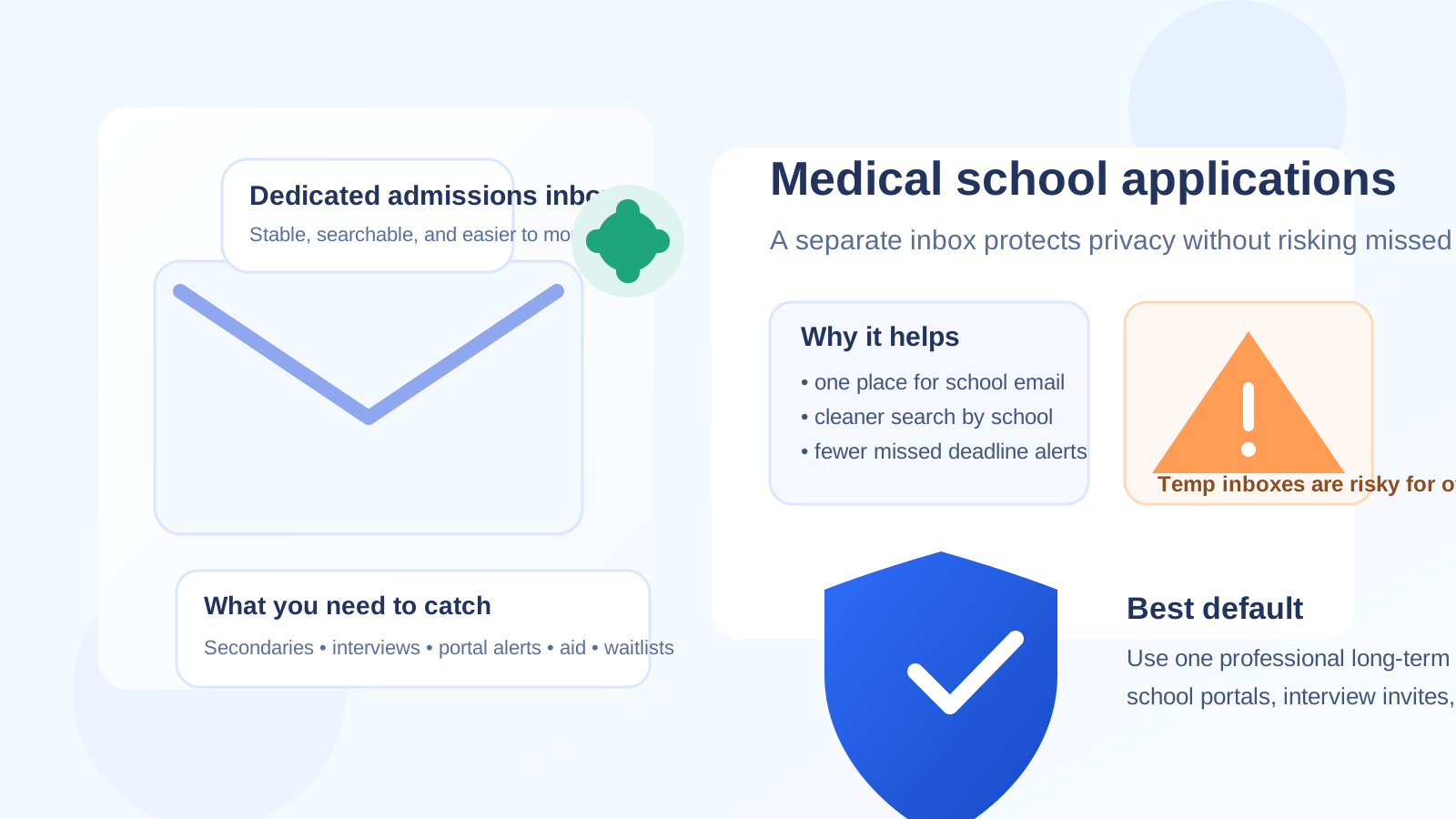
A separate inbox gives you better organization without the instability of a disposable address. It lets you keep school-related messages easy to find, lowers the chance that important admissions emails get buried in your personal inbox, and makes it easier to manage your privacy without risking missed deadlines.
Why medical school applications are different from ordinary sign-ups
Medical school applications are not like downloading a brochure or joining a generic email list. They usually involve a long chain of communication that can stretch for months. You may deal with a primary application service, individual school portals, secondary application requests, interview invitations, financial-aid notices, document reminders, and post-interview updates. That makes email reliability a lot more important than it is for a quick low-stakes signup.
If you are applying through systems like AMCAS, AACOMAS, or TMDSAS, you are not just sending one form and waiting. You are managing a process with multiple deadlines, multiple schools, and multiple chances for a small inbox mistake to create a bigger problem. A separate email helps because it gives the application process its own clean lane.
Short answer: a dedicated inbox is usually the best default
If you want the practical answer, here it is: use a stable separate email account, not your main personal inbox and not a throwaway inbox. A dedicated address gives you the privacy and organization benefits people often want, without the risk that comes from using a temporary inbox for something important.
That balance matters. Medical school applications are exactly the kind of workflow where you want separation, but you also need continuity. You may still be checking the same threads when interview season starts, when financial-aid questions arrive, or when a school follows up later in the cycle.
What a separate email helps you manage
- Primary application updates: confirmations, status notices, and service messages.
- Secondary applications: prompts, fee reminders, and submission confirmations.
- Interview scheduling: date options, virtual meeting links, travel details, and reschedule messages.
- Portal alerts: incomplete file warnings, missing-document notices, and decision updates.
- Financial-aid and scholarship messages: forms, deadlines, and follow-up requests.
- School-specific newsletters: useful sometimes, noisy often, but easier to manage when separate from your daily inbox.
All of that is easier to track when it is not mixed with bills, shopping receipts, social notifications, group chats, and everything else already competing for your attention.
Why not use your main personal email?
You certainly can use your personal email if it is stable, professional, and well organized. Plenty of applicants do. But there are a few reasons a separate inbox is often better.
First, it reduces clutter. A medical school cycle can generate a surprising volume of messages, especially if you apply broadly. Second, it gives you more control over notifications, folders, and search. Third, it protects some privacy. You are not giving every school and every connected service the same inbox you use for everything else in your life.
There is also a mental benefit. A dedicated inbox creates a clean boundary around a stressful process. When you open that account, you know exactly what you are there to check. That kind of focus helps when you are juggling essays, test prep, recommendation logistics, volunteering, research, and normal life at the same time.
Why a temporary or burner email is risky here
This is where a lot of people get tripped up. Temporary inboxes are useful for low-stakes signups, but medical school applications are usually not a good place to rely on them. The problem is not privacy — privacy is a valid concern. The problem is continuity.
A temporary inbox may expire, become hard to monitor, or create confusion later when a school contacts you from a different system than the one you expected. That is a real risk if you are waiting for interview options, decision letters, or requests for extra documents. Missing one message can matter.
A burner-style workflow is better suited to things like browsing forums, downloading one-off resources, or testing a site you do not fully trust yet. A tool like Anonibox can be useful for those low-stakes privacy moments, such as a brochure download or an information-session signup you do not want tied to your main address right away. But for the actual medical school application process, a long-lived separate inbox is usually the safer choice.
What about an email alias instead of a full separate account?
An alias can work if you already have a setup you trust and you are confident you will keep it organized. For some applicants, an alias is a nice middle ground: it protects the primary address, can help with filtering, and still lands inside an inbox they already monitor closely.
Still, a full separate account is often easier for high-volume application cycles. It creates a cleaner break, makes search and labeling simpler, and lowers the chance that admissions messages get mixed into unrelated threads. If you know you will be applying to many schools or you want a more obvious boundary, the full separate account is usually better.
How to set up a separate email for medical school applications
1. Choose a professional address format
Keep it simple. Ideally, use your real name or a close variation of it. Avoid nicknames, jokes, extra numbers, or anything that looks temporary. You want schools to see an address that looks normal, stable, and easy to trust.
2. Use a provider you can keep long term
This is not the place for an account you might abandon in two weeks. Pick an inbox you can access throughout the entire admissions cycle and beyond if needed.
3. Turn on notifications, but keep them manageable
You do not want to miss interview scheduling messages, but you also do not need to be interrupted by every marketing email. Use labels, filters, and VIP settings so the important stuff stands out.
4. Whitelist key senders and check spam regularly
Admissions systems sometimes send from automated addresses, and those messages can occasionally land in promotions or spam. Add important domains to contacts when possible and make spam-folder checks part of your routine during the cycle.
5. Use folders or labels by school
Create a simple system: one folder for each school, plus separate labels for secondaries, interviews, financial aid, and decisions if you want more detail. The goal is not to build a masterpiece. The goal is to make retrieval easy when you are tired and under deadline pressure.
6. Keep one consistent address across the real application workflow
Once you start using the dedicated email for official applications, stick with it. Consistency reduces confusion for both you and the schools.
Best practices during the application cycle
- Check the inbox every day during active parts of the cycle.
- Reply from the same address so threads stay consistent.
- Save important emails locally or in a notes system if they include interview details or deadlines.
- Keep the inbox professional with a clean signature and sensible display name.
- Do not reuse it for random promo signups once the cycle begins.
That last point matters. The whole benefit of a separate email for medical school applications is clarity. If you start using the same inbox for shopping coupons, webinar spam, or unrelated newsletters, you lose the advantage you created.
Mistakes to avoid
The most common mistake is treating an admissions workflow like a casual online signup. That leads people to use addresses that are too disposable, too messy, or too rarely checked.
Other avoidable mistakes include:
- Using a school email account that may expire or become inconvenient later.
- Using a work email that your employer can access or monitor.
- Switching addresses midway through the cycle unless you absolutely have to.
- Failing to check spam, promotions, or portal-generated senders.
- Letting multiple family members or advisors manage the inbox informally, which can create confusion.
If you ever do need to change addresses, do it carefully and update every relevant system, but it is much better to start with a stable setup so you do not need to change at all.
When a separate inbox is especially worth it
A dedicated medical school inbox is especially helpful if any of these apply to you:
- You are applying broadly to many schools.
- You want a cleaner boundary between personal life and admissions stress.
- You already get too much traffic in your main inbox.
- You are privacy-conscious and do not want your primary personal address shared widely.
- You want a more organized way to track secondaries, interviews, and school-specific follow-up.
In those situations, the upside is obvious: better focus, better searchability, better control, and less chance of missing something important.
Quick checklist
- Use a stable, professional email address.
- Keep it separate from your everyday inbox.
- Do not rely on a temporary inbox for official applications.
- Use labels or folders by school.
- Check spam and promotions regularly.
- Stick with one address throughout the cycle whenever possible.
Final answer
If you are wondering whether to use a separate email for medical school applications, the answer is usually yes. It is one of the simplest ways to make a complicated admissions process easier to manage. You get the organizational and privacy benefits of separation without the fragility of a disposable inbox.
For low-stakes browsing, a temporary inbox can still be useful. But for real medical school applications — where deadlines, interview invites, and school communications actually matter — a dedicated long-term inbox is usually the better call.