Usually no—not for your full admissions cycle. A temporary email can help with early law school research, but a real application should almost always live in a stable inbox you control long term.
Law school deadlines, LSAC notices, recommendation follow-up, interview invites, scholarship emails, and deposit reminders are too important to trust to an inbox that may expire or be hard to recover later.
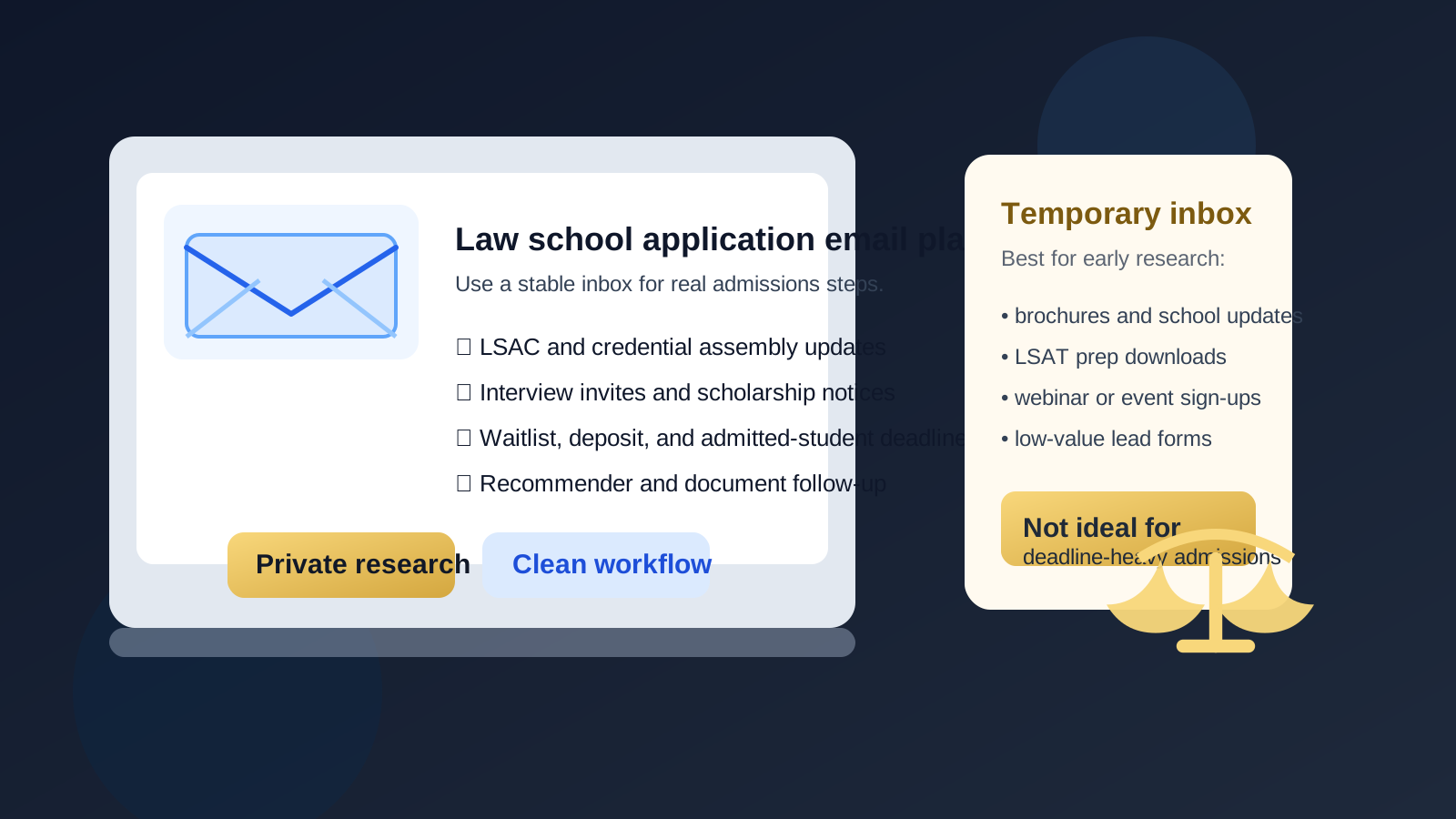
Why this question matters more for law school than for casual sign-ups
A lot of people like the idea of using a temporary email because it keeps their main inbox cleaner. That instinct is not wrong. If you are downloading brochures, signing up for webinars, testing LSAT prep tools, or requesting information from several schools at once, a temporary inbox can reduce clutter and limit how widely your permanent address gets shared.
But law school applications are not a one-click sign-up. They are usually a long chain of related steps: LSAC account activity, school-specific prompts, recommendation requests, application status changes, interview scheduling, fee-waiver notices, scholarship outreach, waitlist updates, and seat-deposit deadlines. That is exactly the kind of workflow where reliability matters more than short-term inbox privacy.
So the best answer is not “never use a temporary email” and not “always use one.” It is to use the right inbox for the right stage.
Short answer: use a temporary email for research, not for core applications
If you want a direct rule, here it is:
- Fine for early research: newsletters, event registration, brochure downloads, trial sign-ups, or one-off interest forms.
- Not ideal for real admissions activity: LSAC-linked communication, application portals, interview invites, scholarship decisions, or anything with deadlines and follow-up.
That middle-ground approach lets you protect your privacy where it actually helps without creating a mess when the admissions process becomes time-sensitive.
When a temporary email can be useful
There are a few law-school-related situations where a temporary inbox can genuinely make sense.
1. School research and brochure downloads
If a school asks for an email address before it sends a viewbook, admissions guide, or event reminder, you may not want that school—or ten other schools—living in your primary inbox forever. A temporary address can be a practical buffer.
2. Webinar and virtual event sign-ups
Admissions webinars, online fairs, and preview sessions often trigger a long follow-up sequence. If you are still comparing programs and just want the link, using a temporary address for that first touch can be reasonable.
3. LSAT prep trials and adjacent tools
Prep platforms, essay-review tools, rankings newsletters, or applicant communities often gate content behind an email field. If you are only evaluating them and do not yet want regular marketing messages, a temporary inbox can keep that noise contained.
4. Lead forms you do not fully trust yet
Not every “law school admissions resource” is a school. Some are lead-generation pages, consultant funnels, or third-party directories. If you are unsure how your address will be used, it is smart to be more cautious.
In those situations, a tool like Anonibox can be useful because it gives you an inbox for low-stakes research without forcing you to hand over your long-term address immediately.
Why a temporary email is risky for the actual application process
Once you move from browsing to applying, the downside of a temporary inbox gets much bigger.
Admissions timelines are long
Law school applications can stretch over weeks or months. You may submit in one sitting, then hear back later about missing materials, interview availability, status updates, scholarships, or waitlist movement. A short-lived inbox is the wrong tool for a long-lived process.
You may need to find old messages again
Application systems do not just send one confirmation. They often send multiple messages over time, and sometimes the message you need is the one you ignored at first. You may need a portal link again, a password-reset email, an event invitation, or the exact wording of a scholarship instruction weeks later.
Recommender and document workflows can be fragile
Law school applications often involve transcripts, letters of recommendation, credential assembly details, and document status checks. If any part of that chain depends on email continuity, losing access becomes more than annoying—it can slow down your application.
Deadline-heavy steps punish missed emails
Interview windows, scholarship response requests, waitlist instructions, and seat-deposit deadlines are not the place to experiment with a disposable inbox. Missing one message can cost you time, money, or an opportunity.
Account recovery gets harder
Even if the application itself goes smoothly, you may later need to sign back in to view updates or reset access. That is much easier if the account is tied to an inbox you still control.
A better setup for most applicants
For most people, the strongest setup is simple: use one dedicated long-term email address for all serious law school application activity, and use a temporary email only for low-value research-stage sign-ups.
That gives you the best parts of both approaches:
- Privacy: your main everyday inbox stays cleaner.
- Reliability: your real applications stay tied to an address you can monitor for months.
- Organization: admissions emails are separated from general life admin.
- Lower risk: important portal, scholarship, and waitlist messages do not disappear into an expiring inbox.
If you already know you will be applying this cycle, a separate permanent inbox is usually better than a temporary one. It is the same privacy mindset, just without the fragility.
What to use for each stage
Use a temporary email for:
- brochure requests
- virtual open-house registrations
- newsletter downloads
- ranking tools and prep-resource trials
- third-party admissions guides you are only testing
Use a dedicated long-term inbox for:
- LSAC-related activity
- school application portals
- fee-waiver requests you may need to track
- recommendation and document follow-up
- interview scheduling
- scholarship, waitlist, and deposit communication
Practical inbox workflow that actually works
If you want a clean system without losing track of anything, this is a solid approach:
- Create one dedicated admissions inbox. Use it for every school, portal, and official step you care about.
- Create folders or labels early. For example: LSAC, submitted applications, interviews, scholarships, admitted-student events, and waitlists.
- Use a temporary inbox for curiosity-stage sign-ups. Keep it for brochures, downloads, and low-stakes forms.
- Move serious interactions to the permanent inbox quickly. If a school becomes a real target, stop using the temporary address with them.
- Check your admissions inbox daily during active windows. Especially around deadlines, status decisions, and interview season.
This setup is boring in the best possible way. It is easy to maintain, and it reduces the odds that an important message gets buried or lost.
When a temporary email becomes the wrong choice
If any of the following is true, switch to a stable inbox immediately:
- you are creating or confirming a real application account
- you are entering details you may need to revisit later
- you are dealing with fee waivers, scholarship forms, or interview requests
- you need reliable password resets or account recovery
- the school may continue communicating with you for months
Once the process becomes consequential, reliability should win.
What about privacy-conscious applicants?
If privacy is the main reason you are considering a temporary email, that concern is fair. Applying to schools can generate a lot of follow-up, and not every third-party resource deserves your permanent address.
But privacy does not require disposability. A separate long-term inbox can give you almost the same privacy benefit while keeping you in control. That is usually the sweet spot for law school applicants: protect your primary personal inbox, but do not gamble with a channel you need for admissions deadlines.
Quick decision checklist
Before you enter an email on any law-school-related form, ask:
- Is this just research, or is this an actual application step?
- Will I need to access these messages weeks or months from now?
- Could this account need password resets or follow-up later?
- Would missing one email here create a real problem?
- Is a dedicated permanent admissions inbox the safer choice?
If the answer to any of the last three is yes, a stable inbox is the smarter move.
Final answer
So, should you use a temporary email for law school applications? Usually not for the real application itself. It can be helpful for early-stage research, event registrations, and low-value downloads, but law school admissions is too long, too detailed, and too deadline-sensitive to run through a disposable inbox.
The better strategy is to use a temporary email only where privacy and spam reduction matter most, then rely on a dedicated long-term inbox for LSAC, schools, interviews, scholarships, and decision-related communication. That gives you a cleaner workflow without making your application process more fragile than it needs to be.