Usually no — a burner email is not the best default for occupational therapy school applications because OTCAS, supplemental forms, interviews, and decision updates can stretch across months.
If you want more privacy, a separate long-term inbox or reliable alias is usually safer than a short-lived burner email for occupational therapy school applications.
That said, the question is still worth asking. Applicants often want some distance between admissions traffic and their everyday inbox, especially if they are also juggling work, observation hours, references, scholarships, and multiple school deadlines. Privacy matters. So does staying reachable. The real challenge is choosing an email setup that protects your inbox without making you miss something important.
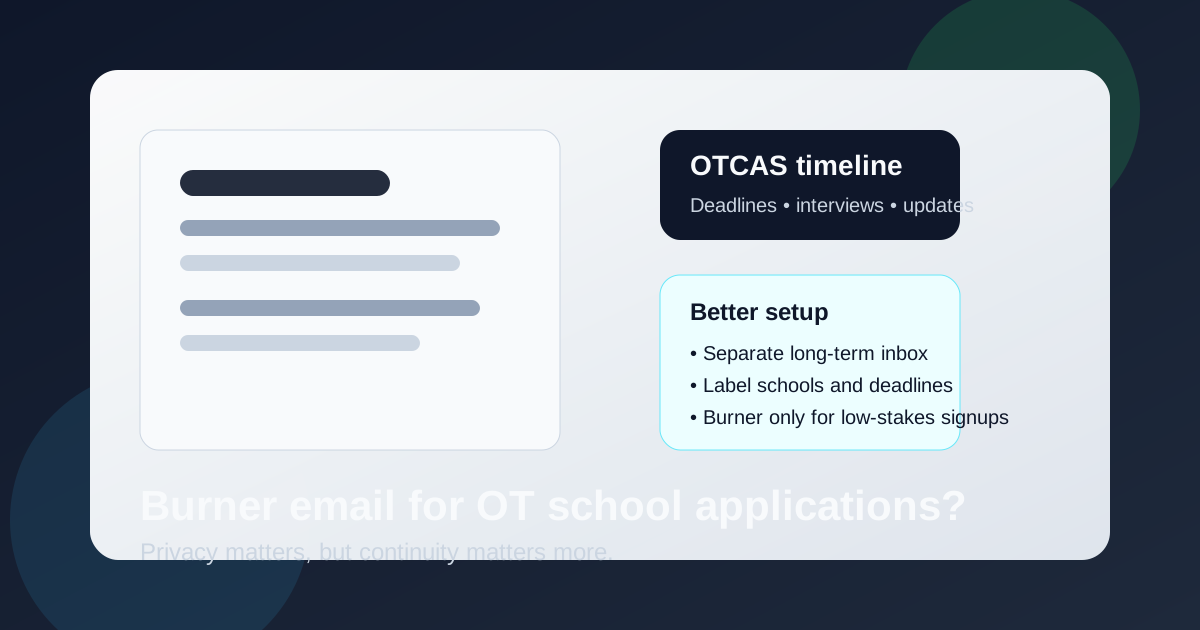
Short answer: use caution with burner email for OT school applications
A burner email can help in low-trust or low-stakes situations, like downloading a guide, joining a general mailing list, or checking a school resource that may trigger promotional follow-up. But for the actual occupational therapy application process, a burner address is often too fragile. Admissions messages are not just one-time confirmations. They may include account verification, status updates, interview scheduling, missing-document alerts, scholarship notices, and waitlist movement weeks or months later.
If the inbox is hard to manage, expires, gets abandoned, or feels less trustworthy to you over time, it can become a liability. For most applicants, the best answer is to use a clean separate inbox you control for the full cycle rather than a throwaway address you may outgrow halfway through.
Why this matters more for occupational therapy school applications
Occupational therapy admissions are not usually a one-click signup. Even organized applicants can end up working across OTCAS, school-specific supplemental materials, transcript workflows, recommendation follow-up, observation-hour documentation, interview coordination, financial-aid notices, and final enrollment steps. That means your email address is part of the system, not just a contact detail.
If a school sends a reminder about a missing requirement, an interview time slot, or a portal message that needs a response, your email setup has to be dependable. A burner email is attractive because it promises less spam and more separation, but admissions is one of the worst places to trade away continuity just to reduce clutter.
When a burner email can help
There are a few situations where using a burner-style address around the edges of the OT admissions process can make sense.
1. Early research on low-trust sites
If you are downloading broad admissions checklists, comparing unrelated pre-OT resources, or testing a site that looks more marketing-heavy than essential, a disposable inbox can be reasonable. This is where a privacy tool like Anonibox fits naturally: low-stakes access, low commitment, and less long-term inbox mess.
2. One-off webinars or generic mailing lists
Some schools, coaching services, or admissions-adjacent vendors send frequent promotional follow-up after a simple signup. If you only want the initial link and do not plan to rely on that address long term, a burner can reduce noise.
3. Narrow vendor-style interactions outside the real application
If the signup is not part of your official admissions workflow and you mainly want to protect your primary inbox from future marketing, a temporary or burner setup may be fine.
Notice the pattern: burner email works best where the consequence of losing the thread is low.
When a burner email becomes risky
For the real application itself, the trade-off changes fast.
1. OTCAS account access and follow-up
Your application email may become tied to portal activity, verification steps, deadline reminders, and communications you need to search later. If the inbox feels temporary, you create unnecessary risk.
2. School-specific supplemental requests
Some programs send follow-up instructions after your main application is underway. Those messages may not arrive all at once, and they may matter long after the day you applied.
3. Interview scheduling and waitlist movement
Interview invitations and seat-related updates can be time-sensitive. A burner email that you check inconsistently, cannot search well, or no longer trust is a poor match for that kind of communication.
4. Recommendation and document issues
If a transcript is delayed, a recommender has a problem, or a requirement needs clarification, you want one reliable inbox where the full record lives.
5. Scholarship and enrollment follow-up
The process does not always end with an acceptance. Financial-aid notices, deposit reminders, onboarding details, and pre-matriculation tasks can continue well after the most stressful application phase ends.
Privacy concerns are real — but continuity usually matters more
The instinct behind using a burner email is understandable. You may not want your personal address tied to everything. You may want fewer newsletters, less cross-platform tracking, and less chance that admissions-related messages mix with shopping receipts, work alerts, or old subscriptions. Those are all reasonable goals.
But occupational therapy school applications are closer to a long project than a casual signup. In a long project, continuity usually matters more than maximum separation. The better privacy move is often not “use the shortest-lived inbox possible.” It is “use a clean, purpose-built, long-term inbox that limits clutter without sacrificing access.”
Better alternatives to a burner email
Use a separate dedicated inbox
For most applicants, this is the best option. A dedicated admissions inbox gives you separation from your everyday mail while still keeping the account stable for months or years. You can monitor it daily, keep it professional, and use it consistently across OTCAS and school follow-up.
Use a reliable alias
If you already have a primary mailbox you trust, a well-managed alias can work too. It gives you organizational separation while still routing into an account you actually monitor. Just make sure forwarding is reliable and searchable.
Use a burner only for outer-layer research
This is the hybrid model. Use Anonibox or another disposable workflow for low-trust research, optional lead magnets, or one-off signups — then switch to a stable inbox for the actual application, interviews, and decisions.
How to decide what is right for you
Ask yourself a few practical questions:
- Will I need access to this inbox for several months?
- Am I applying to multiple OT programs at once?
- Do I want one searchable record of OTCAS and school-specific messages?
- Is my main inbox already too noisy to trust under deadline pressure?
- Am I trying to solve a spam problem, an organization problem, or both?
If the process will be long and detail-heavy, the answer usually points toward a durable separate inbox, not a burner.
Practical best practices if you still want privacy
1. Keep the admissions inbox separate from everyday life
Even without a burner email, you can still protect your attention by using one inbox only for applications, portals, and school messages.
2. Label by school and status
Create folders or labels for OTCAS, each program, interviews, financial aid, submitted items, and decisions. That makes a dedicated inbox much more valuable.
3. Save important messages immediately
Star, archive, or export any message tied to interviews, missing documents, decisions, or payments. Do not rely on memory when deadlines are involved.
4. Check the inbox on a schedule
A good setup only works if you actually use it. During active deadlines, daily checks are sensible.
5. Be selective about where you use disposable email
If a site feels low-trust or optional, a temporary inbox may be fine. If the communication could affect your candidacy, use the durable account instead.
A simple example
Imagine two applicants. One uses a burner address for everything because they want maximum separation from their personal inbox. At first, it feels efficient. Later, they are digging through scattered messages, wondering which school used which portal, and hoping they did not miss a follow-up from an interview invite. The second applicant uses one clean admissions-only inbox, with folders for each school and a routine for checking it every day. That person still protects their personal inbox, but without losing continuity.
The second setup is usually the safer one. It does not remove every risk, but it lowers the chance of avoidable mistakes.
Common mistakes to avoid
- Using a temporary address for the official application itself: what feels private today can become annoying or risky later.
- Switching addresses mid-cycle without a clear plan: this can fragment your communication history.
- Checking the account too rarely: even a perfect inbox setup fails if you ignore it.
- Treating all school communications like marketing email: some messages really are urgent.
- Choosing novelty over reliability: the most helpful inbox is the one you can trust under pressure.
Final answer
Usually no: a burner email is not the best default for occupational therapy school applications. The process is too long, too deadline-heavy, and too dependent on consistent follow-up for a short-lived or semi-disposable inbox to be the smartest choice.
If you want privacy, use a separate long-term admissions inbox or a reliable alias. Save the burner-email approach for low-stakes research, optional signups, or promotional content around the edges. For the actual occupational therapy application process, the winning setup is usually the one that protects your attention without putting your access at risk.