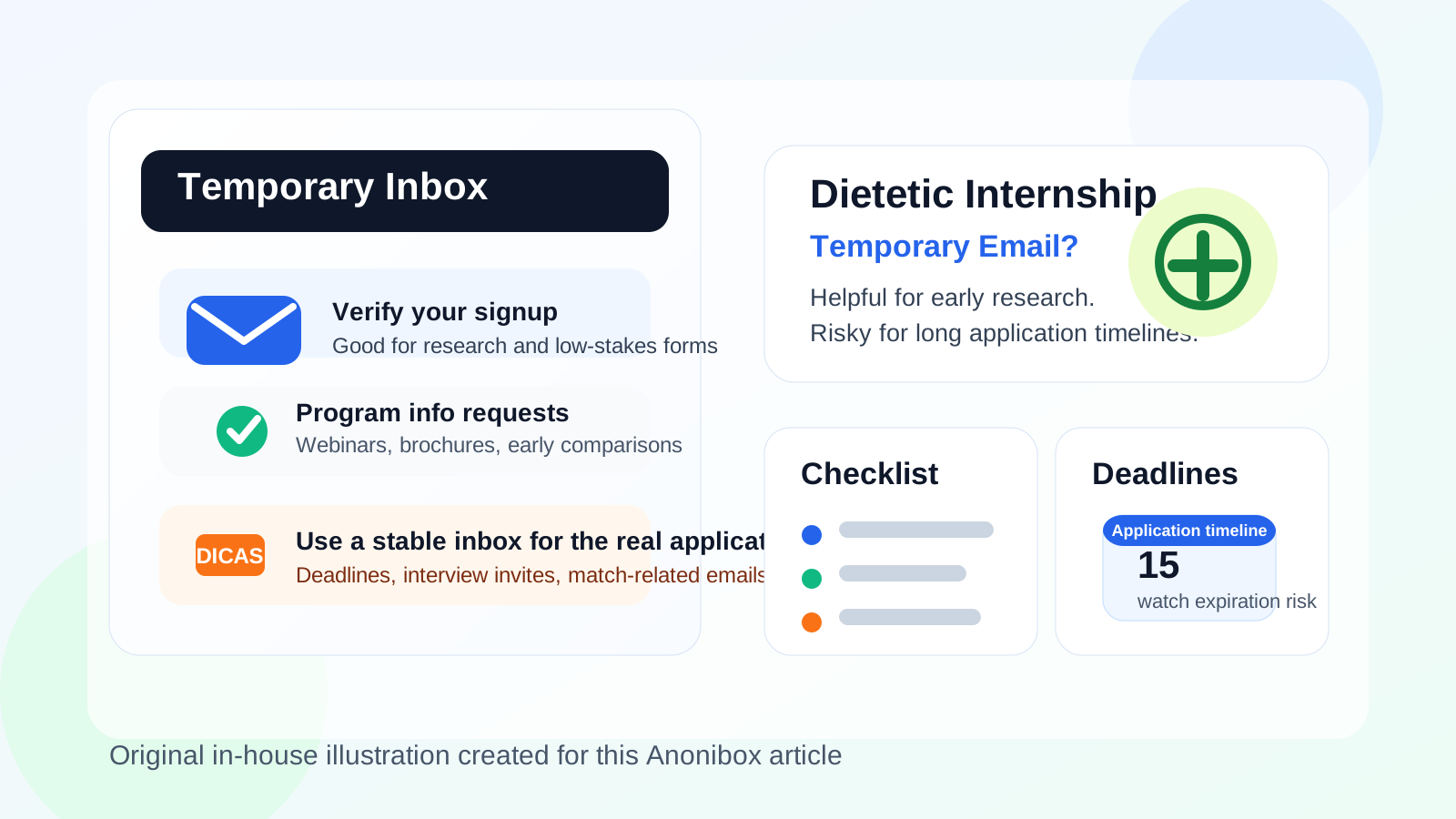
Usually no—using a temporary email for dietetic internship applications is fine for early research, but it is risky for real DICAS submissions, interview invites, recommendation reminders, and match-related updates.
The safer setup for most applicants is a dedicated long-term inbox for actual applications, while a temporary address can still help you explore programs, download materials, or test low-stakes forms without flooding your main inbox.
Dietetic internship applications are not one-and-done signups. You may be tracking DICAS tasks, program-specific instructions, transcript issues, recommendation requests, interview scheduling, ranking decisions, and follow-up communication over weeks or months. That longer timeline changes the answer.
A temporary inbox can absolutely be useful in the research phase. It gives you a way to request brochures, join a webinar, or ask for basic information without feeding your everyday address into every mailing list you touch. But once you are dealing with real application steps, you need reliability more than short-term privacy.
Short answer: useful for research, risky for the real application
If your goal is to browse program pages, compare application requirements, or sign up for a one-off information session, a temporary email can make sense. It keeps your main inbox cleaner and limits how many organizations get your long-term address before you even know which programs you seriously care about.
If your goal is to submit a real internship application, though, a temporary inbox is usually the wrong tool. Dietetic internship communication can stretch across multiple deadlines and decision points. If the inbox expires, stops forwarding, or becomes hard to access when you need it most, the risk is on you.
When a temporary email can actually help
There are some situations where using a temporary inbox is practical and low-risk.
- Program research: You want to request a brochure, a fact sheet, or a webinar registration link.
- Initial comparison shopping: You are deciding which programs are even worth a closer look.
- Low-stakes inquiry forms: You want to ask a short question and do not expect a long back-and-forth thread.
- Spam control: You want to see which schools or services send heavy promotional follow-up before sharing a permanent address.
- Privacy during early exploration: You are not ready to connect your name and primary inbox to every form you visit.
That is where a tool like Anonibox fits naturally. It is useful when you want a quick throwaway address for exploration, especially before you decide which programs deserve a real place in your application plan.
Why it becomes risky for actual dietetic internship applications
The main issue is not whether a temporary inbox can receive one message. It usually can. The issue is whether it stays dependable long enough for everything that follows.
1. DICAS-related communication can unfold over time
Dietetic internship applicants often move through multiple stages: researching programs, building application materials, requesting references, submitting through DICAS, handling program-specific follow-up, and waiting for interview or ranking-related communication. That is a long chain. A temporary inbox is built for quick access, not durable continuity.
2. You may need the same email again later
Some messages matter long after the first click. You may need to revisit a confirmation email, retrieve a password reset, confirm an interview detail, or search back through older instructions. If the inbox is gone, that convenience disappears at exactly the wrong moment.
3. Recommendation and deadline reminders are easy to miss
Even organized applicants sometimes get surprised by timing. A recommender may submit late. A program may ask for clarification. A portal may send an automated reminder that you were not expecting. Missing one of those messages because the inbox expired or was no longer monitored is a bad trade.
4. Some schools may not love disposable-looking addresses
Not every program will care, but some staff members may read a temporary-looking address as less professional or less stable. That does not automatically disqualify you, but it can create unnecessary friction in a process where trust and organization matter.
What is better than a temporary email for this use case?
For actual applications, the best option is usually a separate long-term inbox that you control and check daily. That gives you the privacy benefits of not using your everyday personal address everywhere, while still protecting you from the fragility of a disposable inbox.
A strong setup often looks like this:
- One dedicated email account used only for applications and admissions-related communication
- A clear, professional address that looks normal to programs and coordinators
- Labels or folders for DICAS, individual programs, references, interviews, and financial follow-up
- Notifications turned on, so you do not miss time-sensitive messages
If you want even more separation, an email alias can work too, as long as it forwards into a stable inbox you already control. The key idea is the same: long-term access matters more than maximum disposability once you move from browsing to applying.
Temporary email vs burner email vs alias vs separate inbox
These options get mixed together, but they are not the same.
- Temporary email: Best for short-lived research and low-stakes signups. Weakest option for a long admissions timeline.
- Burner email: Slightly more controlled than a random temp inbox, but still usually a poor fit for real internship applications if you may need the address for months.
- Email alias: Good if it routes into a dependable main inbox and you want cleaner separation without losing continuity.
- Separate inbox: Usually the strongest choice for actual dietetic internship applications because it balances privacy, organization, and reliability.
In other words, temporary email is not “bad.” It is just a tool for a different phase of the process.
A practical workflow that protects privacy without risking deadlines
If you want both privacy and reliability, use a two-stage approach.
Stage 1: use a temporary inbox for early research
Use it for newsletter signups, brochure downloads, webinar links, or quick inquiry forms while you are narrowing your list. This keeps your main inbox from getting crowded too early.
Stage 2: switch to a dedicated real inbox before any serious application step
Before you submit through DICAS, request references, confirm prerequisites, or respond to a program directly, move to the stable inbox you plan to monitor all season. That is the address you should keep tied to any meaningful next step.
Stage 3: build a tracking habit around that inbox
Once the serious phase starts, create folders or labels for:
- DICAS account and system messages
- Each individual internship program
- Reference requests and reminder notices
- Interview invites and scheduling
- Final decisions, ranking, and match-related communication
This matters because missing a message is usually a workflow problem, not an intelligence problem. A dedicated inbox fixes a lot of workflow problems before they happen.
Signs a temporary email is the wrong choice
- You are already filling out real application forms.
- You expect follow-up over several weeks or months.
- You need a reliable record of messages and attachments.
- You may need password resets or account recovery later.
- You are coordinating with recommenders, faculty, or program staff.
- You cannot afford to miss interview or match-day communication.
If several of those are true, a temporary inbox is not giving you smart privacy. It is just adding failure points.
Situations where a temporary email is still reasonable
To be fair, there are still moments where it works well.
- You are checking whether a program sends immediate marketing sequences after a download.
- You want access to a one-time webinar or FAQ session.
- You are comparing a large number of programs and only a few will become serious options.
- You are using an inquiry form that does not involve an application portal or long-term account access.
Those are classic early-stage privacy use cases. They are useful, but they are not the same as managing the actual application itself.
Best practices if you use both a temporary and a real inbox
- Decide your switch point early. Do not wait until deadlines are close. Choose the moment when you stop researching and start applying.
- Save important information outside the temporary inbox. If a webinar or info packet matters, download it immediately.
- Keep names and documents consistent. Make sure the real inbox you use for applications is the one attached to your résumé, records, and future replies.
- Check spam and promotions folders. Even good systems occasionally misclassify application-related mail.
- Do not mix too many addresses. One research inbox plus one real application inbox is manageable. Five overlapping addresses is confusion disguised as privacy.
Final answer
So, should you use a temporary email for dietetic internship applications? Usually not for the actual application process. It can be helpful while you are researching programs, joining webinars, or testing low-stakes forms, but it is usually too fragile for DICAS timelines, interview scheduling, reference reminders, and final decisions.
If you want the best balance of privacy and reliability, use a temporary inbox only at the exploration stage and switch to a dedicated long-term inbox before any real application step. That way you still protect your main address from unnecessary clutter, but you do not gamble with the messages that actually matter.