Usually no — a burner email is too risky as your main inbox for physical therapy school applications because admissions communication can stretch across months and one missed message can cost you an interview, a document fix, or a seat deadline.
If you want more privacy, use a burner address only for low-stakes research and switch to a stable long-term inbox before you submit real PT school applications, PTCAS forms, or interview scheduling details.
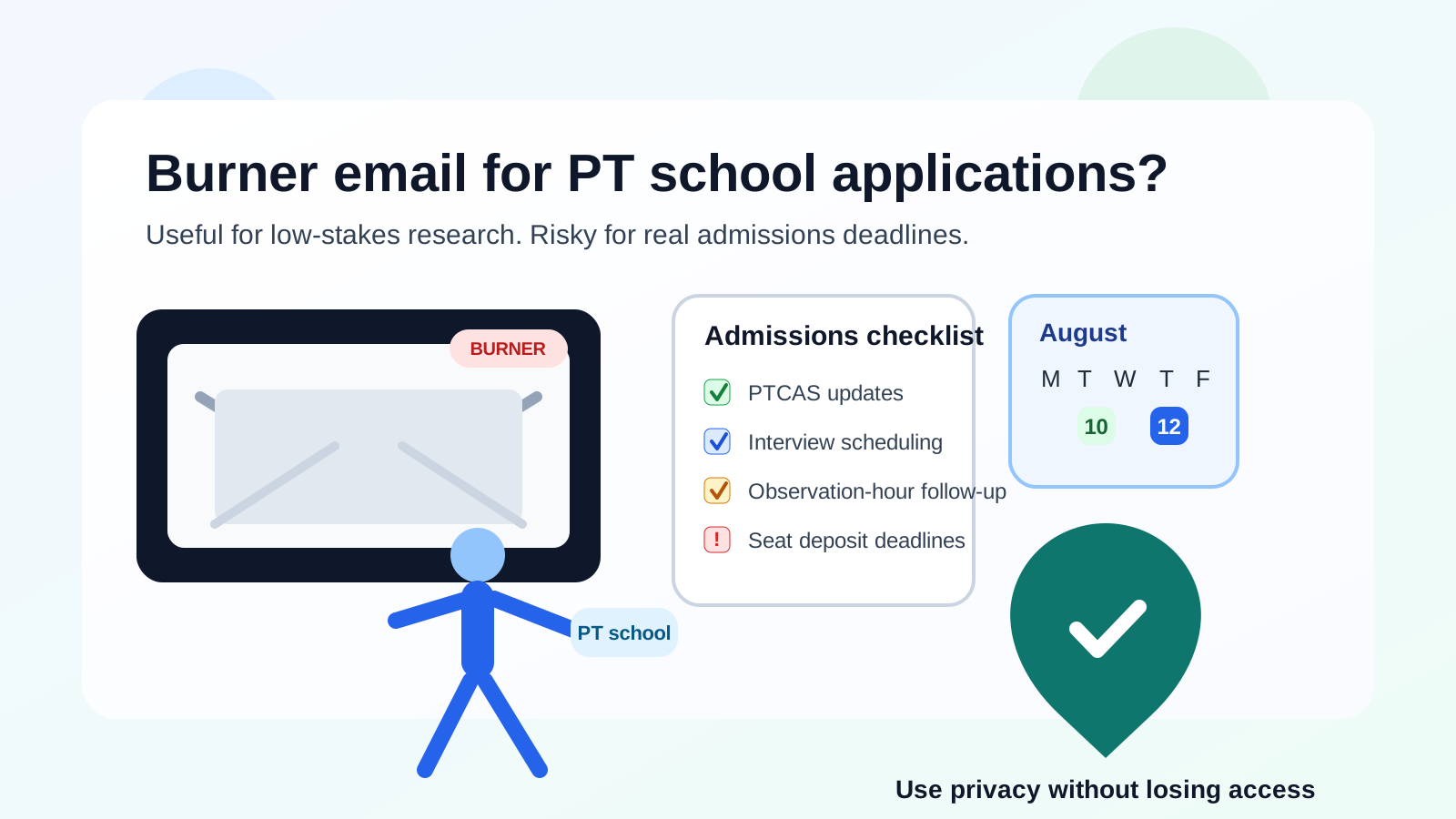
Why this question matters for PT school applicants
Physical therapy school admissions create more email than most applicants expect. You are not just submitting one form and waiting. You may be comparing programs, tracking prerequisite questions, checking PTCAS updates, following up on recommendation letters, confirming observation-hour documentation, watching for supplemental instructions, scheduling interviews, and then dealing with scholarships, waitlists, and seat deposits.
That timeline makes your email choice more important than it looks. A burner inbox can feel private and convenient at the beginning, especially when you are still browsing schools or signing up for webinars. But once the real application cycle starts, convenience is not the main issue anymore. Reliability is. If a school sends a deadline-sensitive message at the wrong time and you do not see it, the privacy win is not worth much.
Short answer: a burner email is fine for research, but weak for real admissions
A burner email can be useful while you are in the low-commitment phase of the process. Maybe you want to download program guides, register for a generic information session, compare ranking tools, or test a school-search platform without inviting months of follow-up into your everyday inbox. That is a perfectly reasonable use case.
But real physical therapy school applications are a different category. Once you are creating applicant accounts, uploading materials, responding to schools, or waiting for interview invitations, you need an address that looks professional, stays active, and gets checked consistently. A burner email is usually the wrong tool for that job.
What can go wrong if you use a burner email as your main PT school inbox?
1. You can miss time-sensitive admissions messages
PT school communication rarely arrives on a tidy schedule. A school may go quiet for weeks and then suddenly send a missing-material notice, an interview slot, or a deposit deadline. If your burner inbox is not one you monitor carefully every day, it becomes easy to miss the message that actually matters.
2. Your setup may not fit a months-long cycle
Even applicants who submit early can still receive follow-up much later. That includes waitlist movement, admitted-student next steps, financial-aid updates, and portal reminders. A burner address often makes sense for short bursts of activity, not for a long process that needs continuity.
3. It can look less trustworthy than a stable address
Most schools care more about whether they can reliably reach you than about the exact provider you use, but a very disposable-looking address can still create friction. You do not need to perform formality, but you do want to look like someone who will not disappear halfway through the process.
4. It makes your own recordkeeping harder
Application cycles are easier when all of your real admissions mail lives in one stable place. If you split serious communication across a burner inbox, a personal inbox, and random school portals, you create extra ways to lose track of what has already been handled.
What kinds of emails show up during physical therapy school applications?
If you are applying through PTCAS or directly to programs, several categories of email can matter:
- application confirmations and status updates
- requests about transcripts, prerequisites, or recommendation letters
- observation-hour or clinical documentation follow-up
- school-specific supplemental instructions
- interview scheduling and logistics
- financial-aid, scholarship, or deposit notices
- waitlist movement and admitted-student next steps
None of those messages are especially dramatic on their own, but several can be deadline-sensitive. That is why reliability should beat novelty. The inbox you use for real applications needs to stay boring, dependable, and easy to search.
When a burner email can still be useful
A burner address is not useless. It just belongs in the early, low-stakes part of the funnel rather than at the center of your admissions workflow.
It can make sense when you are:
- downloading general PT school guides from sites you do not fully trust yet
- signing up for broad webinars or mailing lists during the research phase
- testing school-search tools or directory sites that may generate spam
- separating casual exploration from your long-term application inbox
That is where a service like Anonibox fits naturally. It helps protect your main inbox from early-stage clutter. The mistake is treating that same temporary privacy tool like the best contact method for actual admissions communication.
Burner email vs. separate email vs. email alias
Burner email
Best for low-trust signups, quick access, one-off downloads, and early browsing. Weak for anything that depends on months of continuity.
Separate email
Usually the strongest default for PT school applications. A separate long-term inbox gives you real organization and privacy without the risk of losing access or forgetting where important messages went.
Email alias
An alias can also work well if it forwards into an inbox you already trust and monitor closely. It offers a cleaner public-facing address while keeping everything tied to a mailbox you use regularly.
If you want the safest practical setup, a dedicated long-term email address is usually better than a burner address. If you want a lighter option and your current system is already organized, an alias can be a solid middle ground.
When using a burner email is especially risky
A burner address is a poor main choice when most of the following are true:
- you are already submitting real applications
- you expect communication to continue for months
- you are applying to multiple programs at once
- you need to track school-specific follow-up closely
- you know you sometimes miss messages in secondary inboxes
- you are depending on interviews, waitlists, or seat deadlines that may arrive suddenly
Physical therapy admissions often checks every one of those boxes. That is why most applicants are better served by a stable inbox strategy.
A safer privacy-first workflow for PT school applications
You do not have to choose between chaos and oversharing. A better workflow is to separate the process into stages.
- Use a burner inbox for low-stakes research only. This is where you protect your everyday inbox from exploratory signups.
- Create a dedicated long-term admissions email before real applications begin. Use it for PTCAS, direct school accounts, supplemental forms, and interview communication.
- Keep all real PT-school messages in one place. That makes it easier to search by program, deadline, or status.
- Check the inbox daily. During busy parts of the cycle, check it more than once a day.
- Leave the inbox active through the full cycle. Do not retire it right after submission. Waitlists, aid notices, and admitted-student tasks often come later.
This approach keeps the privacy benefit of temporary email where it helps most, while avoiding the reliability problems that show up once the stakes rise.
How to set up a better PT-school inbox
If you decide not to use a burner address as your main application email, the replacement does not need to be complicated.
- Choose a professional-looking address: some version of your real name is usually safest.
- Use it only for application-related activity: keep newsletters, shopping, and unrelated accounts out of it.
- Set strong login security: use a good password and multi-factor authentication when available.
- Create simple labels or folders: PTCAS, schools, interviews, aid, and deadlines are enough for most people.
- Save critical messages: if an email contains a portal link, interview slot, or deposit step, star it and back it up somewhere you trust.
The goal is not a perfect productivity system. The goal is lowering the chance that you miss something important because your contact method was built for convenience rather than continuity.
Common mistakes to avoid
- Using a burner address for actual submissions: what feels private at first can become fragile later.
- Switching email addresses mid-cycle without a plan: inconsistency creates confusion for you and sometimes for schools.
- Forwarding serious admissions mail into an inbox you already ignore: that defeats the purpose of trying to stay organized.
- Assuming every email is low priority: some are routine, but some can change your timeline fast.
- Abandoning the inbox after you apply: admissions communication often continues well beyond submission day.
So, should you use a burner email for physical therapy school applications?
Usually no. A burner email can help during the research phase, but it is too risky as the main inbox for physical therapy school applications because you may need to manage PTCAS notices, observation-hour follow-up, supplemental requirements, interview scheduling, and deposit deadlines over a long period of time.
If you want privacy, keep the burner inbox for low-stakes exploration and move serious admissions activity to a stable long-term email or a well-managed alias. That gives you the best balance: less spam early on, but reliable access when the application process becomes real.