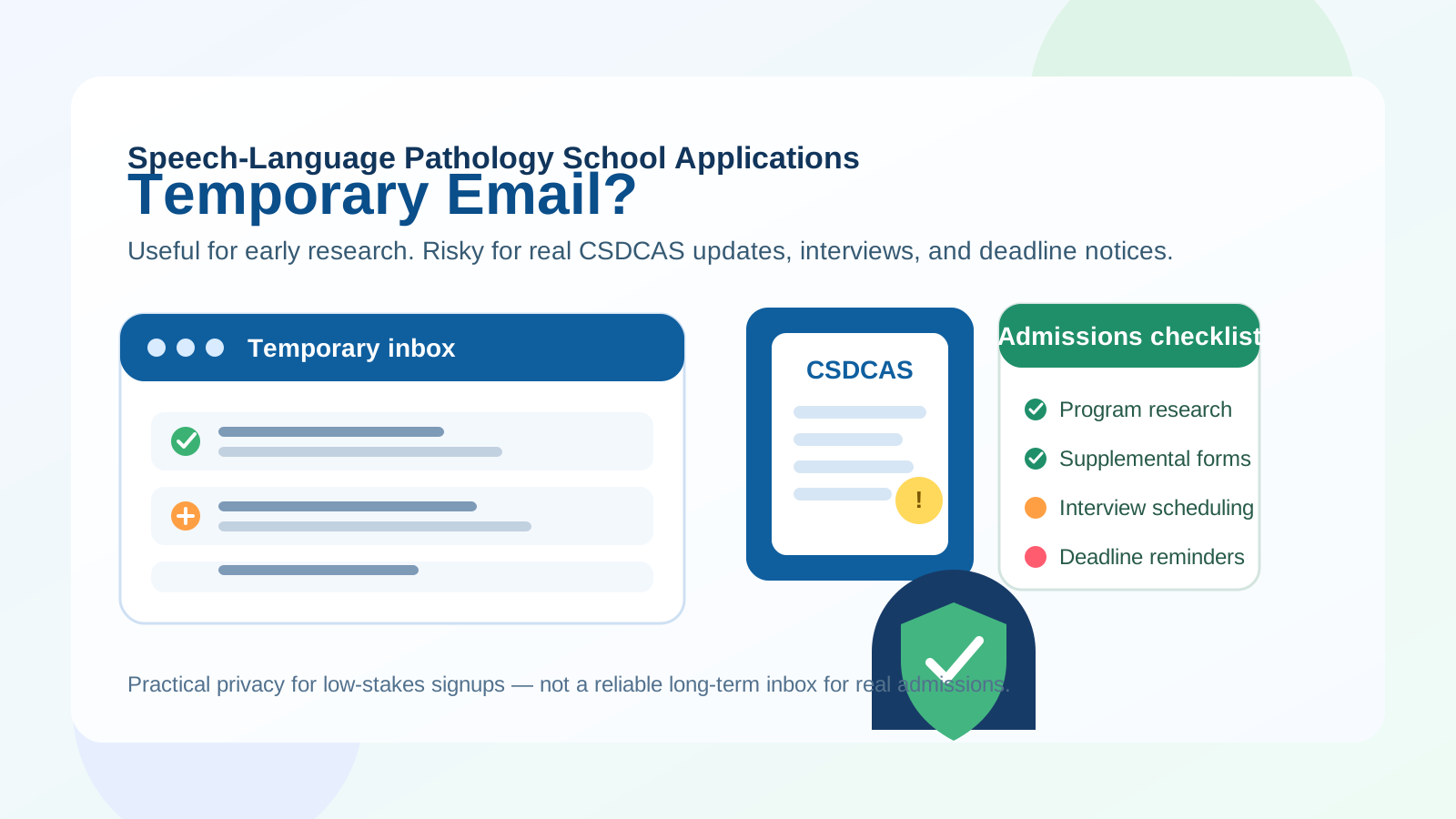
Usually no — a temporary email is too risky as your main inbox for speech-language pathology school applications because important messages can arrive over weeks or months, and one missed CSDCAS or program email can create a real problem.
A temporary inbox can still help during early research, webinar signups, or low-stakes downloads, but for actual SLP applications you are usually better off with a stable email you will monitor every day.
Why this question matters for SLP school applicants
Speech-language pathology school applications generate more email than many applicants expect. You may start with program research and CSDCAS account setup, then move into transcript coordination, recommendation requests, supplemental applications, observation-hour questions, interview invitations, financial-aid notices, waitlist updates, and deposit reminders. That timeline is long enough that your email choice stops being a small detail and becomes part of your application strategy.
A temporary inbox sounds appealing because it gives you privacy and keeps your main account from collecting marketing email. That can be genuinely helpful at the beginning. But once your contact details are tied to real schools, real deadlines, and real decisions, convenience is not the only issue anymore. Reliability matters more.
Short answer: good for research, weak for real admissions
If you are still browsing programs, downloading brochures, signing up for generic information sessions, or comparing application requirements, a temporary email can be a smart buffer. It lets you explore without handing your long-term address to every school-search tool, webinar signup, or admissions list.
But once you are dealing with actual speech-language pathology school applications, the tradeoff changes. At that point you need continuity, easy recordkeeping, and an inbox you will still be checking later in the cycle. A temporary email is usually not the best fit for that.
When a temporary email can make sense
There are a few situations where a temporary inbox is practical and low risk:
- Signing up for a general admissions webinar before you know which schools matter
- Downloading program guides, checklists, or sample timelines
- Testing school-search tools, ranking sites, or directory platforms
- Separating early research from your everyday inbox while you compare programs
- Checking how a form or portal behaves before you commit real contact details
In other words, temporary email is strongest in the browsing stage. It helps you avoid unnecessary inbox clutter while you gather information.
When it becomes a bad idea
Once you move from curiosity to real application activity, temporary email becomes much harder to defend. Speech-language pathology programs may contact you at unpredictable times, and some of those messages matter immediately.
1. You could miss a deadline-sensitive message
Schools do not always send updates on a neat schedule. You might hear nothing for days and then suddenly get a notice about a missing document, a supplemental requirement, an interview invitation, or a deposit deadline. If your temporary inbox is not part of your daily routine, that message can slip past you.
2. CSDCAS-related communication can stretch across the cycle
Centralized application systems are useful, but they also create a steady stream of account notices, status updates, and process-related reminders. Even if the platform itself works smoothly, your overall SLP application journey still extends beyond one quick signup. A disposable inbox is usually built for short-term use, while admissions often requires long-term follow-through.
3. Your own organization gets worse
Applicants often underestimate how much they rely on old emails later. You may need to look back at school instructions, portal links, timeline notes, or earlier responses from programs. When serious admissions mail is scattered across a temporary inbox, a personal inbox, and multiple school portals, staying organized gets harder for no good reason.
4. It can create avoidable trust friction
Most programs mainly care that they can reach you, not which provider you use. Still, an obviously disposable-looking address can make your communication feel less stable than it needs to be. You do not need a fancy inbox, but you do want one that feels reliable and professional over the entire application window.
What kinds of emails show up during speech-language pathology school applications?
If you are applying to SLP programs, the inbox tied to your applications may receive messages about:
- Account setup and verification
- Transcript or recommendation reminders
- School-specific supplemental instructions
- Interview invitations and rescheduling details
- Financial-aid or scholarship follow-up
- Waitlist updates and final decision notices
- Seat deposits, admitted-student events, and onboarding next steps
That is a lot to trust to a short-term address you only planned to use for quick signups.
A better setup for most applicants
For real applications, the better default is usually a stable separate inbox or a well-managed email alias that forwards into an account you already trust. That gives you the privacy and organization benefits people want from temporary email without the same risk of losing continuity.
A simple approach looks like this:
- Use a temporary email only for low-stakes browsing and early research.
- Switch to a stable dedicated application inbox before creating or submitting real application accounts.
- Use that stable inbox consistently across CSDCAS, school portals, and interview scheduling.
- Create folders or labels for each program so important messages stay easy to find.
This keeps your main personal inbox cleaner without putting the real admissions cycle on a disposable foundation.
How Anonibox fits the workflow
Anonibox makes the most sense at the top of the funnel. If you want to compare programs, test signups, or avoid turning one afternoon of school research into months of promotional email, a temporary inbox is useful. It gives you a clean layer of privacy while you decide which programs are worth serious attention.
Where people get into trouble is trying to use that same setup all the way through the admissions process. Temporary email is a strong research tool, but it is usually the wrong long-term inbox for interview coordination, application corrections, and final admissions communication.
Signs you should stop using a temporary email and switch now
If any of these are true, it is probably time to move to a stable address:
- You are creating actual application accounts rather than just browsing
- You have started requesting recommendations or transcripts
- You are paying fees or submitting materials to real programs
- You are waiting for interview invitations or status updates
- You need one searchable inbox for a process that may last months
That switch does not mean you were wrong to use a temporary address earlier. It just means the stakes have changed.
Common mistakes to avoid
Using one disposable inbox for everything
If you sign up for multiple school tools, guides, and mailing lists with one throwaway address, you can quickly lose track of which message belongs to which source.
Submitting real applications before changing addresses
The later you wait to switch, the more annoying the transition becomes. It is much easier to move to a reliable inbox before schools start contacting you directly.
Assuming all school-related messages are low urgency
Some admissions emails are informational. Others are time-sensitive. You do not always know which kind you are about to receive.
Thinking privacy and reliability are opposites
They do not have to be. A separate long-term inbox or alias can give you much of the privacy benefit without the same risk as a temporary address.
A practical decision checklist
Before you use a temporary email for speech-language pathology school applications, ask yourself:
- Am I still researching, or am I starting real applications?
- Will I still need this inbox weeks or months from now?
- Could missing one message delay or damage my application?
- Would a separate stable inbox solve the same problem better?
If you are still in the exploratory phase, temporary email may be perfectly fine. If you are already interacting with actual programs, deadlines, or interviews, the safer move is usually a dedicated long-term address.
Final verdict
A temporary email can be useful for speech-language pathology school research, but it is usually too risky for the real application process. SLP admissions involve enough moving parts, enough waiting, and enough deadline-sensitive communication that a disposable inbox is rarely the best home for it.
If privacy is your goal, use temporary email at the beginning and then move to a stable application inbox before the process becomes real. That gives you the cleaner inbox and lower exposure you want without gambling on missed updates when the stakes are higher.