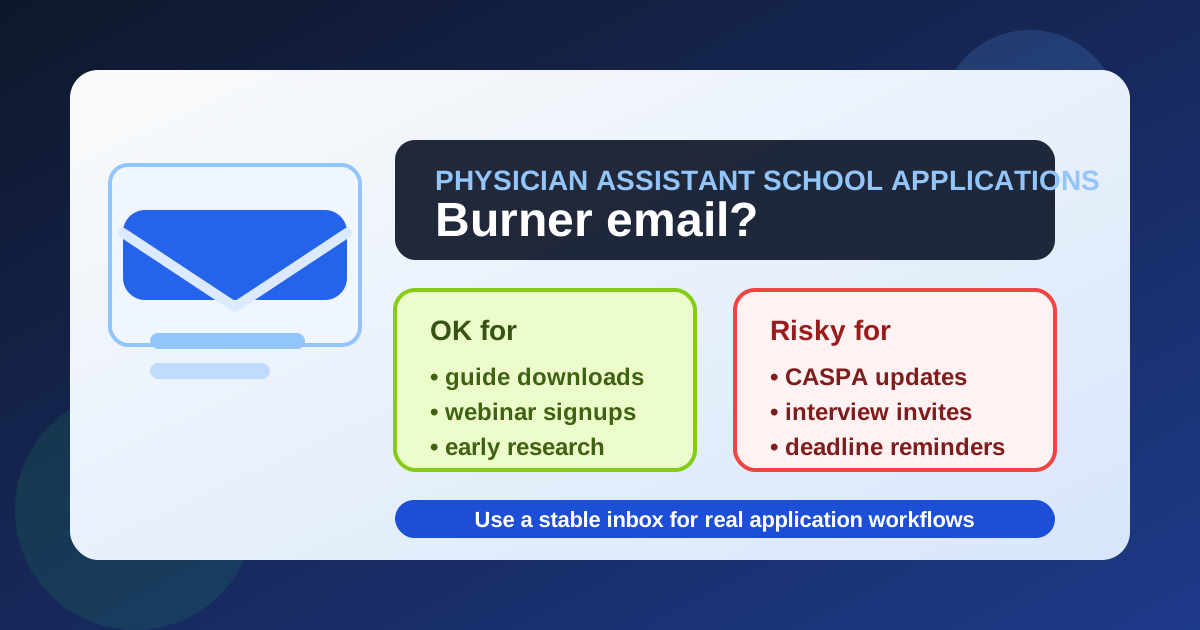
Usually no — a burner email is too risky as your main inbox for physician assistant school applications.
It can help with low-stakes research or one-off webinar signups, but CASPA updates, supplemental requirements, interview invites, and admissions deadlines belong in a stable address you can monitor for months.
Why this question matters for PA school applicants
Physician assistant school applications are not a quick one-and-done signup. Many applicants spend weeks researching programs, comparing prerequisites, organizing personal statements, tracking recommendation requests, and preparing materials before they even submit. After that, the process often continues through CASPA notices, school-specific supplemental applications, interview invitations, waitlist movement, and enrollment decisions.
That long timeline changes the email decision. A burner inbox might feel appealing because it limits spam and keeps your personal address off every mailing list, but the same short-lived convenience can become a real problem when an important message arrives late, gets buried, or lands in an inbox you no longer check. In other words, the privacy benefit is real, but the operational risk is real too.
What a burner email is actually good for
A burner email can still be useful in the early research stage. If you are browsing programs and want to protect your main inbox from marketing sequences, a short-lived address can help with low-risk actions such as:
- downloading a PA program brochure or admissions checklist
- registering for a general information session or webinar
- testing a school portal before deciding whether you want ongoing contact
- joining a newsletter while you compare multiple programs
- reading one-time promotional or event emails without merging them into your long-term inbox
That is the best use case. You get the immediate message you need without giving every school or education vendor your primary email address right away. If you use Anonibox for this part of the process, treat it as a buffer for low-stakes research rather than the permanent center of your application workflow.
Why a burner email is risky for real PA school applications
1. The timeline is longer than people expect
Physician assistant admissions can stretch across months. You may submit through CASPA, wait for verification, receive follow-up notices from individual schools, get interview invitations on different schedules, and then hear back about waitlists or next steps much later. A burner inbox that feels fine today may be a bad fit for communication you still need access to two, three, or six months from now.
2. Missing one message can create disproportionate damage
Not every email matters equally, but some absolutely do. A message about a missing prerequisite, a supplemental essay, a fee payment, an interview timeslot, a transcript issue, or a deposit deadline can be time-sensitive. If you miss one because you stopped checking a disposable inbox or the mailbox expired, the consequence is not just inconvenience. You could lose momentum with a program you actually care about.
3. PA school communication is often fragmented across systems
Applicants often assume the process lives in one clean portal. In practice, messages may come from CASPA, from a program’s own admissions office, from a separate interview scheduling tool, or from a financial-aid or student-services office later in the cycle. A burner address works badly when communication is fragmented, because you need consistency more than novelty.
4. Burner addresses can make organization harder, not easier
The idea behind a burner email is simplicity: keep clutter away from your main inbox. But for something as deadline-heavy as PA school applications, a short-lived address can create a second kind of clutter — scattered records. If your confirmations, receipts, instructions, and follow-ups are split between temporary inboxes and your real account, it becomes easier to overlook details when you are already juggling essays, prerequisite planning, and interview prep.
Privacy concerns are legitimate, but the answer is usually not a burner inbox
Applicants worry about spam for good reason. Once your email address reaches school mailing lists, test-prep providers, scholarship offers, third-party student services, and recruitment campaigns, your main inbox can get noisy fast. That does not mean every privacy-conscious applicant should use a burner email for the full application process. It usually means you should choose a more durable privacy strategy.
For most people, the safest middle ground is a dedicated long-term admissions email. That gives you separation without sacrificing reliability. You still protect your personal everyday inbox, but you keep one stable mailbox for everything related to PA school: CASPA messages, school supplementals, interview logistics, decisions, and aid notices.
Better options than a burner email
Use a dedicated admissions inbox
Create a separate email account that you plan to keep for the full cycle. This is often the best answer for PA school applicants. It keeps the process organized, reduces clutter in your personal inbox, and makes it easier to search one place when you need to find an old confirmation or deadline email.
Use an email alias on a stable account
If your provider supports aliases, that can be even cleaner. You get segmentation without managing a fragile throwaway inbox. An alias lets you filter, label, and track admissions email while keeping long-term access and recovery options under your control.
Use a burner email only for the earliest phase
If you really want the privacy benefits of a disposable inbox, limit it to browsing-stage activity. Once you know which programs are serious contenders, switch to your long-term admissions address before you begin anything that could trigger deadlines, status changes, or one-to-one follow-up.
A practical workflow that balances privacy and reliability
- Research broadly with a temporary address if you want: use it for brochures, webinars, and general inquiry forms.
- Create one stable application inbox: this becomes the address for CASPA and any real program communication.
- Move serious schools to the stable inbox early: do not wait until after you submit to switch.
- Set filters and labels: separate CASPA messages, individual programs, interview invites, and finance-related notices.
- Check the inbox on a routine schedule: during active application periods, daily is a good default.
- Save important messages outside the inbox too: keep a spreadsheet or checklist with schools, deadlines, contacts, and next steps.
This approach gives you the real privacy advantage people want without taking unnecessary admissions risk.
When a burner email may still be reasonable
There are a few narrow situations where a burner address is still sensible:
- you are collecting basic program information and have not narrowed your list yet
- you want to sign up for a one-time open house without starting a long marketing sequence
- you are testing whether a school sends useful information before committing your long-term address
- you are comparing several programs and want to keep early top-of-funnel outreach separated
Even in those cases, the burner inbox should be a temporary research tool, not the identity you use for the actual application cycle.
Red flags that mean you should switch to a stable inbox immediately
- you are about to submit through CASPA
- a program asks for follow-up documents or invites you to interview
- you start receiving school-specific instructions rather than general marketing email
- you need to track several deadlines across multiple programs
- you would be genuinely harmed by missing one message
If any of those are true, a burner inbox has outlived its safe purpose.
How to keep your admissions inbox from turning into spam chaos
One reason applicants reach for burner email is that they fear losing control once they start sharing an address. The fix is usually inbox management, not mailbox fragility. Use folders, rules, starred messages, or tags. Whitelist important domains. Archive marketing email aggressively. Forward critical items to a backup address if you want redundancy. Those small habits do more for application safety than relying on a disposable inbox ever will.
If you are privacy-conscious, the goal is not to avoid every piece of email forever. The goal is to decide which contacts deserve a durable channel and which ones do not. PA school applications very clearly belong in the durable category.
Final answer
A burner email is fine for early physician assistant school research, but it is usually the wrong choice for real applications. The process lasts too long, the messages matter too much, and the downside of losing access is larger than the upside of avoiding a little inbox clutter.
If you want privacy, use a dedicated admissions email or a stable alias instead. Save burner addresses for low-stakes browsing, and use a dependable inbox for CASPA, supplemental materials, interview scheduling, and final admissions decisions.