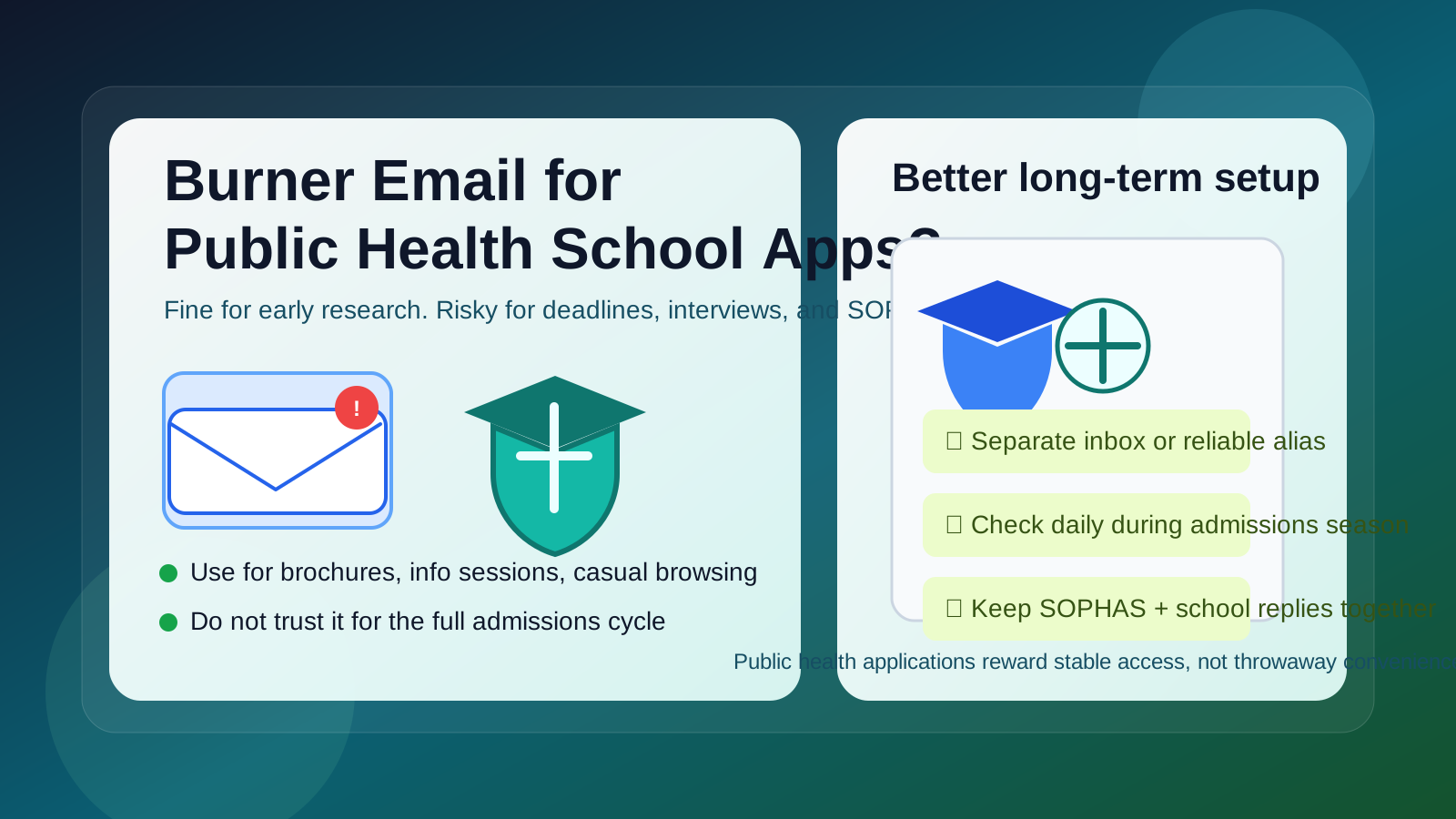
Usually no — a burner email is not the best main inbox for public health school applications because SOPHAS updates, interview invites, scholarship notices, and school follow-up can arrive over weeks or months.
A burner address can help for early brochure downloads or webinar signups, but most applicants should switch to a stable separate inbox or reliable alias before they submit anything important.
That is the practical answer behind searches for burner email for public health school applications. Public health admissions sits in an awkward middle ground: applicants often want more privacy than they get from using their everyday personal inbox, but they also need more reliability than a disposable or low-attention address usually provides. If you are applying through SOPHAS, comparing multiple MPH programs, or waiting on funding and interview updates, the inbox you choose matters more than it seems.
A burner email can still have a role. The mistake is treating it like a full-cycle admissions solution instead of a short-term privacy tool. The safer approach is to use a burner email only where the stakes are low, then move to a durable inbox before anything deadline-sensitive begins.
Why applicants even consider a burner email
Public health school research creates a lot of email long before you submit a real application. You may download brochures, register for virtual info sessions, request concentration guides, compare tuition pages, subscribe to department updates, or join mailing lists from schools you are only loosely considering. That early-stage marketing traffic can get noisy fast.
A burner email sounds appealing because it lets you explore without handing your main inbox to every school and form. That instinct is reasonable. Applicants are not wrong to want more privacy, cleaner organization, and less long-term spam.
The problem is that real admissions communication is different from simple marketing mail. Once you move from browsing into actual applications, the risk changes. You are no longer just protecting your inbox from clutter. You are managing messages that can affect whether your application is complete, reviewed on time, funded, or even seen by the right office.
What “burner email” means in this context
People use the term burner email in a few different ways. Sometimes they mean a fully temporary inbox that may disappear quickly. Sometimes they mean a secondary account they created only for one purpose and plan to abandon later. Sometimes they mean a throwaway address used for signups they do not fully trust.
For public health school applications, all of those versions share the same weakness: they are built to be replaceable. That makes them useful for low-stakes privacy, but not ideal for a multi-month process where missing a single message can matter.
A burner address is also easy to neglect. If you do not expect to keep it long term, you are less likely to monitor it carefully, organize folders, preserve recovery access, or keep checking it after you think the important part is over. Admissions timelines are exactly where that casual attitude can backfire.
When a burner email can actually help
A burner email is not useless here. It can be helpful during the earliest research stage, especially if you are still trying to understand which schools or concentrations belong on your serious list.
Reasonable low-risk uses include:
- Downloading a brochure or concentration overview
- Signing up for a one-time webinar or virtual information session
- Testing whether a school immediately starts a heavy promotional sequence
- Separating casual research from your real admissions workflow
- Comparing several programs before you decide where to apply
That is where a service like Anonibox fits naturally. If you are still in the browsing stage and want to keep generic school marketing out of your everyday inbox, a short-term address can be a useful filter.
But notice the pattern in those examples: none of them are core admissions tasks. They are all optional, low-risk, and easy to repeat if a message gets lost. That is very different from waiting for a transcript problem notice, an interview invitation, or a funding update.
Where burner email starts to become risky
1. SOPHAS and school messages do not all arrive at once
Public health applicants often assume the important emails will come right after account creation. In reality, many messages arrive later. Verification updates, missing-item notices, portal invitations, school-specific reminders, recommendation issues, and transcript questions can show up days or weeks after you first sign up. If your burner inbox is no longer active, monitored, or easy to access, you may not see them in time.
2. Different offices may email from different systems
A single application cycle can involve messages from SOPHAS, graduate admissions offices, departmental coordinators, scholarship teams, interview schedulers, faculty contacts, and sometimes financial-aid staff. Those messages may not look similar, and they do not always arrive in a tidy order. A burner inbox makes this harder because it is often used casually rather than maintained like a real project inbox.
3. Interview and scholarship timelines can be fragile
Many public health programs use rolling review, limited interview windows, or short response deadlines. If you miss a request to confirm an interview slot, submit an extra form, or reply to a scholarship follow-up, the damage is not theoretical. You may lose momentum or miss the opportunity completely.
4. Account recovery can become a mess
Even if the burner address technically stays alive, it may not be an account you want tied to long-term admissions records. If you forget the password, lose access to recovery information, or stop checking the inbox consistently, you turn a privacy convenience into an administrative problem. That is avoidable if you start with a more durable setup once the process becomes real.
Burner email vs. temporary email vs. alias vs. separate inbox
These options sound similar, but they solve different problems.
- Burner email: good for low-stakes signups you may not want to keep using. Weak for long admissions timelines.
- Temporary email: even more disposable; useful for early browsing, riskier for anything tied to deadlines or identity continuity.
- Email alias: often a stronger middle ground, because it gives you separation while still routing to a stable inbox you actually monitor.
- Separate inbox: usually the safest option for full application cycles if you want both privacy and reliability.
If you are seriously applying to public health programs, the last two options usually make more sense than the first two.
The best setup for most public health applicants
For most people, the smartest workflow looks like this:
- Use a burner or temporary inbox only during casual research. Keep it for brochure downloads, webinars, and low-value mailing lists.
- Create a dedicated long-term admissions address before submitting real applications. This can be a separate inbox or a reliable alias that forwards into one.
- Use that durable address consistently everywhere important. SOPHAS, school portals, financial-aid forms, interview replies, and admitted-student follow-up should all live in one place.
- Check it daily. An inbox strategy only works if you actually watch it.
This gives you privacy where privacy helps and reliability where reliability matters. You are not forced to choose between “share my main personal inbox with everyone” and “trust a throwaway address with my future.”
Signs you should stop using a burner email immediately
If any of these are now true, it is time to move to a stable address:
- You created a real SOPHAS or school application account
- You requested letters of recommendation
- You paid an application fee or submitted materials
- You are waiting for an interview invite or status update
- You are discussing scholarships, assistantships, or financial aid
- You are narrowing your list and know which programs matter most
At that point, a burner email stops being clever and starts being risky.
How to switch without losing track of messages
If you already used a burner address during research, the safest move is to transition before the critical stage deepens.
- Create the long-term admissions inbox first
- Update your email anywhere a real application account exists
- Save any useful prior messages, links, or attachments
- Check both inboxes for a short overlap period
- Stop using the burner address for anything tied to active deadlines
That overlap matters because some schools keep using the first address on file longer than you expect. A clean transition is better than a sudden cutoff.
Practical privacy tips for applicants who still want more separation
You do not need to expose your main everyday inbox just because burner email is a bad fit for final applications. Better options include:
- Use a dedicated school-application inbox with a professional name
- Use an alias that forwards to a monitored primary account
- Create labels or folders for SOPHAS, schools, scholarships, and interviews
- Turn on two-factor authentication for the real admissions inbox
- Whitelist domains from application platforms and target schools
- Keep a simple spreadsheet of portals, login emails, and deadlines
Those steps usually reduce stress more than a burner email does, because they solve both privacy and organization at the same time.
A quick checklist before you choose
Ask yourself these questions:
- Am I still browsing, or am I already applying?
- Would missing one message actually matter now?
- Am I likely to keep checking this address every day for months?
- Can this inbox handle school portals, interview replies, and funding follow-up reliably?
- Would an alias or separate inbox give me the same privacy with fewer risks?
If the stakes are rising, the answer usually points away from burner email.
Final answer
A burner email for public health school applications can be useful for early research, but it is usually the wrong choice for your main admissions inbox. Public health school communication often runs through SOPHAS, individual programs, scholarship offices, and interview scheduling over a long timeline. That kind of process rewards stable access, not throwaway convenience.
If you want privacy, use a burner address only for low-stakes exploration. Once real applications begin, move to a reliable alias or separate inbox you can monitor every day. That is the setup most likely to protect your privacy and keep you from missing something important.