Usually no — a burner email is rarely the best address to print on your resume. A stable job-search inbox is usually better because recruiters may reply days or weeks later, and you need an email address you will still be checking.
A burner email can help around the edges of a job search, but the resume itself usually works best with a professional long-term address you control and monitor every day.
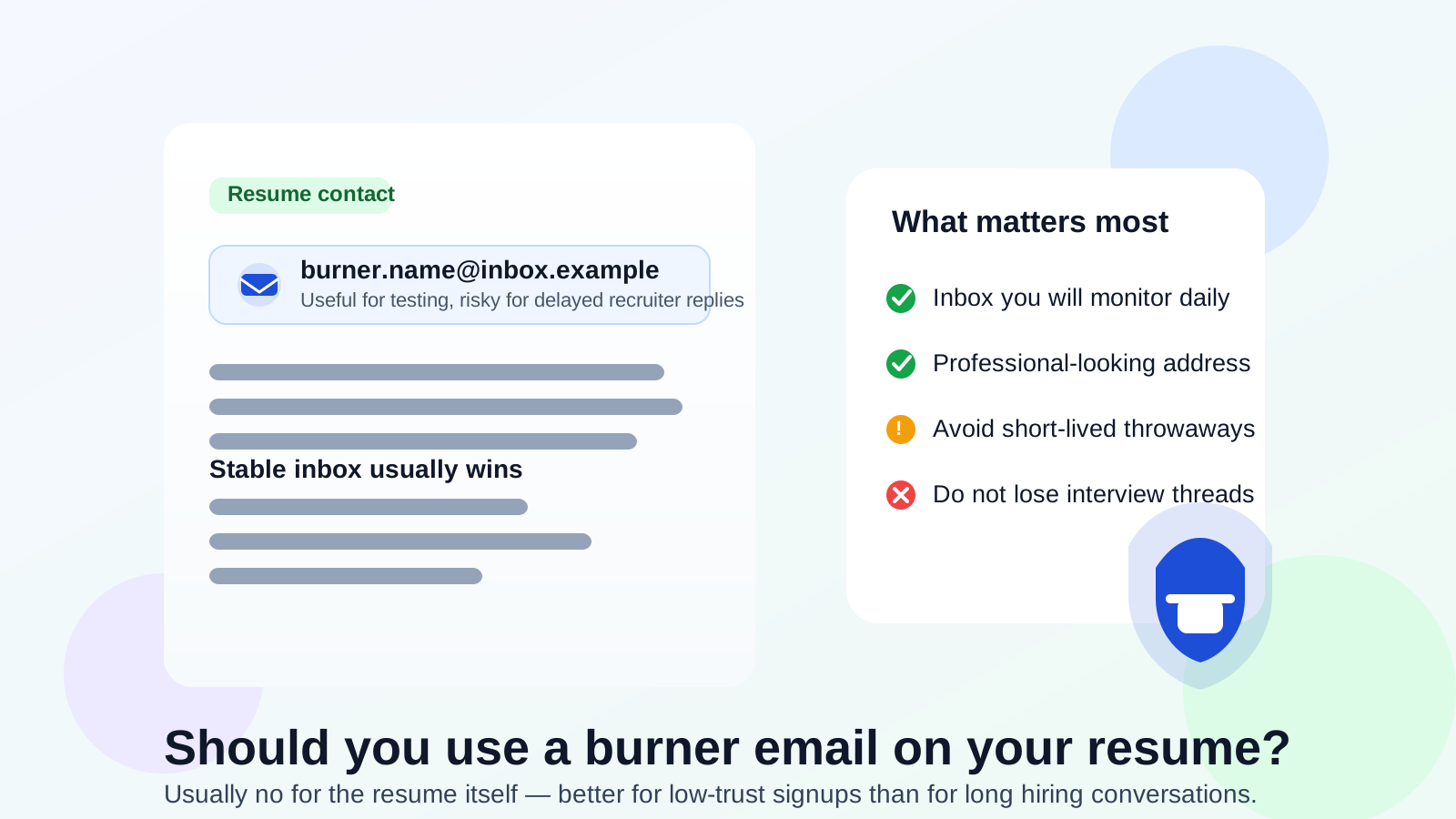
That short answer is what most people really need when they search for should you use a burner email on your resume, but the details matter. A resume is not the same thing as a one-time signup form, a gated download, or a job board account you are testing for a weekend. It is a document that can be saved, forwarded, revisited, and used to contact you much later than you expect.
So while a burner email can protect your main inbox from spam, it can also create exactly the kind of follow-up problem you were trying to avoid. The right move depends on what you mean by “burner,” how serious the application is, and whether you are using the address only for first-contact experiments or as your actual resume identity.
What people usually mean by a burner email
The phrase burner email gets used loosely, and that is where a lot of bad advice starts. In practice, most people mean one of three different things:
- A true temporary inbox: short-lived, disposable, useful for quick verification links, but risky for long conversations.
- A separate long-term job-search email: isolated from your main inbox, but still stable enough for interviews, calendar invites, and offer-stage follow-up.
- An alias or forwarding address: a separate public-facing email that still routes into a mailbox you already control.
If you mean the first one, the answer is usually no for a resume. If you mean the second or third, the answer becomes more flexible because those setups can still look professional and remain reliable over time.
Why people consider putting a burner email on a resume
The idea is not irrational. Resumes get uploaded to job boards, attached to applications, emailed to recruiters, shared inside hiring teams, and sometimes stored for months. That can lead to unwanted outreach long after your job search ends. People use burner emails because they want to:
- keep recruiter spam out of their main inbox
- separate job-search traffic from personal messages
- reduce exposure when applying on lower-trust sites
- track which platforms generate useful replies versus noise
- shut down a search-related address later if it gets messy
Those are all sensible goals. The problem is that the resume itself usually needs more durability than a disposable workflow can offer.
Why resumes are different from job-board signups
A signup form for a resume builder or a job-alert platform often needs only one thing from your email address: quick verification. A resume needs much more than that. It may be opened again after an interview pipeline stalls, after a manager gets back from vacation, or after another candidate drops out.
That means the email on your resume has to support delayed replies, interview scheduling, assessment links, document requests, and offer-stage logistics. Even if the employer moves slowly or inconsistently, your contact address has to stay dependable.
That is the biggest reason burner email advice changes when the conversation moves from “job-search privacy” to “what should appear on the resume itself.”
The main risks of using a burner email on your resume
You can miss delayed recruiter replies
This is the biggest risk by far. Hiring rarely happens on your timeline. A recruiter may reach out the same day, or they may return to your resume two weeks later. If the address was meant to be disposable, lightly monitored, or temporary, you may miss the message that mattered.
It can make you harder to reach during a real hiring process
Once a company moves you forward, email is often tied to interview schedules, take-home tasks, confirmations, and portal logins. A burner setup that felt clever during the first application can become annoying once the process gets real.
It can look improvised if anything breaks
Most recruiters will not care about your privacy theory. They care whether you respond. If messages bounce, go unanswered, or come from an address that looks obviously disposable, the problem is not whether burner email is morally acceptable. The problem is that you look less reachable than another candidate.
You may lose your own paper trail
Job searches already involve enough moving parts: different applications, different deadlines, recruiter threads, interview links, and notes about who said what. If your resume points people to an inbox you do not use regularly, you make your own process harder to manage.
A burner email can solve the wrong problem
If your main concern is privacy, the answer is often not “put a disposable inbox on the resume.” The better answer is usually “use a dedicated but stable job-search inbox on the resume, and reserve temporary email for lower-trust signups around the search.”
When a burner email can still be useful
This does not mean burner email is useless in a job search. It just means the resume itself is usually the wrong place for it. A burner email can still help when you are:
- testing unfamiliar job boards
- downloading gated salary guides or hiring reports
- trying AI resume tools before you trust them
- signing up for alerts, newsletters, or trial platforms
- checking whether a recruiter marketplace is worth the noise
That is where a tool like Anonibox fits naturally. If you want to protect your main inbox while experimenting with lower-trust sites, a temporary inbox can be useful. But if the question is what address should live on the resume PDF you send to real employers, a durable inbox usually wins.
Better alternatives than a burner email on your resume
1. A dedicated long-term job-search inbox
This is the safest middle ground for most people. Create a separate email account just for your job search, but make it a real address you plan to keep for the full search cycle. That gives you separation without fragility.
A good dedicated inbox should be:
- easy to check every day
- professional-looking
- stable enough for months of follow-up
- simple enough to search and organize later
2. An email alias that forwards into a mailbox you already use
An alias can give you privacy and organization without forcing you to monitor one more inbox. If your alias forwards into an account you already check, you get a cleaner public-facing address while keeping your real workflow intact.
3. Temporary email only for low-trust entry points
If a site wants an email before it reveals alerts, scans your resume, or lets you test a feature, that is where temporary email makes more sense. It is a screening tool, not usually a resume identity.
What if you still want some privacy on your resume?
If you are concerned about spam, the answer is not necessarily to become fully disposable. It is usually to become more intentional. Here is a practical setup that works for a lot of people:
- Use a dedicated long-term email on the resume itself.
- Use temporary email for low-trust job tools, newsletters, and one-off signups.
- Use a separate phone number if you also want to control recruiter calls and text spam.
- Retire or archive the dedicated search inbox after the job search ends if it becomes noisy.
That approach keeps you reachable for real opportunities without exposing your main personal inbox everywhere at once.
Signs a burner email is a bad choice for your resume
- You do not plan to monitor it daily.
- You expect the inbox to expire or stop being useful soon.
- You are applying to jobs where delayed follow-up is common.
- You are already struggling to track applications across multiple tools.
- You would feel nervous if a recruiter replied three weeks from now.
If any of those sound familiar, the address belongs in your testing workflow, not on your resume.
When it might be acceptable anyway
There are some edge cases where a burner-style address can work. For example, if it is not truly temporary, you control it long term, it looks professional enough, and you check it consistently, then it is basically acting like a dedicated job-search inbox. At that point, the debate becomes less about the word burner and more about whether the address is stable, credible, and easy for you to manage.
So the real rule is simple: if the email behaves like a disposable inbox, do not put it on the resume. If it behaves like a stable communication channel, it may be fine even if you mentally think of it as your burner account.
A quick decision checklist
Before you print an email address on your resume, ask:
- Will I still check this inbox every day a month from now?
- Can this inbox handle interview scheduling and follow-up threads?
- Would I trust it for an assessment link or offer-stage message?
- Does it look professional enough for a recruiter to take seriously?
- Am I using it because it is truly the best option, or just because I am trying to avoid spam in the simplest possible way?
If the answer breaks down at “daily monitoring” or “long-term follow-up,” it probably should not be on the resume.
Final answer
Usually no — a burner email is not the best address to use on your resume. It can help you shield your main inbox during job-search experiments, but the resume itself usually needs a stable email that can survive slow hiring timelines, recruiter follow-up, and repeated document sharing.
The better setup is usually a dedicated long-term job-search inbox or a reliable alias, with temporary email reserved for the noisier edges of the search. That gives you privacy without making yourself harder to contact when a real opportunity finally lands.