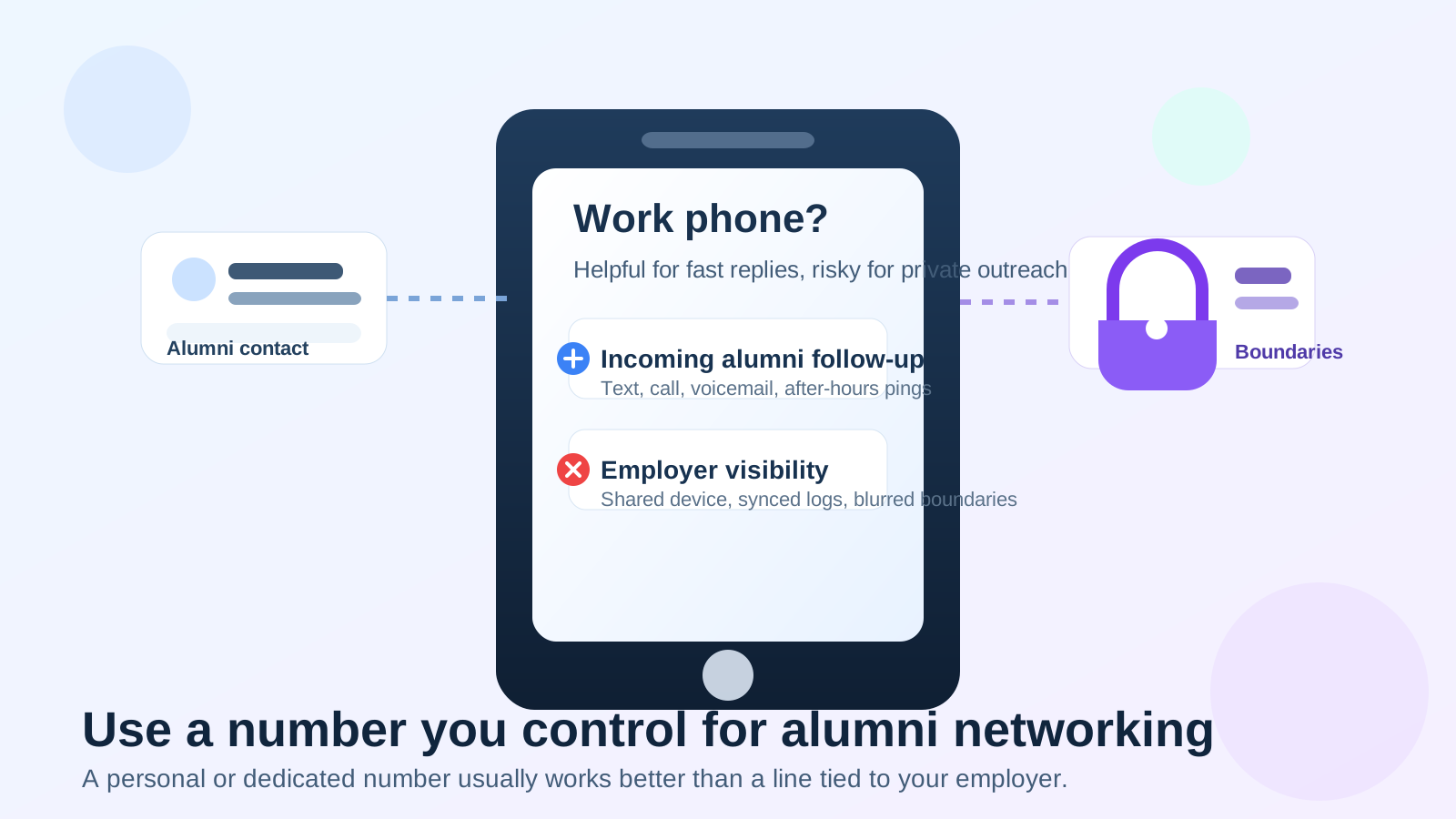
Usually no. You generally should not use your work phone number for alumni networking if that number is tied to your current employer, because it can expose private career conversations, blur professional boundaries, and create visibility you do not fully control.
A personal number or a separate number you manage yourself is usually the better choice. It keeps you reachable for alumni follow-up without turning your employer-owned line into the channel for confidential networking.
Why this question matters more than it seems
Alumni networking often starts casually. You reconnect with someone from your university, meet an alum through a campus group, or get introduced to a graduate who works at a company you admire. The exchange feels friendly, so sharing a phone number can seem harmless.
But alumni networking is not the same thing as routine business contact inside your current job. These conversations can lead to informational chats, referrals, introductions, and sometimes a quiet job search. That changes the privacy calculation. The number you share is not just a convenience detail. It can affect how visible your networking is, how easy it is to maintain boundaries, and how much control you keep if the relationship changes over time.
If your work phone number belongs to a company-managed device, VoIP line, or employer-paid plan, you may be using the wrong tool for a relationship that is supposed to stay personal and portable.
Short answer: use a number you control, not a number your employer controls
The cleanest rule is simple: for alumni networking, use a number you can keep, monitor, and separate from your employer. That might be your personal mobile number. It might be a dedicated second number you use for job-search and professional outreach. In some cases, you may not want to share a phone number at all until the relationship becomes more active.
What usually makes a work number a poor fit is not that something dramatic will happen every time. It is that the downside is unnecessary. Alumni relationships often last longer than your current role, and they should not depend on infrastructure owned by your employer.
What can go wrong if you use your work phone number?
1. Your employer may have more visibility than you expect
People often think of privacy only in terms of direct surveillance, but real-life exposure is usually more mundane. A missed call appears during the workday. A voicemail transcript shows up on a synced device. A text preview pops up while you are presenting. A company mobile-management policy backs up logs you do not personally control. None of that has to be malicious to be uncomfortable.
If you are networking with alumni because you want mentorship, referrals, or future options outside your current employer, using a work number increases the chance that ordinary follow-up becomes visible in the wrong context.
2. It blurs your identity
When you hand someone a work number, you may accidentally frame the relationship as employer-to-employer or role-to-role rather than person-to-person. The alum may assume they are reaching you primarily in your current company capacity, not as an individual managing your own career.
That matters because alumni networking usually works best when it feels personal, long-term, and independent. If you change jobs, lose access to the number, or want to keep the relationship going after leaving your company, the line tied to your current role becomes a weak foundation.
3. It creates after-hours and boundary issues
Alumni follow-up does not always happen on a neat schedule. Someone may text after an evening mixer, call during a lunch break, or send a voicemail on a weekend after promising to introduce you to a hiring manager. If those contacts land on a work-managed phone or system, your personal networking starts living inside employer space.
That may feel messy even if nothing overtly bad happens. The point of a healthy contact strategy is to keep personal career-building and employer infrastructure from overlapping more than necessary.
4. You may lose the number when you need the relationship most
Alumni networking is not always immediate. A conversation today may lead to a useful connection six months later. If the number belongs to your employer and your job changes, you may lose access to the contact thread right when the relationship becomes valuable.
A personal or dedicated number is more portable. That portability matters because the best professional relationships outlast a single company.
When using a work phone number might be acceptable
There are a few cases where using a work number is not automatically a mistake.
- You are networking openly as part of your current role. If the alumni contact is directly relevant to employer-sponsored partnerships, recruiting, fundraising, or sales, then a work number may be the correct business channel.
- You are not job searching or seeking private career help. If the exchange is purely public and professional, the privacy downside may be smaller.
- Your work number is effectively your public professional number and you fully understand the trade-offs. Some roles are built that way, but even then it is worth asking whether it is the best fit for alumni conversations that may turn personal or exploratory.
Those exceptions are real, but they are narrower than most people think. If the conversation has any confidential career angle, a work number is usually the wrong default.
Better alternatives for alumni networking
Use your personal number
If you are comfortable sharing it, your personal mobile number is often the simplest and most stable choice. It follows you when jobs change, it keeps the relationship independent of your employer, and it gives you direct control over how you answer, mute, save, or block contacts.
Use a dedicated second number
This is often the best middle ground. A separate number lets you stay reachable without giving every new contact access to your main personal line. It can also help you keep alumni networking, recruiter calls, and job-search logistics organized in one place.
If you already separate your email during career exploration, the same logic applies here. Anonibox can help you avoid exposing your primary inbox too early, and a dedicated phone number can do the same thing for calls and texts.
Start with email or LinkedIn first
You do not need to jump straight to phone contact. For many alumni conversations, email or LinkedIn is enough early on. Once the relationship feels useful and trustworthy, you can decide whether exchanging numbers makes sense.
How to decide what to share
Before giving an alum your number, ask yourself:
- Am I networking privately, or as part of my current employer role?
- Would I be comfortable if this call or text appeared on a work-managed device or system?
- Do I want to keep this relationship after I leave my current job?
- Would a personal or separate number solve the same problem with fewer risks?
- Does this conversation really need phone contact yet, or would email work fine?
If those questions make you hesitate, that is a sign your work number is probably not the best channel.
Practical best practices if you do share a number
Whether you use a personal number or a separate one, a few habits make alumni networking easier to manage:
- Use a clear voicemail greeting. You want alumni contacts to know they reached the right person without oversharing details.
- Keep messages professional but warm. Alumni networking works best when you sound organized, respectful, and easy to follow up with.
- Move slowly with sensitive topics. Do not jump into confidential job-search details by text if you have not built trust yet.
- Save important contacts somewhere stable. A short note about where you met and what you discussed can be more useful than the number alone.
- Protect your main channels. If you expect a lot of outreach, use a separate email and separate number strategy so one networking push does not spill into every part of your life.
Red flags that make a work number an even worse idea
- You are actively exploring a move away from your current employer.
- Your device is company-owned or heavily managed.
- Your role involves shared call logs, synced dashboards, or team-visible communication tools.
- You already feel uneasy about after-hours messages showing up on your work phone.
- You expect this alumni contact to become a long-term relationship rather than a one-off chat.
In those situations, using a work number is usually all downside and very little upside.
Final answer
Usually no. You generally should not use your work phone number for alumni networking unless the relationship is clearly part of your official job and you are comfortable with the visibility that comes with that.
For private career conversations, referrals, and long-term alumni relationships, a personal number or dedicated second number is almost always the better choice. It protects your boundaries, reduces employer visibility, and gives you a contact method you can keep long after your current role changes.
That is the real goal: stay easy to reach without tying personal career growth to a phone line your employer may partially control.