Yes, you can use Hide My Email for job referrals, but only if you want extra privacy without sacrificing continuity and you plan to keep the alias active for the full conversation. It is a better fit than handing out your main address everywhere, but it is not a magic throwaway solution for referrals that may turn into interviews, follow-ups, and offer-stage messages.
For most people, Hide My Email works best when a referral is real, the contact is trustworthy, and you still want to separate job-search traffic from your everyday inbox. If the conversation may stretch over weeks, you need an alias you will keep monitored, organized, and easy to recognize later.
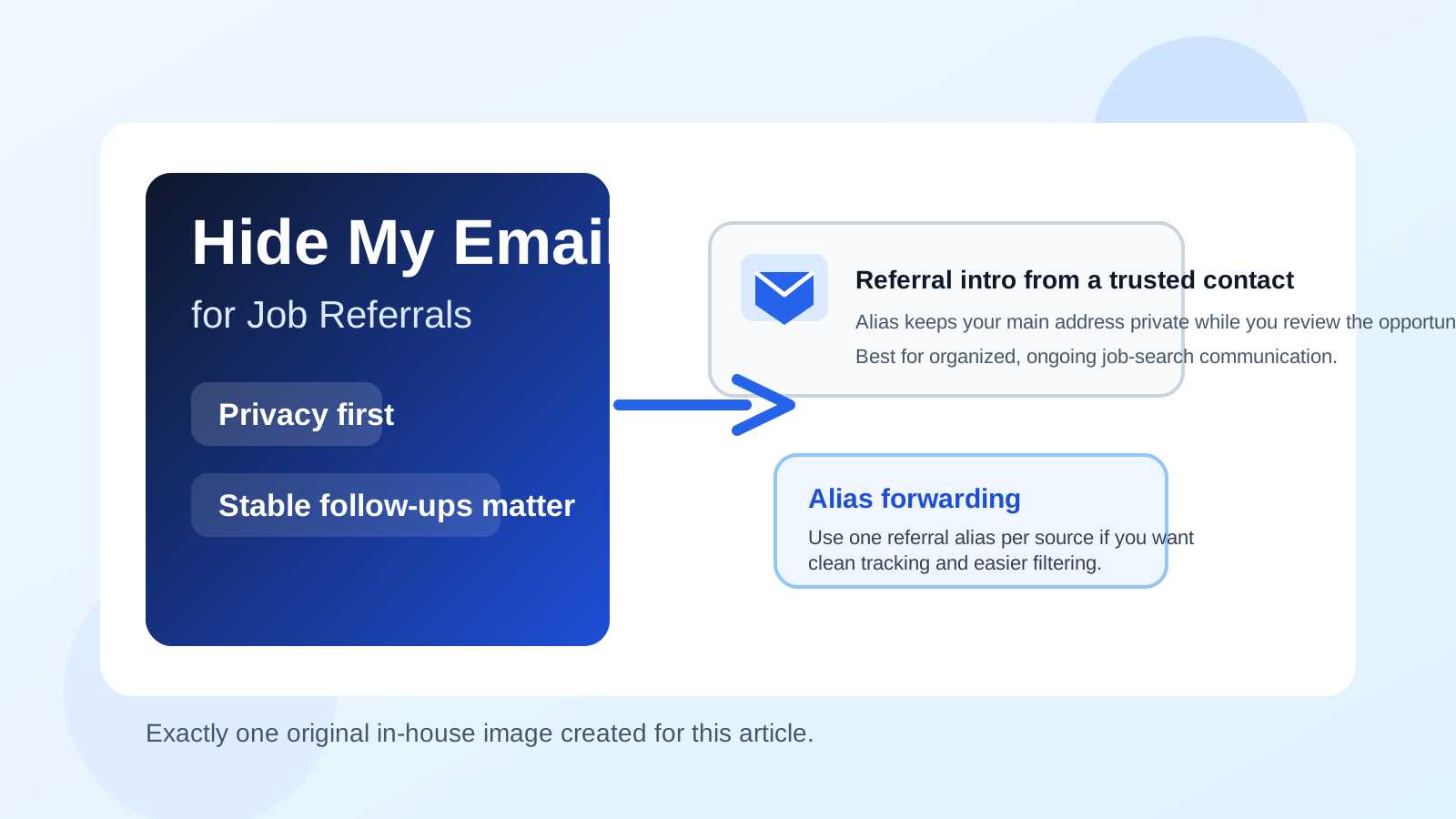
Why people consider Hide My Email for job referrals
Job referrals are personal. They often come from friends, former coworkers, alumni, recruiters, or people in your network who are willing to introduce you to a hiring team. That makes the communication more valuable than a random cold application, but it also means your contact details can move quickly from one inbox to another.
That is where Hide My Email becomes appealing. Instead of giving every referrer your main personal address, you can hand out an Apple-generated alias that forwards mail to your real inbox. You still receive the message, but the other person does not need to know your main address immediately.
For privacy-conscious job seekers, that is a reasonable goal. Referrals can be legitimate and helpful while still creating long message chains, extra newsletters, follow-up nudges, or recruiter handoffs you would rather keep separated from your everyday inbox.
Short answer: usually yes, but treat it like a stable alias, not a disposable inbox
The biggest mistake is thinking Hide My Email should be used like a one-time burner. Referrals are rarely one-message interactions. A good referral can lead to résumé sharing, scheduling, introductions to hiring managers, interview loops, and later status updates. That requires continuity.
If you use Hide My Email, use it as a controlled alias for a real job-search workflow, not as a temporary address you plan to forget about. In other words, it is closer to a privacy layer than to a throwaway mailbox.
When Hide My Email is a good choice for job referrals
1. You want privacy from the first introduction
If someone is referring you into a company but you do not want your main address circulating internally right away, an alias gives you a buffer. That can be useful when the introduction is warm but you still want to control how widely your primary inbox is shared.
2. You like separating job-search communication from daily life
Even legitimate referrals create noise. You may get résumé requests, company info, interview links, reminders, and later follow-ups. A separate alias makes that traffic easier to spot and organize.
3. You want to track where messages came from
Using a dedicated alias for a specific referral source can help you remember who introduced you, which company the thread belongs to, and how the contact chain started. That is helpful when you are managing multiple conversations at once.
4. You already live comfortably in the Apple ecosystem
If you already understand how your aliases are managed and forwarded, the setup friction is low. Familiar tools are usually better than complicated privacy workflows you will not maintain consistently.
Where Hide My Email can create friction
It still depends on your real inbox
Hide My Email forwards mail. That means the underlying destination still matters. If your real inbox is cluttered, ignored, or poorly filtered, the alias alone does not fix that problem.
Referral threads can become long-lived
A referral is often more durable than a one-time signup. The same thread may matter a month later when a recruiter circles back or a hiring manager wants to reconnect. If you disable the alias, lose track of it, or forget why you created it, you create avoidable friction for yourself.
Not every workflow stays simple
Some referrals involve multiple people, forwarded threads, attachments, calendar coordination, and later conversations with recruiters or hiring teams. In those cases, a dedicated professional inbox may feel cleaner than relying on an alias layer forever.
It can encourage overconfidence
Privacy tools are useful, but they do not replace judgment. An alias does not make a suspicious recruiter trustworthy, a vague job legitimate, or a scam harmless. You still need to vet the source, the company, and the request.
How referrals differ from cold applications
This matters. A cold application can be transactional: submit the form, confirm the email, and wait. Referrals are usually relational. A real person is putting their reputation behind an introduction, and the conversation often moves faster.
Because of that, a referral address should feel dependable. It should be something you check regularly and can keep active without confusion. That is why Hide My Email can work, but only if you treat it like part of a serious job-search system rather than an anonymous one-off tool.
Best practices if you use Hide My Email for job referrals
Create one alias per meaningful referral source
If you are actively networking, one alias for every important referral path is often smarter than reusing a single address everywhere. It keeps conversations easier to trace and reduces confusion when different contacts forward your information internally.
Label or filter the forwarded messages immediately
As soon as the first referral email lands, tag it, move it, or filter it in your destination inbox. You do not want a valuable introduction buried under routine mail.
Use a professional destination inbox
The forwarded mail should arrive somewhere you genuinely monitor. That inbox should have a professional display name, a sensible signature if you use one, and enough organization that you will not miss time-sensitive replies.
Switch to a long-term address when the process becomes formal
If the referral turns into a serious hiring conversation, it is fine to move the thread to the stable address you intend to keep using for applications, interviews, and offer-stage paperwork. You do not need to stay on an alias forever just because you started there.
Keep your referral notes outside the inbox too
Write down who referred you, when they did it, which alias you used, and what stage the conversation reached. That tiny bit of organization prevents messy follow-up later.
When a dedicated job-search email may be better than Hide My Email
If you expect a long search, a lot of networking, or multiple parallel referrals, a dedicated job-search inbox can be simpler. It gives you a stable address you control directly, with clean folders and no ambiguity about whether a forwarded alias is still active.
Hide My Email is strongest when you want privacy plus convenience. A dedicated inbox is stronger when you want long-term control and a single professional identity for all job-search communication.
That is also where a tool like Anonibox fits naturally in the bigger privacy picture. For disposable signups, one-off tests, or situations where you do not want to expose your main inbox at all, a temporary mailbox can be useful. But for real referrals that may matter weeks from now, a stable alias or dedicated job-search inbox is usually the better choice.
When you should avoid using Hide My Email for referrals
- If you rarely check the destination inbox.
- If you plan to deactivate aliases aggressively and might break continuity.
- If the referral is likely to turn into a long, multi-person thread immediately.
- If you already have a clean professional inbox built specifically for your job search.
- If the situation feels suspicious and the real problem is trust, not privacy.
In those cases, either use your dedicated job-search email or pause the conversation until you have verified the opportunity properly.
A quick decision checklist
- Is this a legitimate referral from someone I trust?
- Do I want to protect my main address from being shared more widely?
- Will I keep this alias active for as long as the process lasts?
- Is my destination inbox organized enough for time-sensitive follow-up?
- Would a dedicated job-search inbox be simpler for this situation?
If most of your answers point toward privacy plus stable follow-through, Hide My Email is a sensible option. If your answers point toward long-term coordination, lots of stakeholders, or the need for one polished address everywhere, a dedicated inbox may be the cleaner move.
Final verdict
Hide My Email can be a smart choice for job referrals because it protects your main inbox while still letting you receive real introductions and follow-ups. The key is using it as a dependable alias, not as a disposable address you plan to abandon.
If you want privacy without losing control, it works well. If you want the simplest long-term setup for a serious search, a dedicated professional inbox may still win. Either way, the best outcome is the same: stay reachable for real opportunities while keeping unnecessary exposure, inbox clutter, and job-search sprawl under control.