Yes, a custom domain email can be a smart choice for background checks if you want a professional address that stays separate from your main personal inbox without looking disposable or temporary.
It works best when the inbox is stable, monitored, and easy for employers or screening vendors to trust and reach throughout the full hiring process.
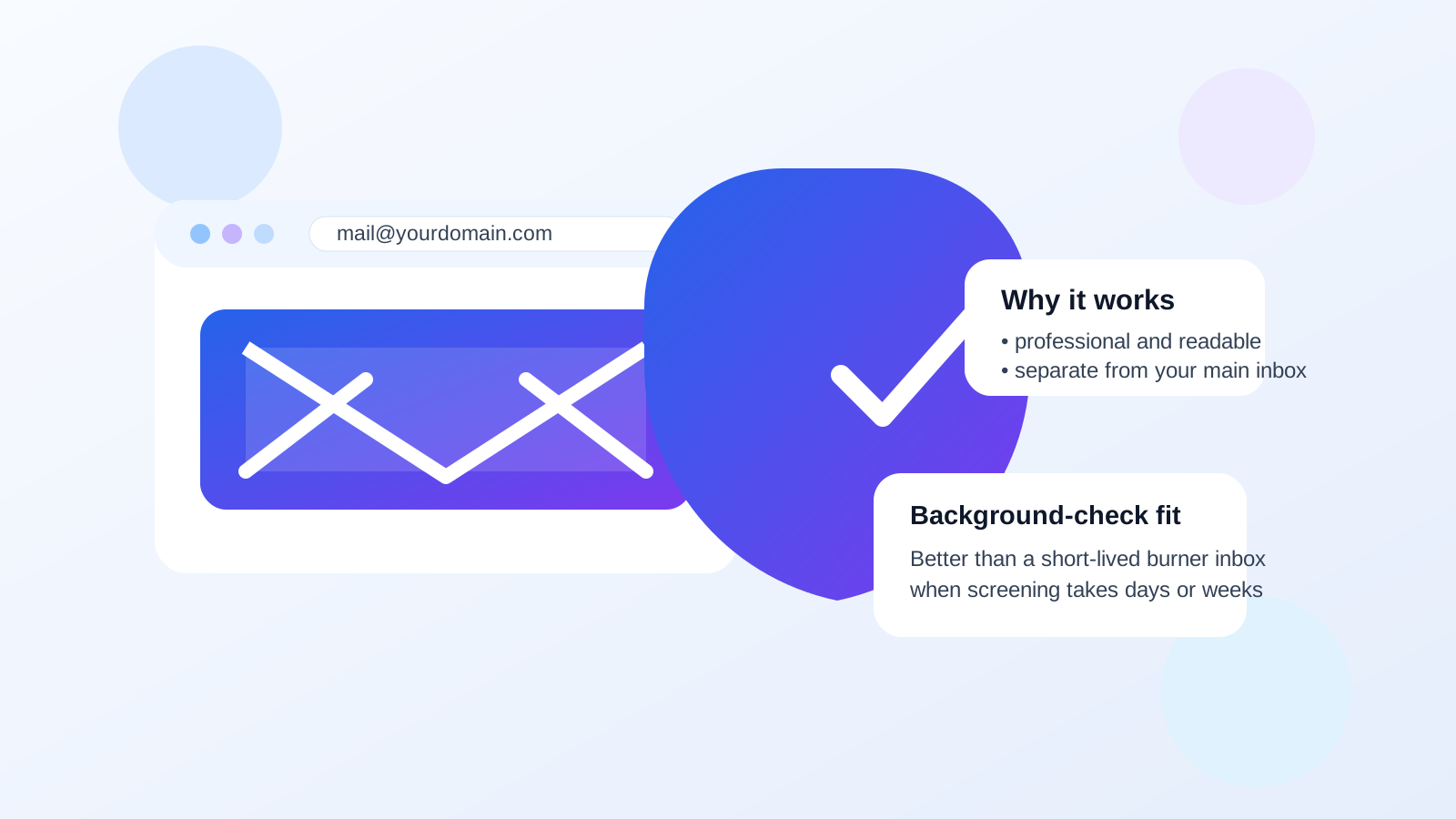
That is the short answer to should you use a custom domain email for background checks. For many job seekers, it can be an excellent middle ground between using a main personal email address for everything and using a short-lived temporary inbox that may not feel reliable enough for late-stage hiring.
Background checks usually happen when the stakes are higher than they were during the first application. At that point, communication may involve HR teams, third-party screening companies, secure portals, document requests, identity confirmations, and status reminders. You need an email address that is easy to monitor and credible enough for practical hiring communication, but you may still want to protect your main inbox from long-term clutter and unnecessary data spread.
A custom domain email can solve that problem well. It gives you more control, cleaner separation, and a more durable identity than a throwaway address, while still helping you avoid tying every hiring process directly to the same inbox you use for personal life, shopping, finance, and years of old accounts.
Why background checks change the email decision
People often think about privacy tools as if every hiring step has the same requirements, but that is not really true. Early in a job search, you might reasonably use stricter segmentation because you are dealing with job boards, recruiter outreach, newsletters, and uncertain opportunities. A background check is later in the funnel. The employer is usually real, the process is more formal, and the communication matters more.
That means your email address needs to do two things at once:
- stay private enough that you are not oversharing your main identity footprint
- stay stable and professional enough that you do not create avoidable friction
A custom domain inbox is often a strong fit for that stage because it looks intentional rather than disposable. It can help you keep hiring communication organized without sending the signal that the address might disappear tomorrow.
What makes a custom domain email attractive for background checks?
A custom domain email can be useful for several reasons.
1. It feels more durable than a temporary inbox
Background checks can take longer than people expect. Some finish quickly, but others involve follow-up questions, portal reminders, re-submission requests, or delays with references and verification steps. A custom domain address is better suited to that reality than a short-lived inbox that may expire or get abandoned too early.
2. It keeps your main personal inbox out of more systems
Your main email address often connects to a huge part of your life. It may already be tied to banking alerts, family communication, medical portals, shopping receipts, travel, and years of password resets. Using that same address everywhere in hiring adds more exposure than some people want. A custom domain email gives you a cleaner buffer.
3. It can look professional without feeling corporate
A work email is usually the wrong choice for background checks if you are job hunting discreetly, but some job seekers also dislike relying on a very personal address they created years ago. A custom domain can look polished and deliberate without being attached to a current employer.
4. It supports long-term control
If you control the domain and mailbox, you control what happens next. You can keep using it, route it elsewhere, archive it, or phase it out on your own terms. That is a better privacy position than relying entirely on third-party inboxes you do not own.
When a custom domain email is a particularly good fit
This approach makes the most sense when:
- you want more separation than your main personal inbox gives you
- you are late in the hiring process and need something more reliable than a disposable address
- you expect several employers or screening vendors to contact you over time
- you are privacy-conscious but still want to appear organized and reachable
- you already use a separate inbox strategy for job searching and want a stronger long-term version of it
It can also be a good choice for people in industries where professionalism matters, people who are switching careers and want a cleaner identity for the search, and people who simply do not want background-check messages mixed into the same inbox they use for everything else.
When your main personal email is probably still fine
A custom domain email is helpful, but it is not mandatory for everyone. Your main personal inbox is often perfectly acceptable if:
- you only have a small number of legitimate hiring processes underway
- your current address already looks professional and is easy to monitor
- you are not especially worried about long-term inbox clutter or account spread
- you would be less likely to miss messages on a newer mailbox
The most important point is reliability. If your custom domain setup is complicated, unstable, or something you do not check consistently, then it is not helping you. A privacy strategy that causes missed portal links or delayed responses is not really a win.
Why a custom domain is different from a burner email
This distinction matters a lot. A burner email and a custom domain email are not solving exactly the same problem.
A burner address is useful when you want strong separation for low-trust or early-stage situations, especially if you mainly need to receive a quick confirmation or avoid long-term marketing noise. A background check is usually more serious than that. It may involve identity documents, secure links, follow-up clarifications, and timing that stretches across days or weeks.
A custom domain inbox gives you separation without looking or behaving temporary. That makes it a better match for people who want privacy but still need stable, credible communication.
Potential downsides of using a custom domain email
There are real trade-offs too.
Setup complexity
If you are not comfortable managing domains, forwarding, DNS records, or mailbox settings, a custom domain can add unnecessary friction. The inbox should feel simpler once it is running, not more stressful.
Deliverability depends on the setup
If the mailbox is poorly configured, you could miss messages or have trouble with sending and forwarding. That is not a reason to avoid custom domains entirely, but it is a reason not to improvise carelessly in the middle of an active hiring process.
It is not automatically private just because it is custom
A domain you control may be cleaner and more compartmentalized, but it does not create magical anonymity. Employers and vendors still see the address you use, and your privacy still depends on your overall habits, what services back the inbox, and how broadly you use that same address elsewhere.
It can be overkill for some people
If you are applying to only a few roles and you already have a sensible job-search email workflow, a custom domain may be more infrastructure than you really need.
Best practices if you use a custom domain email for background checks
Make the address simple and readable
Do not create something clever that people will mistype. Use a straightforward local part and a domain that does not look suspicious or confusing.
Check the inbox often
Background-check emails are often time-sensitive. If a screening vendor needs one more detail and you do not respond, the delay can affect the hiring timeline.
Keep it active longer than you think you need
Do not shut down or stop monitoring the inbox the moment you submit one form. Delayed follow-ups are common, especially if documents need clarification or the employer changes start dates.
Use it consistently across the screening stage
If you begin the process with one email address and then switch halfway through, people can get confused. If you want to use a custom domain inbox, it is usually best to standardize on it for that stage.
Pair it with clear, normal communication habits
Reply in a timely way, keep your messages concise, and avoid overexplaining your privacy setup. Most legitimate employers do not care that much which reasonable email you use as long as they can reach you reliably.
How this compares with other background-check email options
Main personal email
Reliable and easy, but it may expose your most established inbox to more hiring systems than you would prefer.
Separate standard inbox
Often the simplest privacy-friendly option. Good for many people, though it gives you less ownership than a custom domain.
Burner or temporary inbox
Useful in early-stage situations, but often too fragile for background checks if you expect important follow-up.
Work email
Usually a poor choice if you are employed and job searching discreetly. It creates ownership, visibility, and boundary problems you do not control.
Custom domain email
Stronger than a burner address for stability, more separate than a main personal inbox, and often more controlled than a generic free account. For the right person, it is the best middle ground.
What about trust and recruiter perception?
Most legitimate employers care much less about the domain than job seekers imagine. What matters more is whether the address is functional, monitored, and professional enough for ordinary communication. A custom domain usually clears that bar just fine if it looks normal and works reliably.
The bigger risk is not perception. The bigger risk is operational sloppiness: missing emails, broken forwarding, or using an address you stop checking. If your setup works, a custom domain is rarely the problem.
How Anonibox fits into the broader workflow
For some people, the cleanest approach is staged. They may use an inbox-segmentation tool like Anonibox earlier in the job-search process when dealing with signups, alerts, and uncertain opportunities, then shift to a more stable inbox strategy once a real employer moves them into background checks. A custom domain email fits that later stage well because it preserves separation while offering stronger continuity than a short-lived disposable workflow.
That does not mean everyone needs multiple layers. It just means the best privacy setup often changes as the hiring process becomes more serious.
A quick decision checklist
- Will I monitor this inbox consistently?
- Can it stay active through the whole screening process?
- Does it give me better separation than my main personal email?
- Is it more reliable than using a temporary or burner address here?
- Will it reduce clutter and exposure without making me harder to reach?
If the answer to most of those questions is yes, a custom domain email is probably a strong choice for background checks.
Final answer
So, should you use a custom domain email for background checks? In many cases, yes. It can be an excellent privacy-conscious option because it gives you a stable, professional inbox that stays separate from your main personal account without looking short-term or disposable.
The key is using it well. If the mailbox is dependable, easy to monitor, and kept active for the full hiring timeline, it can be one of the best ways to balance professionalism, privacy, and organization during background checks.