Yes — an email alias can be a smart choice for background checks if it forwards reliably, looks professional, and stays active for the full screening process.
It becomes a bad choice when the alias is confusing, disposable, or easy to lose access to, because background checks often involve time-sensitive follow-up from employers and third-party screeners.
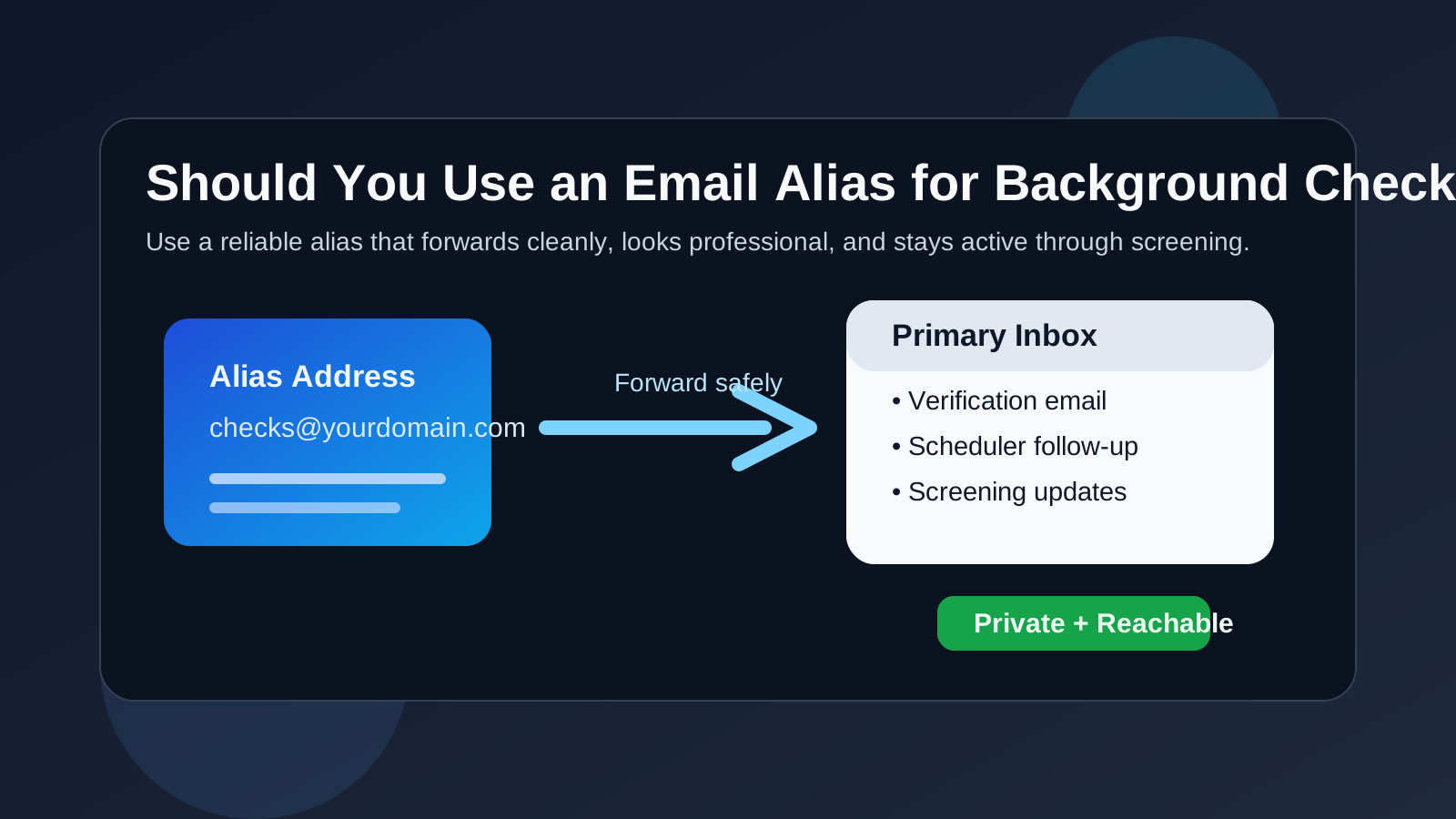
That is the real answer to should you use an email alias for background checks. The goal is not to hide from a legitimate screening process. The goal is to protect your main inbox, reduce unnecessary exposure, and keep job-search communication organized without missing anything important.
For many people, an alias sits in the sweet spot between a fully public primary email address and a short-lived temporary inbox. It can help you keep screening-related messages separate while still giving employers a stable, professional way to reach you.
What background checks usually need from your email
Background checks are not usually a one-message event. Depending on the employer and screening vendor, your email may be used for several steps:
- Consent forms and disclosure notices
- Identity verification links
- Requests to confirm past addresses or employment dates
- Status updates from the screening provider
- Requests to correct missing or inconsistent information
That is why reliability matters more here than it does in early-stage browsing or one-off signups. A background check email address needs to receive messages consistently, stay available for days or weeks, and be checked often enough that you do not miss deadlines.
Why an email alias can make sense
An alias can be useful because it gives you separation without giving up continuity. In practice, that usually means one address that forwards to your real inbox or one extra address dedicated to hiring-related communication.
That setup helps in a few ways:
- Inbox control: you can route screening and hiring messages separately from everyday mail.
- Privacy: you do not have to expose the address you use for banking, personal subscriptions, and everything else.
- Tracking: you can tell which messages came from the screening process and which came from unrelated recruiter noise.
- Cleanup: if the alias starts attracting spam later, you can adjust or retire it without changing your main inbox identity.
For job-search privacy, that is often a better balance than broadcasting one personal address everywhere. It is also more dependable than using something so temporary that it may disappear before the screening finishes.
When an alias is a better choice than a temporary inbox
This is where people often mix up two different tools. A temporary email can be useful in very early research stages, such as testing signups, downloading a guide, or checking whether a service will immediately start marketing to you. But a background check is usually not that stage anymore.
Once an employer is verifying your details, you usually want stability. An alias gives you that stability while still reducing exposure. If you use Anonibox or another privacy-first option earlier in a job search, this is often the point where it makes sense to graduate from a short-lived inbox to a more durable alias or dedicated address.
In other words: temporary inboxes help with low-commitment access, while aliases are often better for active hiring steps that may stretch across multiple messages and deadlines.
When using an email alias for background checks is a good idea
- You want to keep screening mail separate from your main personal inbox.
- You already use aliases or forwarding addresses and know how to monitor them.
- You want a cleaner trail of employment-related communication.
- You are sharing contact details with an employer or screening vendor you do not want tied to your primary address forever.
- You can keep the alias active until the check is fully complete.
Those are all reasonable situations. Many applicants simply want a more organized job-search setup, and an alias is often one of the lowest-friction ways to get it.
When an alias is the wrong tool
An alias is not automatically smart just because it is private. It can backfire if it adds confusion or fragility.
- The alias looks suspicious: a random or joke-like address can make a serious process feel sloppy.
- The forwarding is unreliable: if messages sometimes fail, go to spam, or arrive late, that is a real problem.
- You do not monitor it: an alias only helps if you actually check what comes through.
- You plan to delete it too soon: screening delays are common, so do not assume the process ends in a day or two.
- You use too many moving parts: if the setup is so complicated that you might miss consent forms or verification links, simplicity wins.
The biggest mistake is treating a background check like a disposable signup. It is not. Even when you want privacy, you still need a dependable channel.
What kind of alias works best?
The best alias for background checks is usually one that feels boring in the best possible way: simple, readable, and clearly yours.
Good alias traits
- Uses your name, initials, or a professional variation
- Forwards instantly to an inbox you already monitor
- Can both receive and, ideally, reply cleanly if needed
- Will still exist next week, next month, and until the hiring process is done
Examples might include something like firstname.jobs@yourdomain.com, screening@yourdomain.com, or a professional alias attached to a provider you trust. The exact format matters less than the stability and professionalism.
Alias types that are riskier
- Short-lived aliases you cannot guarantee access to later
- Addresses full of random characters
- Forwarding setups you have never tested before using them in a live hiring process
- Anything that makes replying difficult or breaks email threading
If you need to explain your own email address for it to seem legitimate, it is probably not the right one for this use.
How to use an email alias safely for background checks
1. Test it before you share it
Send yourself messages from another account. Click links, confirm forwarding speed, and check spam folders. Do not wait until a screener’s consent form goes missing to find out the setup is flaky.
2. Keep the naming professional
Even privacy-focused contact details should still feel normal. A background check is an administrative process. Make it easy for HR, recruiters, and screening vendors to trust the address at a glance.
3. Watch the inbox every day
Some background check emails are time-sensitive. If a vendor needs clarification and you miss the message, your start date or offer process may slow down for a completely avoidable reason.
4. Keep it active until everything is closed out
Do not shut down the alias the moment you complete the form. Employers may follow up later, especially if records need confirmation or the process pauses and resumes.
5. Pair privacy with consistency
Your alias should match the overall tone of the rest of your application materials. If your résumé uses one professional name format and the screening email looks unrelated, that mismatch can create unnecessary friction.
Common scenarios
You are applying to a well-known company
An alias can still make sense if you want separation, but it should be stable and polished. This is not the moment for an experimental forwarding setup.
You are working with a third-party screening vendor
This is one of the strongest cases for an alias. A dedicated address lets you keep those messages organized without exposing your main inbox more widely than necessary.
You already used a temporary inbox earlier in the process
If the employer is moving forward and the background check is starting, it is usually wise to switch to a more durable address. Reliability matters more now than pure throwaway convenience.
You are worried about long-term spam
That is a valid reason to use an alias. The key is to choose one you can keep alive while the process is active, then filter or retire it later if needed.
A quick decision checklist
- Will this alias stay active for the full screening timeline?
- Does it forward reliably to an inbox I check every day?
- Does it look professional enough for HR and screening vendors?
- Can I reply from it cleanly if someone emails back?
- Would using my primary address give me any real advantage here?
If the alias passes those checks, it is usually a reasonable choice.
Final answer
Yes, you can use an email alias for background checks — and for many people it is a smart middle-ground privacy move. It protects your main inbox better than handing out your primary address everywhere, while staying more dependable than a short-lived temporary inbox.
The important part is not the word “alias.” It is whether the address is stable, professional, and monitored. If it forwards properly and stays active through the full process, it can be a very practical way to handle screening communication without losing control of your personal inbox.