Yes — a custom domain email can be a smart choice for job referrals if you personally own the domain, the inbox is reliable, and the address looks simple and professional.
No — it is not a good choice if the domain is tied to your current employer, a side business, or a fragile forwarding setup that could make you miss referral follow-ups.
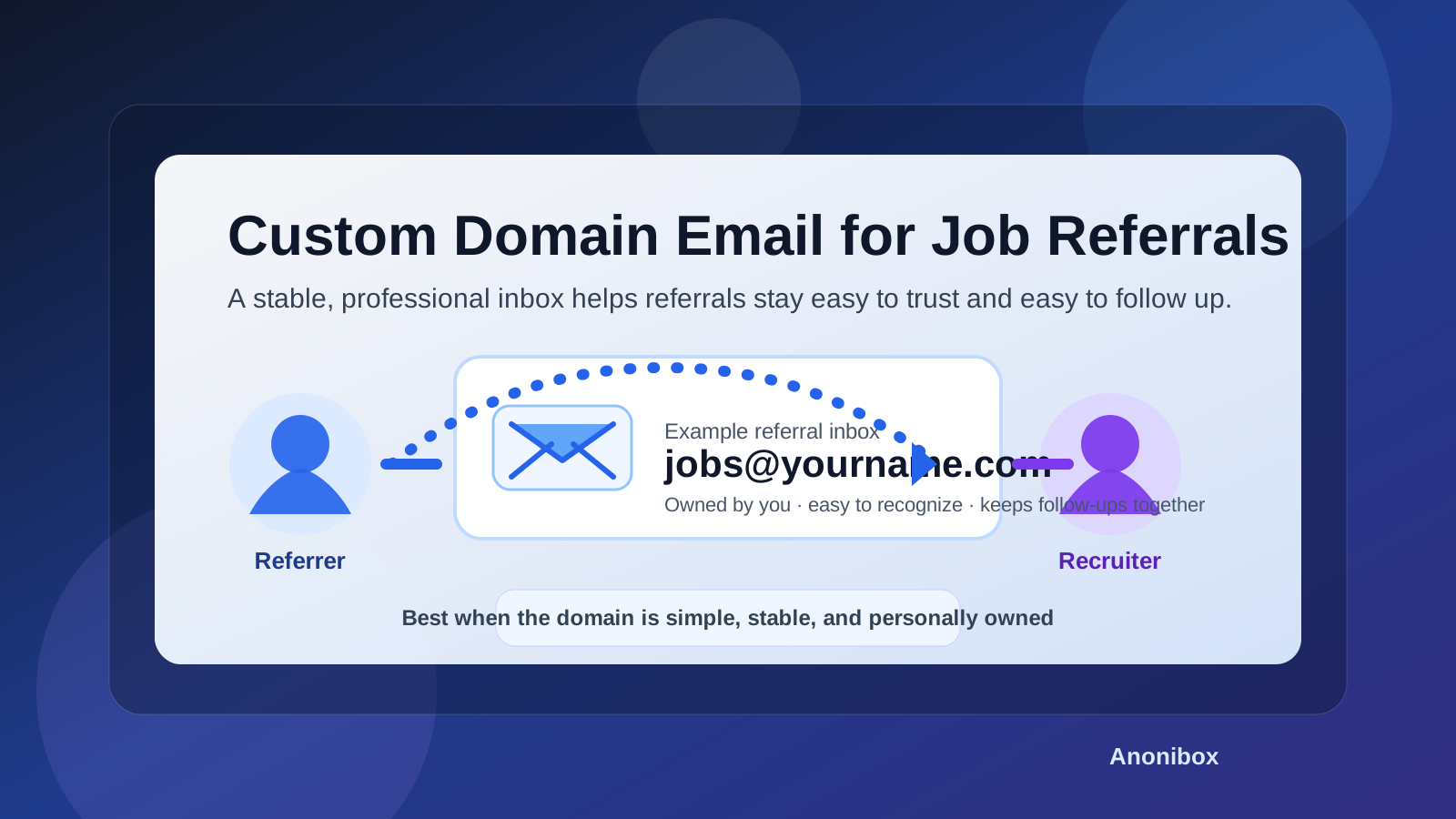
That is the real tradeoff. Referral-based job searching is different from cold applications because another person is putting some trust behind your name. A referrer may introduce you directly to a recruiter, forward your résumé internally, or tell a hiring manager to watch for your message. That means your email address does not just need to work — it needs to feel stable, easy to recognize, and easy to reply to.
A custom domain email can help with that. It can give you more control over privacy, keep job-search follow-ups out of your everyday inbox, and create a cleaner long-term identity than an address you made years ago for random signups. But it only helps when the setup is boring in the best possible way. If the domain looks gimmicky, breaks forwarding, or seems tied to the wrong context, it can create doubt instead of confidence.
Why referrals are different from normal applications
With a standard application, you are usually one candidate in a queue. With a referral, there is often a human handoff. Someone may say, “Reach out to this recruiter and copy me,” or “Send me your résumé and I’ll make an introduction.” In that moment, your email address becomes part of the first impression.
That does not mean recruiters are obsessing over domains. Most care far more about your experience, your résumé, and whether the referral is legitimate. But email still shapes how smooth the interaction feels. A clear, stable address makes it easier for a referrer to pass your details along confidently. A confusing or fragile one can add friction for no real gain.
When a custom domain email works well for job referrals
A custom domain email tends to work best when all three of these things are true:
- You personally own the domain and can keep it active through the full referral and hiring process.
- The address is easy to read and remember, such as jobs@yourname.com or firstname@lastname.com.
- The inbox behaves like a normal professional mailbox, with reliable forwarding, working replies, and no surprise delivery problems.
If that describes your setup, a custom domain can be an excellent referral-stage email. It can look deliberate without looking corporate, and it can give you a clean place to manage introductions, recruiter replies, and interview follow-ups.
What makes a custom domain useful at the referral stage
1. It gives you privacy without looking disposable
A referral usually lasts longer than a one-time signup. You may exchange multiple emails, receive scheduling updates, or hear from several people in the same hiring loop. A temporary inbox is often too fragile for that. A custom domain gives you some of the separation benefits of a dedicated job-search inbox without looking short-lived or suspicious.
That is one reason people mix tools depending on context. Something like Anonibox can make sense for low-trust signups or early research where you mainly want to protect your main inbox. A referral is different. If a real person is introducing you, you usually want a long-lived inbox you control and can keep checking for weeks or months.
2. It keeps referral conversations organized
Referrals can get messy fast. You may have one employee introducing you, another recruiter asking for availability, and a third person sending the official application link. A dedicated custom-domain inbox can keep all of that in one place instead of mixing it with newsletters, shopping receipts, and personal messages.
3. It can feel more intentional than an old personal address
If your everyday email is something you created a decade ago and never expected to use professionally, a clean custom-domain address may simply present you better. That does not make you more qualified, but it can make the communication flow feel more polished.
4. It supports long-term continuity
Good referrals do not always turn into instant interviews. Sometimes the company pauses hiring, the recruiter follows up weeks later, or a referrer reconnects when another opening appears. A custom domain you own can stay with you across that entire timeline. That is a real advantage over throwaway inboxes and over work-tied addresses you may not control later.
When a custom domain email can hurt you
A custom domain is only an advantage when it looks trustworthy and works predictably. Here are the main ways it can go wrong.
1. The domain looks gimmicky or salesy
If your domain sounds like a startup pitch, a joke, or an affiliate site, it can distract from the referral. A referrer should not have to wonder whether your email belongs to a side hustle, a marketing funnel, or a parody account. Neutral beats clever here.
2. The domain is tied to your current employer or client work
This is one of the clearest “don’t do it” cases. If the domain is owned by your employer, a client, or a business you may shut down, it creates unnecessary risk. Referral emails should come from an identity you control personally.
3. The setup depends on brittle forwarding
Many custom-domain inboxes rely on forwarding rules. That can be fine, but only if you have tested the full path: incoming mail, replies, attachments, calendar invites, and spam filtering. If recruiter replies land in junk or vanish in a broken forwarder, the custom domain becomes a liability.
4. The address is too hard to type or say out loud
Referrals often move quickly through chat messages, LinkedIn DMs, and verbal handoffs. If your address includes awkward punctuation, uncommon spellings, or a domain people constantly mistype, you create friction for the very people trying to help you.
What recruiters and referrers usually care about
Most recruiters are not scoring you based on whether you use Gmail, Outlook, Proton Mail, or a custom domain. What they care about is whether communication feels easy and trustworthy. From their perspective, a good referral email address is:
- Easy to read
- Easy to reply to
- Consistent with your résumé and LinkedIn profile
- Stable enough for scheduling and follow-up
- Not obviously tied to something confusing or unprofessional
If your custom domain satisfies those points, it is probably fine. If it fails several of them, a mainstream provider may actually be the safer choice.
How to set up a custom domain email for referrals the right way
Keep the address simple
Use something plain: your name, initials, or a dedicated jobs mailbox. Avoid novelty words, long strings, and complicated separators. The more a referrer has to think about it, the worse it is.
Make sure the domain is personally owned
You should control the registration, renewals, and mailbox access yourself. If another person, employer, or business partner controls the domain, it is not a good foundation for job-search referrals.
Test the workflow before you use it
Send test emails from multiple providers. Reply from your phone. Forward a PDF résumé to yourself. Send a calendar invite. Make sure everything arrives where you expect. A referral-stage inbox should be tested before it matters.
Match it to your job-search identity
If your résumé says Jane Smith and your email is jane@janesmith.com, that feels coherent. If your résumé says Jane Smith and your email is contact@hypergrowthlab.io, people may wonder whether they are talking to a candidate or a company.
Keep the domain alive longer than you think you need to
Do not shut it down the moment a referral goes quiet. Hiring processes reopen, interview loops restart, and recruiters return to old threads. If you use a custom domain for referrals, plan to maintain it well past the first conversation.
When a normal email provider is the better option
You do not need a custom domain to handle referrals well. In fact, a regular inbox is often better if:
- You do not already own a clean personal domain.
- You are not confident in the technical setup.
- You only need a stable, professional address for one job search cycle.
- Your custom domain has branding baggage that could confuse people.
A separate Gmail, Outlook, or privacy-focused mailbox can be easier to trust than a custom domain that is poorly maintained. The point is not to look clever. The point is to stay reachable and credible.
Quick checklist before you share a custom-domain address with a referrer
- Would this address make sense to someone seeing it for the first time?
- Can a recruiter type it correctly without asking twice?
- Will you still control this inbox in three to six months?
- Have you tested replies, attachments, and calendar invites?
- Does the domain match the professional identity you want to present?
- Is it clearly your domain — not your employer’s, not your client’s, and not a joke project?
If the answer is yes across the board, your custom domain is probably a solid referral-stage option.
Final answer
Yes, you can use a custom domain email for job referrals, and in many cases it is a smart move. It gives you more privacy than using your everyday inbox everywhere, and it can create a cleaner, longer-lived identity for introductions and recruiter follow-up.
But it only works when the domain is personally owned, professionally named, and technically reliable. If the setup is confusing, unstable, or tied to the wrong context, it is safer to use a simple mainstream inbox instead. For referrals, trust and continuity matter more than novelty. The best email address is the one a referrer can share confidently and a recruiter can use without ever wondering whether it will break.