Yes — using a separate email for audiology school applications is usually a smart move because AuD admissions can stretch across months of portal updates, recommendation reminders, interview invites, and financial-aid follow-up.
The important part is choosing a stable, professional inbox you will monitor every day, not a throwaway address that could disappear before a school, central application service, or campus coordinator sends something important.
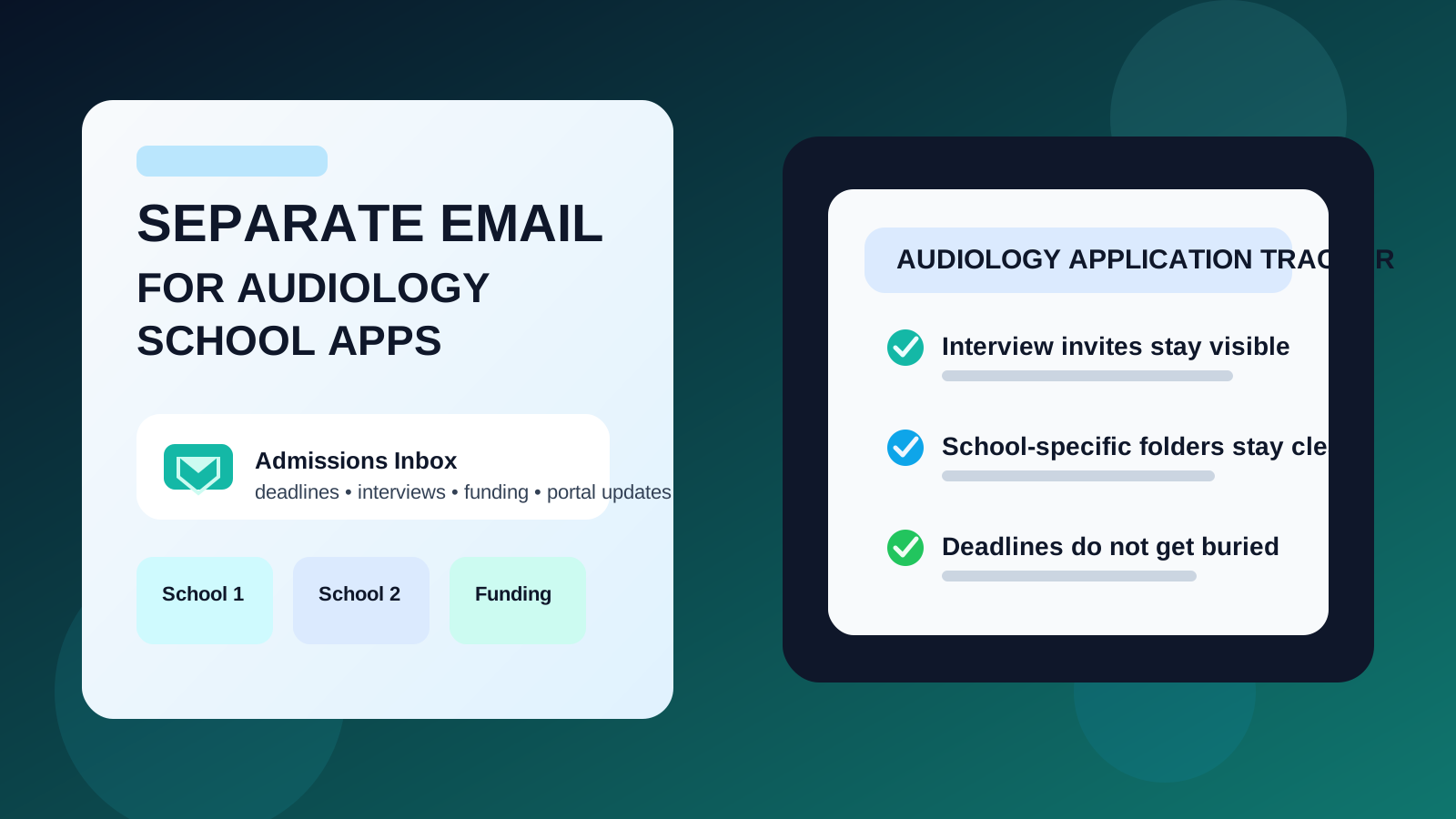
That is the practical answer behind searches for separate email for audiology school applications. Audiology admissions often involve more moving pieces than people expect. You may be comparing multiple AuD programs, attending virtual info sessions, managing transcripts and recommendation requests, checking application portals, replying to interview invitations, sorting scholarship or assistantship notices, and watching for follow-up from individual departments after the main application is submitted. Even when every school is legitimate, the volume alone can become noisy.
A separate email helps because it creates one place where all of that school-related communication lives. Instead of mixing admissions traffic into the same inbox you use for personal messages, work notifications, banking alerts, and random retail receipts, you create a clean lane for a very specific goal: getting through the application cycle without missing something important.
Why audiology school applications deserve their own inbox
Audiology applicants are often dealing with a long, deadline-heavy process. Some programs may communicate through a shared application platform, while others send updates through their own graduate admissions office, department staff, faculty coordinators, interview teams, or financial-aid offices. That means your messages may not come from one obvious sender or one predictable address pattern.
You may also receive a mix of communication types:
- application confirmations after you submit materials
- missing-item alerts for transcripts, references, or prerequisite questions
- interview invitations that need a quick response
- scholarship, assistantship, and visit-day messages from separate offices
- decision follow-up about deposits, housing, onboarding, or accepted-student events
When all of that lands in a crowded personal inbox, it becomes easier to overlook something time-sensitive. A separate email lowers that risk by keeping admissions traffic visible.
Why a separate email is usually better than a temporary email for actual applications
This is one of the biggest distinctions to understand. A separate email and a temporary email solve different problems.
A temporary inbox is useful when you want short-term privacy for low-stakes signups: maybe you want to download a program guide, register for a webinar, compare open-house pages, or access general information without inviting a wave of long-term marketing mail. Tools like Anonibox can be helpful in that early research phase because they keep exploratory signups from taking over your main inbox.
But an audiology school application is not a low-stakes signup. It is a long-cycle process with deadlines, identity verification, portal logins, and messages that may arrive weeks or months after your first submission. For that reason, a stable separate email is usually the better fit than a disposable one. You want privacy and organization, but you also want continuity.
The safest rule is simple: use a temporary inbox for casual early browsing if you want, but use a reliable separate email for any real application workflow that you cannot afford to lose access to later.
When using a separate email makes the most sense
1. You are applying to multiple programs
If you are building a list of several audiology schools, a dedicated inbox keeps each program’s messages easier to sort and compare. You can create labels or folders for every school and instantly see where each application stands.
2. Your main inbox is already crowded
Many applicants already have noisy inboxes before application season even starts. Work threads, newsletters, account alerts, family logistics, and subscription mail do not stop just because you are applying to grad school. A separate address protects important admissions mail from getting buried underneath daily clutter.
3. You want cleaner privacy boundaries
Audiology applications can lead to more communication than just one acceptance or rejection notice. If you attend events, ask questions, request information, or stay in contact with schools after admission, those messages can continue for months. A separate email keeps that activity from blending into your long-term personal inbox history.
4. You expect a long decision timeline
Some applications move quickly. Others stretch out with interviews, waitlists, funding questions, and follow-up requests. The longer the timeline, the more valuable a stable dedicated inbox becomes.
How to set up a separate email for audiology school applications the right way
Choose a professional address
Your admissions inbox does not need to be fancy. It just needs to look normal and credible. Use a straightforward variation of your name rather than a nickname, joke handle, or leftover address from high school. If a program coordinator sees the address on an email thread, it should look like it belongs to a serious applicant.
Keep it stable for the full cycle
This matters more than almost anything else. Do not create an address you might abandon in a few weeks. You may still need access when schools send interview confirmations, admitted-student updates, funding notices, or post-decision follow-up.
Use folders or labels by school
A simple structure works well:
- one folder for each university
- one folder for general admissions platforms
- one folder for financial aid or scholarships
- one folder for interview scheduling
This makes it much easier to spot where you owe a response and where you are just waiting.
Create filters for important senders
If you know a school’s admissions office or graduate portal domain, add filters so those messages never disappear under less important mail. You can star them, label them, or route them into a dedicated folder automatically.
Check spam and promotions regularly
Admissions emails do not always land where you expect. A routine five-second scan of spam and promotions folders can save you from missing an interview or document request.
Set up recovery options carefully
If the inbox is going to hold important application communication, protect it like an important account. Use a strong password, keep recovery methods up to date, and turn on extra account security where appropriate. You do not want to lock yourself out in the middle of application season.
Common mistakes to avoid
Using a disposable address for official application traffic
This is the biggest mistake. Disposable inboxes are great for spam control in the right situations, but they are risky for admissions workflows that may continue for months.
Switching email addresses mid-cycle
If your résumé, portal account, recommendation request, and direct communication all use different addresses, you create confusion for yourself and for the schools. Once you pick the admissions inbox, keep it consistent whenever possible.
Forwarding everything into your main inbox without rules
Some applicants create a separate address and then immediately forward every message into their crowded personal inbox. That removes a lot of the organizational benefit. If you do forward, at least use labels or filters so school mail still stands out clearly.
Ignoring the inbox after submission
Submitting the application is not the end of the process. Schools may follow up with missing-item notices, interview logistics, funding details, waitlist communication, or campus event invitations. A separate inbox only works if you keep checking it.
What if a school already has your personal email?
That is not a disaster. Plenty of applicants start the process with one address and later realize they want more structure. If you are still early enough in the cycle, you can update your contact information in the portal and use the separate inbox going forward. Just make sure the change is reflected consistently across the places that matter most.
If the process is already well underway, it may be safer to keep using the original address for that school while using a separate one for the rest of your applications. Consistency is often more important than chasing a perfect system halfway through the cycle.
Where Anonibox fits naturally
Anonibox makes the most sense at the edges of the process, not at the core of it. If you are signing up for school newsletters, virtual open houses, downloadable checklists, or low-commitment research content, a temporary inbox can protect your main address nicely. That keeps early browsing private and reduces long-term promotional clutter.
Once you move into actual audiology school applications, though, the smarter setup is usually a stable separate inbox. That gives you the same organizational benefit people want from privacy tools, but with the reliability you need for a real admissions cycle.
A simple workflow that works well
- Use your main inbox rarely for school applications, so personal and financial messages stay separate.
- Use Anonibox or another temporary option only for low-stakes program browsing, if you want that privacy buffer.
- Create one professional dedicated admissions inbox for actual audiology applications.
- Label messages by school and stage such as submitted, interview, funding, and decision.
- Check the inbox daily until the cycle is fully over.
This approach is simple enough to manage but structured enough to prevent missed messages.
Quick checklist before you apply
- Does the email address look professional?
- Will you still have access to it for the full admissions timeline?
- Have you set up folders or labels for each program?
- Have you enabled account recovery and basic security?
- Have you decided which interactions are okay for a temporary inbox and which need your stable admissions address?
If the answer to those is yes, you are already ahead of many applicants.
Final answer
Yes — a separate email for audiology school applications is usually a smart, low-friction way to protect your privacy and stay organized. It helps you keep AuD admissions messages visible, prevents your main inbox from getting overloaded, and makes it easier to track interviews, funding updates, and deadlines across multiple schools.
The key is reliability. Use a professional inbox you can keep active for the full cycle, and save temporary-email tools for the lower-stakes research phase rather than the official application itself. Done that way, a separate admissions inbox is not just cleaner — it is genuinely easier to manage.