Yes — an email alias can be a smart choice for audiology school applications if you want a stable, professional address without exposing your main inbox everywhere.
It works best when you need reliable long-term access for AUDCAS messages, supplemental application requests, interview scheduling, financial aid notices, and deposit deadlines, while still keeping your primary email a little more private.
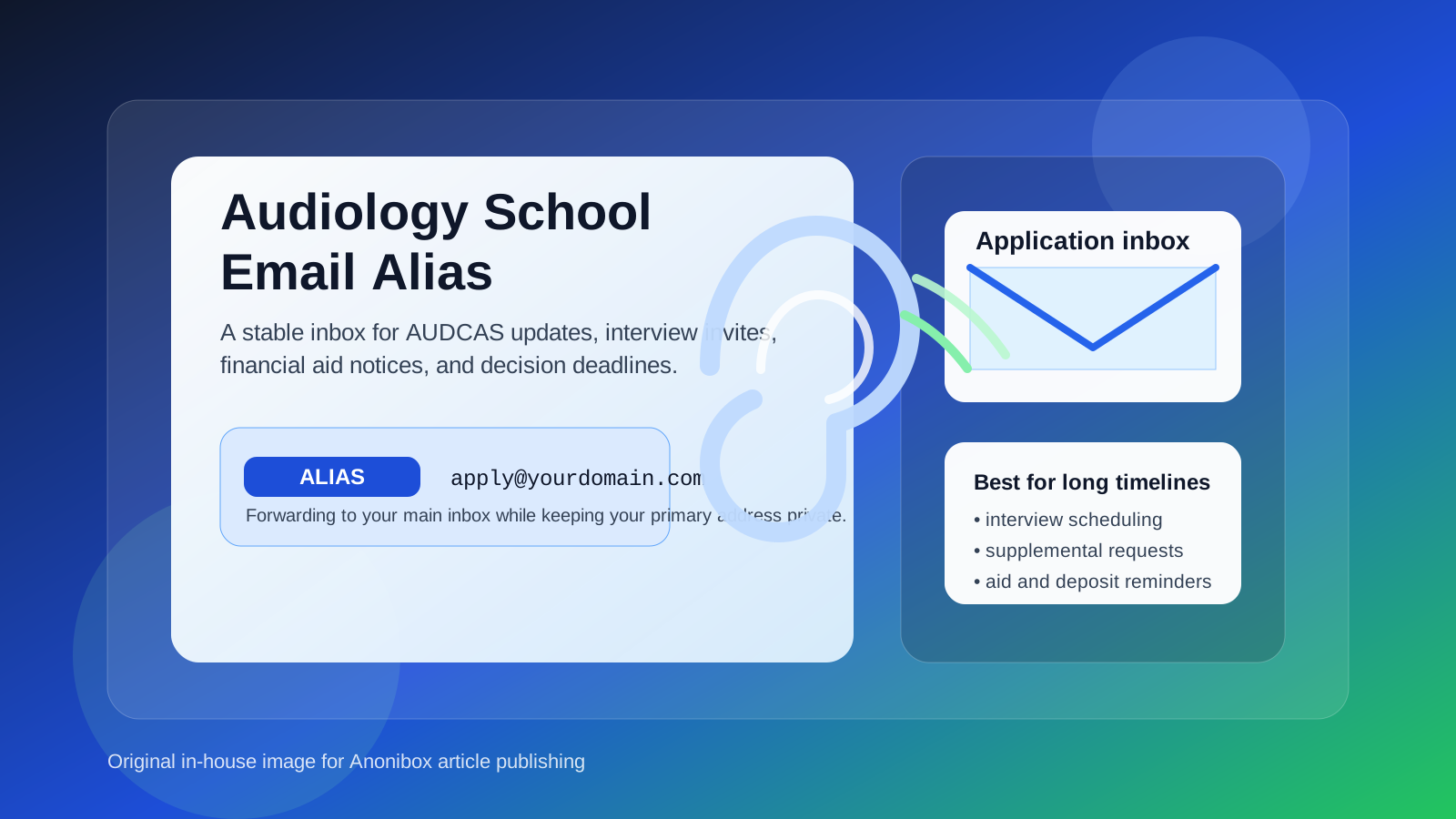
Why an email alias makes sense for audiology school applications
Audiology school applications are not a one-day transaction. You may hear from programs, centralized application systems, faculty coordinators, financial aid offices, and interview teams over a period of months. That long timeline is the main reason an email alias is often a better fit than a throwaway inbox.
An alias gives you a dedicated address for applications while still routing messages into an inbox you already control. That means you can keep your personal address out of more forms, newsletters, and third-party systems without risking the loss of something important. For an admissions cycle that may include status checks, prerequisite questions, supplemental paperwork, campus visit details, and waitlist movement, stability matters.
In other words, the goal is not to disappear. The goal is to stay reachable while reducing unnecessary exposure.
What an email alias is — and what it is not
An email alias is usually an alternate address that forwards to your real inbox or lives under the same mailbox. For example, instead of using your everyday personal address everywhere, you might apply with an address such as audapps@yourdomain.com or another professional variation you manage.
That is different from a temporary email, which is often short-lived and better suited to quick signups, one-off research, or low-trust forms. It is also different from opening a completely separate mailbox, which can make sense if you want total separation but creates more overhead.
For most audiology applicants, the alias sits in the middle: more privacy and organization than using your primary email everywhere, but more continuity than relying on a disposable inbox.
Why long admissions timelines change the answer
Plenty of privacy advice sounds good until deadlines enter the picture. Audiology applications tend to involve multi-step communication windows, and that changes what “best” looks like. You may need to monitor:
- centralized application updates through AUDCAS or school-specific systems
- requests about transcripts, prerequisite completion, or missing materials
- interview invitations and scheduling windows
- financial aid instructions and scholarship notices
- seat deposit reminders and enrollment paperwork
Those messages are too important to risk losing in a short-lived inbox, but they are also specific enough that many applicants prefer not to tie them directly to the same address they use for everything else online. That is where an alias becomes practical. It preserves continuity without making your main address the default for every application form and follow-up message.
When an alias is a better choice than a temporary email
If you are actively submitting real applications, an alias is usually the safer option. Temporary email tools are more useful earlier in the funnel, like when you are comparing school resources, downloading a guide, checking a webinar registration flow, or testing a low-priority form you are not fully ready to trust yet.
Once you are in the real admissions process, you want an inbox setup that you can monitor every day and keep active through decisions, deposits, and post-admit logistics. An alias helps with that because it remains under your control.
That is also the point where the “burner” mindset can become counterproductive. A disposable inbox may reduce spam, but it is not ideal when one missed message could affect an interview slot or next-step requirement.
When an alias may not be enough
An alias is strong for privacy and organization, but it is not perfect for every applicant. If your existing inbox is already chaotic, an alias that forwards into that same chaos may only solve half the problem. You may be better off with a fully separate admissions mailbox if:
- your main inbox gets buried under work or family email
- you are applying to many programs at once and expect heavy traffic
- you want completely separate notification rules, labels, and search history
- someone else has access to the inbox tied to your primary address
The key question is not just “Can I hide my primary email?” It is also “Will I actually notice and respond to important admissions messages fast enough?” Privacy is useful, but reliability wins when deadlines are involved.
How to set up an email alias for audiology school applications
1. Pick a professional address format
Choose something simple, readable, and mature. Avoid novelty handles or anything that looks temporary in a bad way. A format based on your name plus an application label is usually enough.
2. Route it somewhere you already check
If the alias forwards to your main inbox, make sure those messages are easy to spot. Create a filter, folder, or label for application mail so it does not blend into everything else.
3. Test it before you use it
Send yourself messages from another account. Make sure replies work, forwarding behaves the way you expect, and important mail does not land in spam.
4. Keep the alias active for the full cycle
Do not retire it after submission. Keep it live through interviews, decisions, waitlists, aid updates, and onboarding.
5. Save key messages outside the inbox when necessary
If an email includes a deadline, portal link, or instructions you cannot afford to lose, save a copy somewhere organized. An inbox strategy is helpful, but redundancy is still smart.
A practical workflow that balances privacy and reliability
One reasonable workflow looks like this:
- Use a privacy-friendly address strategy when researching programs and lower-trust forms.
- Move to a stable alias once you are dealing with actual schools, real portals, and real deadlines.
- Use filters so every application message is grouped together.
- Check the alias-linked inbox daily during active admissions season.
- Keep a shortlist of important programs and star or archive critical messages separately.
If you use Anonibox or another temporary inbox tool during early research, that can still fit into the process naturally. The important distinction is timing. A temporary address can be useful when you are screening forms or limiting exposure early on, but a stable alias is usually the better call once your audiology applications become real and deadline-driven.
Common mistakes to avoid
- Using a short-term inbox for long-term admissions communication: this is the biggest avoidable risk.
- Choosing an unprofessional alias: admissions emails should still feel polished and credible.
- Forgetting to test replies: receiving mail is not enough if your response path is broken.
- Forwarding into an overloaded inbox without filters: the alias helps less if everything still gets buried.
- Turning the alias off too soon: post-admit logistics often arrive later than applicants expect.
Should you use an alias for every school-related message?
Usually, yes for the application cycle itself. Consistency helps. If you use one address for AUDCAS, another for supplemental forms, and a third for interviews, you can make your own recordkeeping harder. A single stable alias for the admissions cycle is often cleaner than mixing strategies.
That said, once you enroll, you may want to transition to whatever address makes the most sense for student life. The alias is a workflow tool, not a permanent identity commitment.
Quick checklist before you submit
- Does the alias look professional?
- Have you tested incoming and outgoing mail?
- Is there a filter or label for admissions messages?
- Will you still have access to this address through interview season and enrollment?
- Are you checking it often enough to catch time-sensitive requests?
If you can answer yes to those questions, an alias is probably a solid setup for your audiology applications.
Final answer
An email alias is often a very good choice for audiology school applications because it gives you a stable, professional contact point without forcing you to use your main personal address everywhere. It is especially useful when you want to keep your application workflow organized across AUDCAS updates, school follow-ups, interview scheduling, aid notices, and decision emails.
For early research or low-trust signups, a temporary inbox can still have a place. But for real admissions communication, the safer move is usually a long-lived alias you control and check consistently. That way, you get the privacy benefits you want without creating unnecessary risk around the messages that actually matter.