Yes — using a separate email for informational interviews is usually the smart choice. The best version is a stable, professional inbox you check often, not a throwaway address that may disappear before the conversation goes anywhere.
Informational interviews sit in a middle ground between casual networking and a real hiring process. That makes inbox choice matter more than people think. You want enough separation to protect your privacy and keep outreach organized, but you also need an address that looks credible and can support follow-up messages, scheduling, and future opportunities.
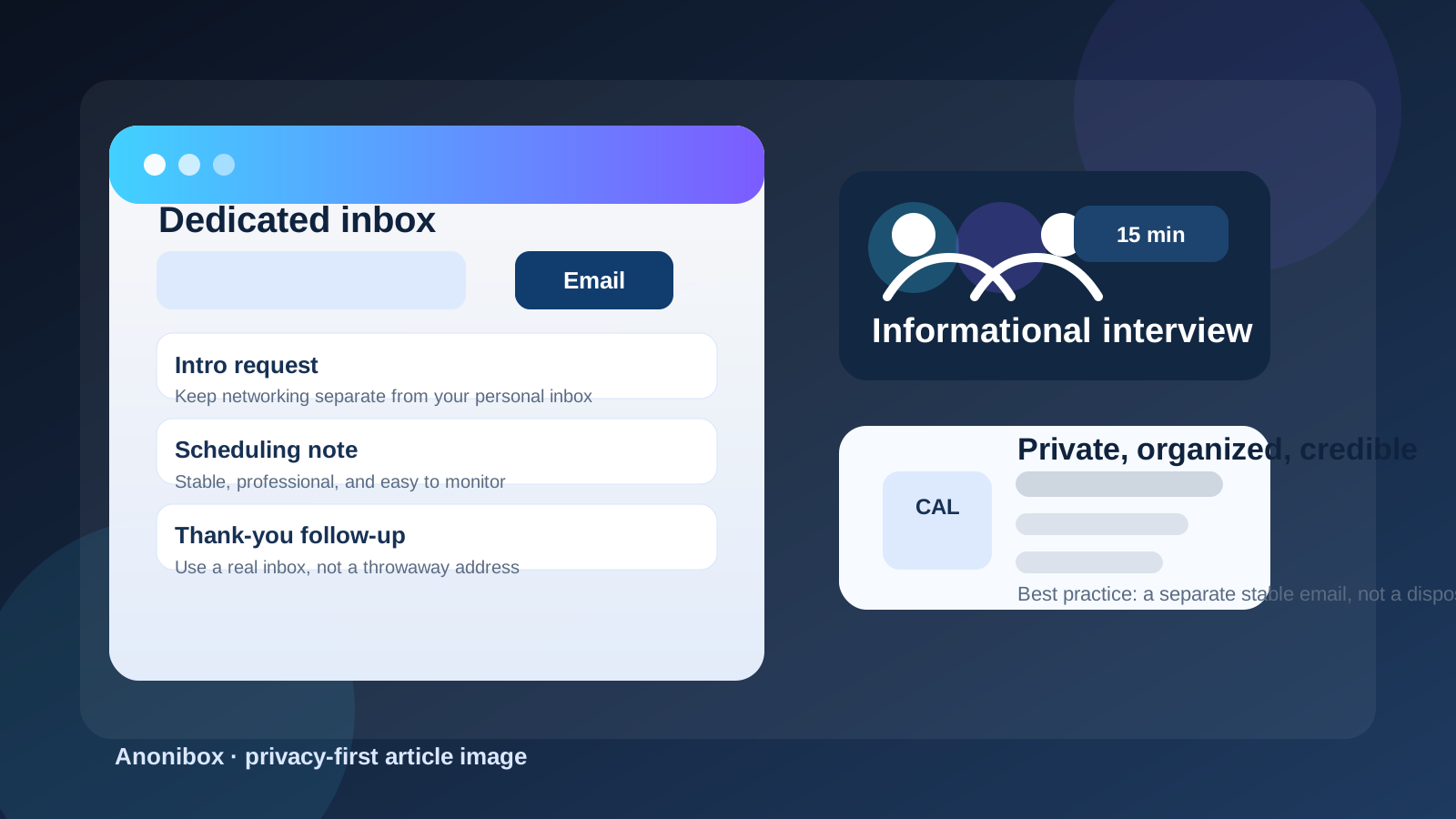
Short answer: separate is usually better, disposable is usually not
If you are actively reaching out to alumni, hiring managers, industry peers, or people working at companies you admire, a separate email address can make your life noticeably easier. It keeps networking messages away from your personal inbox, helps you stay organized, and reduces the chance that your main address gets passed around long after your search ends.
But there is an important distinction here. A separate email is not the same thing as a temporary email. For serious one-to-one conversations, a disposable address is usually the wrong tool. Informational interviews often lead to second conversations, introductions, referrals, or future openings. You need a real inbox you can keep.
Why informational interviews need a slightly different email strategy
Informational interviews are not job interviews in the formal sense, but they are still professional interactions. You are asking for someone’s time, attention, and trust. That means your email address quietly communicates something about how you manage communication.
Unlike a job board signup or a one-time webinar registration, an informational interview can have a longer tail. Someone may reply next week, circle back in a month, or reconnect when a team starts hiring. If the address you used no longer exists, or if your message came from something that looks obviously disposable, you may lose the relationship before it has a chance to become useful.
That is why the right answer is not “use whatever is most private” or “always use your personal inbox.” The better answer is to match the email setup to the kind of conversation you are starting.
Why a separate email often helps
1. It protects your personal inbox from long-term spillover
Networking tends to spread. One informational interview can lead to a mailing list, a recruiter introduction, a community invite, or a thread that gets forwarded inside a company. If all of that lands in your everyday personal inbox, it becomes harder to separate career conversations from bills, family messages, receipts, and everything else.
A dedicated networking or job-search inbox keeps that activity contained. It also makes it easier to archive old conversations without losing track of the ones that still matter.
2. It gives you cleaner job-search organization
Informational interviews often happen at the same time as applications, recruiter outreach, portfolio sharing, and follow-up emails. A separate inbox lets you search and label those conversations more easily. That matters when you are trying to remember who offered an introduction, who said “reach out in September,” or which contact works at which company.
3. It can support confidentiality
If you are job searching while still employed, a separate inbox reduces the chance that career-related messages mix with accounts, calendars, or devices that other people can casually see. It will not solve every confidentiality problem, but it is one easy layer of separation.
4. It gives you a professional reset
Some personal email addresses are perfectly fine. Others were created years ago and are a little too casual, too cluttered, or too tied to old habits. A separate address gives you a cleaner presentation without forcing you to expose your long-term personal inbox everywhere.
When your personal email is still okay
A separate email is usually better, but your personal email is not automatically wrong. It can work well if:
- the address is professional and easy to read
- you already use it responsibly for career communication
- you check it often and respond quickly
- you are doing only occasional networking rather than a broad outreach campaign
- privacy separation is not a major concern for you right now
If your personal inbox is calm, organized, and not overloaded with newsletters or promotional clutter, it may be good enough. The risk is not that employers or contacts will reject it. The risk is that you lose control of volume and context as your networking expands.
When a separate email is clearly the better choice
You should lean toward a separate inbox if any of these sound familiar:
- you are sending a lot of cold outreach
- you are networking across multiple industries or target companies
- you want to keep your search private from your current workplace
- your personal inbox already gets too much noise
- you expect informational interviews to turn into referrals or formal applications
- you want cleaner records of who said what and when
In those cases, a separate inbox is less about paranoia and more about basic communication hygiene.
Why a temporary or disposable email is usually the wrong fit
This is the part many privacy-minded people get wrong. A disposable inbox can be useful for low-trust signups, download gates, or early research where you only need a verification email and do not want long-term spam. That is a real use case, and it is where a service like Anonibox can make sense.
Informational interviews are different. You are not just trying to collect one confirmation link. You are starting a professional relationship. The person on the other end may notice if your address looks obviously temporary, and even if they do not, the larger problem is reliability. If you miss a reply, a calendar invite, or a later referral because the inbox expired or stopped being monitored, you created friction where you did not need any.
A good rule of thumb is simple:
- Use temporary email for low-trust, one-off exposure.
- Use a stable separate inbox for real human conversations.
What a good separate email looks like
You do not need anything fancy. In fact, boring is better.
- Use your real name or a clear variation of it.
- Avoid extra numbers, jokes, or slang.
- Choose a provider you can keep for the long term.
- Turn on two-factor authentication.
- Create simple labels or folders for networking, referrals, applications, and follow-ups.
Think of the inbox as a stable professional workspace, not a disposable shield and not a personal diary.
How to use the separate inbox well
Keep your message identity consistent
If your outreach comes from one name, your résumé uses another, and your LinkedIn profile uses a third variation, people can get confused. Your inbox should support a clear identity across your messages, signature, and profile links.
Check it often
A separate inbox only helps if you actually monitor it. Informational interview replies can come quickly, especially when someone offers a short window for a coffee chat, a phone call, or a calendar slot.
Use a simple signature
You do not need a giant corporate signature block. Your name, a short descriptor if relevant, and maybe your LinkedIn profile or portfolio are enough. The point is to make replying easy and context clear.
Archive aggressively
Once a conversation is finished, archive it. This keeps the inbox usable and makes the ongoing threads stand out.
A practical example
Imagine you are exploring product management roles while still working full time. You want to talk with alumni, current PMs, and startup operators to understand hiring expectations. If you use your main personal email, all of those conversations land beside family messages, travel receipts, promo offers, and random app notifications. If you also start applying for roles, recruiter emails get mixed into the same mess.
Now imagine you use a separate, professional inbox just for career conversations. Your outreach, replies, calendar notes, and follow-ups live in one place. You can search by company, tag warm contacts, and keep a cleaner timeline of who offered advice, who invited a follow-up, and who might become a referral later. That is the real advantage. It is not secrecy for its own sake. It is clarity.
Red flags that should make you slow down
Even informational interview outreach can attract low-quality or suspicious responses. Be cautious if:
- someone pushes you off email to a random chat app immediately
- they ask for personal documents before any real conversation
- the contact will not identify their role or company clearly
- the tone shifts from “happy to chat” to pressure about a vague opportunity
- you are asked for payment, training fees, or sensitive account details
That is where privacy tools matter most. You can use an Anonibox-style temporary inbox for low-trust lead generation, event registrations, or forms that feel spammy, but once a conversation becomes legitimate, move it to the stable inbox you control.
How this should evolve if the conversation turns into a real opportunity
One reason a separate email works so well for informational interviews is that it can continue working if the conversation turns into a referral, an interview, or an application. That continuity is valuable. You do not need to explain a sudden address change halfway through the relationship, and the other person can find the full thread if they want to reconnect later.
If you used a disposable address at the very beginning for some reason, switch early — before a real introduction, résumé review, or calendar invite depends on it. The more serious the opportunity becomes, the more important stability becomes.
Quick checklist before you choose
- Will this be a one-off signup or an ongoing human conversation?
- Do I want job-search communication separated from my personal life?
- Does my current personal inbox already feel noisy or disorganized?
- Will I still be able to access and monitor this address months from now?
- Does the email look professional enough for a networking conversation?
If you want privacy, professionalism, and long-term reliability at the same time, a separate stable inbox is usually the best balance.
Final answer
Yes, you should usually use a separate email for informational interviews — but make it a real, professional address, not a throwaway one. That gives you better organization, better privacy, and a cleaner path from early networking to referrals, interviews, and applications if the conversation goes well.
The smartest setup is simple: use temporary email selectively for low-trust exposure, and use a dedicated long-term inbox for the conversations you actually want to build on.