Yes — you can use GMX Mail for job referrals if the address looks professional, you check it consistently, and you plan to keep using it through follow-ups, recruiter outreach, and interview scheduling.
No — it is a poor choice if the account is half-abandoned, cluttered, or being treated like a semi-temporary inbox that you may stop checking right after someone sends the referral.
A job referral changes the usual email question. When you apply cold, you are mostly thinking about privacy, spam, and whether recruiters can reach you. When someone refers you, another person is putting their credibility behind your name. That makes your contact details part of the handoff. The address does not need to be trendy, but it should be stable, professional, and easy for both the referrer and the employer to trust.
If you are asking should you use GMX Mail for job referrals, the practical answer is that GMX is usually fine when the account behaves like a real long-term inbox. Most hiring teams care far more about whether you reply promptly, keep the thread organized, and present yourself professionally than about whether you use Gmail, Outlook, or GMX. The bigger risk is not the provider itself. It is using an address that looks outdated, gets ignored, or does not fit the more personal nature of a referral conversation.
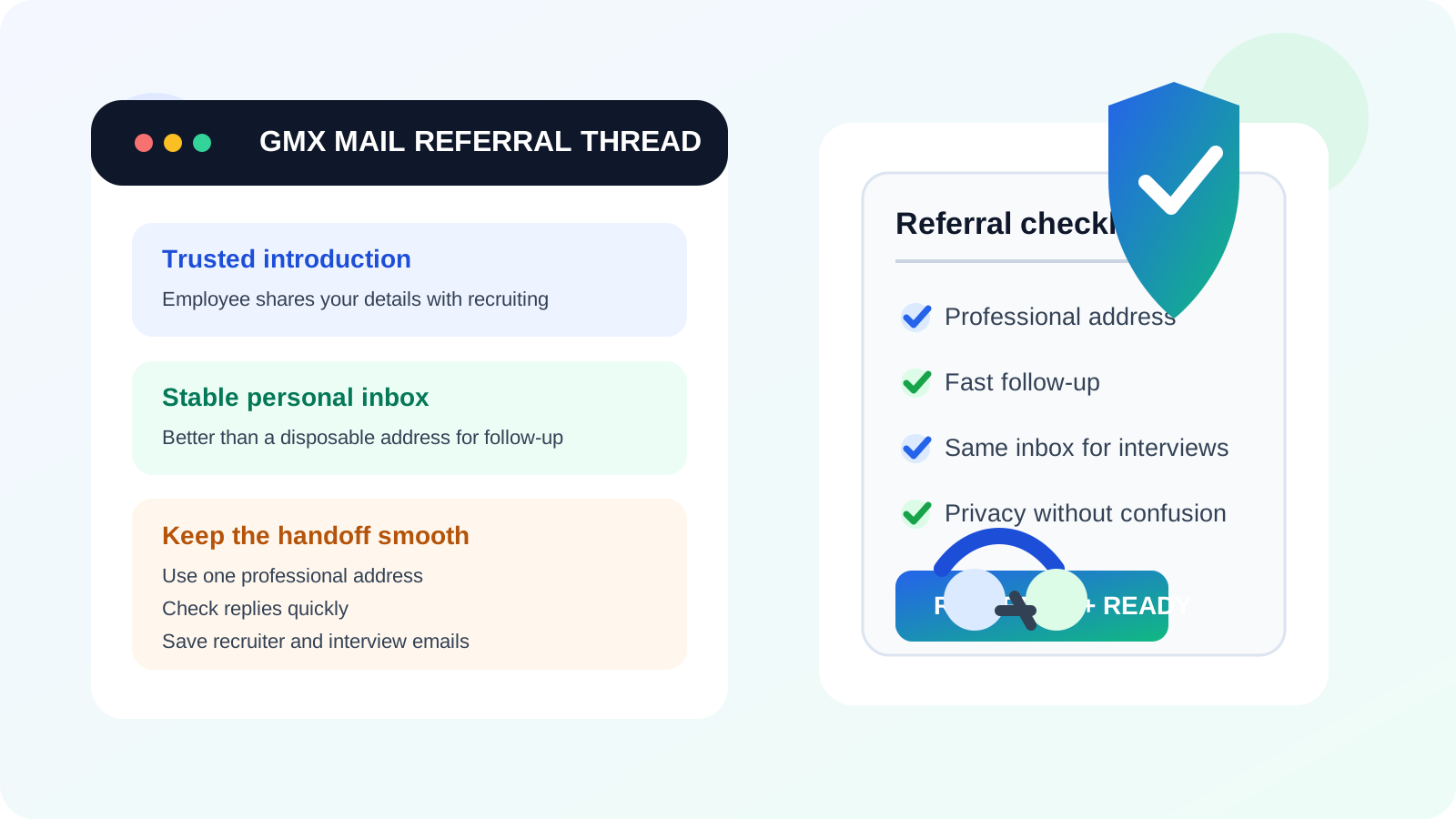
Why referrals are different from ordinary applications
A referral is not just another form submission. It usually starts with a trusted person sharing your profile internally, emailing a recruiter, or introducing you directly to a hiring manager. That means the employer may first encounter you through someone else’s recommendation rather than through a generic applicant tracking system.
Because of that, your inbox plays a slightly different role at the referral stage:
- It becomes part of a trust chain: the person referring you wants the handoff to feel smooth and credible.
- It may be used for fast follow-up: recruiters often move quickly when a referral comes from a strong internal source.
- It needs continuity: a referral can turn into interviews, scheduling changes, and application follow-through within days.
- It should not create avoidable questions: nobody should wonder whether the address is disposable, abandoned, or likely to bounce future replies.
That is why GMX can work well if you use it as a genuine personal inbox, but it is also why a disposable or poorly maintained setup is a bad fit once a real person is attaching their name to your candidacy.
When GMX Mail is a good choice for job referrals
1. You use it as a real personal inbox
If GMX is already one of your normal email accounts and you check it reliably, that matters more than brand familiarity. A mailbox you know how to manage well is often better than opening a brand-new account just because you think another provider looks more mainstream.
2. The address looks professional
For referral-stage communication, the provider usually matters less than the handle itself. A clean address based on your name is usually fine. An address full of random numbers, old jokes, gaming references, or unnecessary punctuation can make a worse impression than GMX ever will.
3. You want some separation from your main inbox
Many job seekers want a dedicated address for career conversations so recruiter messages do not get mixed into years of personal mail. That is a reasonable use case. GMX can work well as a dedicated job-search inbox as long as it remains stable and monitored.
4. You want control over your own account
A referral should lead to an inbox you fully control, not one tied to your current employer, school, or a short-lived service. A personal GMX account is usually far better than a work email, a campus address you may lose access to, or anything you do not intend to keep through the full hiring cycle.
When GMX Mail can create friction
The account feels old or neglected
If your GMX inbox is something you opened years ago and barely use, that is a warning sign. Referral threads can move quickly. If you are not confident that you will see messages the same day they arrive, the account is not doing its job.
Your inbox is overloaded
A referral often leads to several related emails in a short window: an introduction, a recruiter follow-up, a request to apply formally, interview scheduling, and reminders. If your inbox is flooded with newsletters, account notices, and unrelated traffic, important messages can get buried.
Your address looks awkward when someone has to share it manually
Sometimes a referrer types your address into an internal system or forwards it directly to a recruiter. Long or awkward addresses create more room for typos. That does not mean GMX is a problem. It means simplicity matters more when another person is passing your details along.
You are using too many parallel inboxes
Privacy-conscious job seekers often juggle several email accounts, aliases, and temporary addresses. That can be smart at the top of the funnel. But referral-stage conversations benefit from clarity. If your referrer shares one address, your resume lists another, and you reply from a third, the process becomes messier than it needs to be.
GMX Mail vs a temporary inbox for referrals
This is where the answer gets much clearer. Temporary email is helpful when you want to reduce spam exposure, test a low-trust signup, or keep exploratory activity out of your main inbox. A real referral is different. A referral means someone expects an ongoing conversation to happen afterward.
If you use Anonibox for low-trust job boards, newsletter gates, or one-off research, that can make sense early in a search. But once a friend, former coworker, mentor, or internal employee is introducing you for a real role, you usually want a stable mailbox that you will still be checking next week, next month, and through the interview cycle.
That makes GMX much better than a disposable inbox for actual referrals. The real advantage is not just professionalism. It is continuity. Recruiters may follow up later, resend links, or ask you to complete a formal application after the introduction. A stable inbox gives the referral room to turn into a real process.
What employers and referrers usually care about
People often overestimate how much the provider name matters. In most cases, a recruiter or hiring manager is not performing a deep judgment on GMX specifically. They are asking simpler questions:
- Can this candidate be reached quickly?
- Does the address look professional enough to trust?
- Will the conversation stay organized?
- Does the candidate respond consistently?
- Will the same address still work when the referral becomes an interview process?
If your GMX account passes those tests, it is probably fine. If it fails them, switching to a cleaner long-term inbox may help more than defending the provider on principle.
Best practices if you use GMX Mail for job referrals
Use a name-based address if possible
Your email should look like it belongs in a professional conversation. That does not require perfection, but it should not distract from your actual qualifications.
Reply from the same address your referrer shared
Consistency matters. If your contact shares one GMX address with the recruiter, keep using that same address for the follow-up unless you clearly explain a switch. It reduces confusion and makes the thread easier to track.
Clean the inbox before the referral gets active
Create a folder for the company, archive unrelated noise, and make sure notifications are turned on. Referral-stage momentum is easier to protect when your inbox is not chaotic.
Check the account frequently
Do not treat referral email like a backup inbox you remember every few days. A strong internal introduction can lead to fast next steps, and slow replies can waste the advantage the referral created.
Match your display name to your professional identity
Your display name should line up with your resume, LinkedIn profile, and portfolio. Small mismatches make it harder for recruiters to connect the dots quickly.
Keep records of key messages
Save copies of role descriptions, interview links, and follow-up instructions. Referral conversations can move from casual introductions to formal recruiting workflows very quickly.
Referral-stage privacy and scam concerns
A referral is lower risk than a random cold outreach message, but you should still use common sense. Not every message that mentions a referral is automatically legitimate, especially if it arrives from a domain you do not recognize or includes strange requests.
Verify unexpected follow-ups
If someone claims to be contacting you because of a referral but the timing or role feels off, verify through the person who referred you or through the company’s official careers page.
Be careful with documents and links
It is normal to receive application links or interview scheduling emails. It is not normal to be rushed into downloading odd software, sharing sensitive financial details, or sending identity documents before the process is clear.
Do not confuse privacy with disposability
Protecting your personal contact details is smart. But there is a difference between using a dedicated personal inbox and using something so temporary that the referral thread could break. Privacy strategy should reduce noise, not destroy continuity.
When another inbox may be better than GMX
GMX is not automatically the wrong choice, but another address may be better if:
- your GMX handle looks unprofessional,
- you rarely log in and do not trust your notification setup,
- the inbox is overloaded with unrelated messages,
- you already have a cleaner dedicated job-search inbox elsewhere, or
- you expect the referral to lead directly into a long, multi-step hiring process and want the most polished setup possible.
In that case, the lesson is not that GMX is bad. It is that referral-stage communication rewards clarity and consistency, and your best inbox is the one that supports both.
A quick decision checklist
- Does my GMX address look professional at a glance?
- Will I notice recruiter follow-ups quickly?
- Can I keep using this inbox through applications, interviews, and possible offers?
- Would my referrer feel comfortable sharing this address internally?
- Am I using a real long-term mailbox instead of a throwaway setup?
If most of those answers are yes, GMX Mail is probably a reasonable choice for job referrals.
Final answer
GMX Mail can work well for job referrals if the address is professional, stable, and easy for you to monitor. The provider itself is usually less important than whether the account supports a smooth handoff from the person referring you to the recruiter or hiring team.
If your GMX inbox is clean, active, and clearly tied to your professional identity, it is a solid option. If it is cluttered, neglected, or too awkward to share confidently, move to a better long-term inbox before the referral starts. The goal is simple: protect your privacy without making the referral harder for the person helping you or the employer trying to reach you.