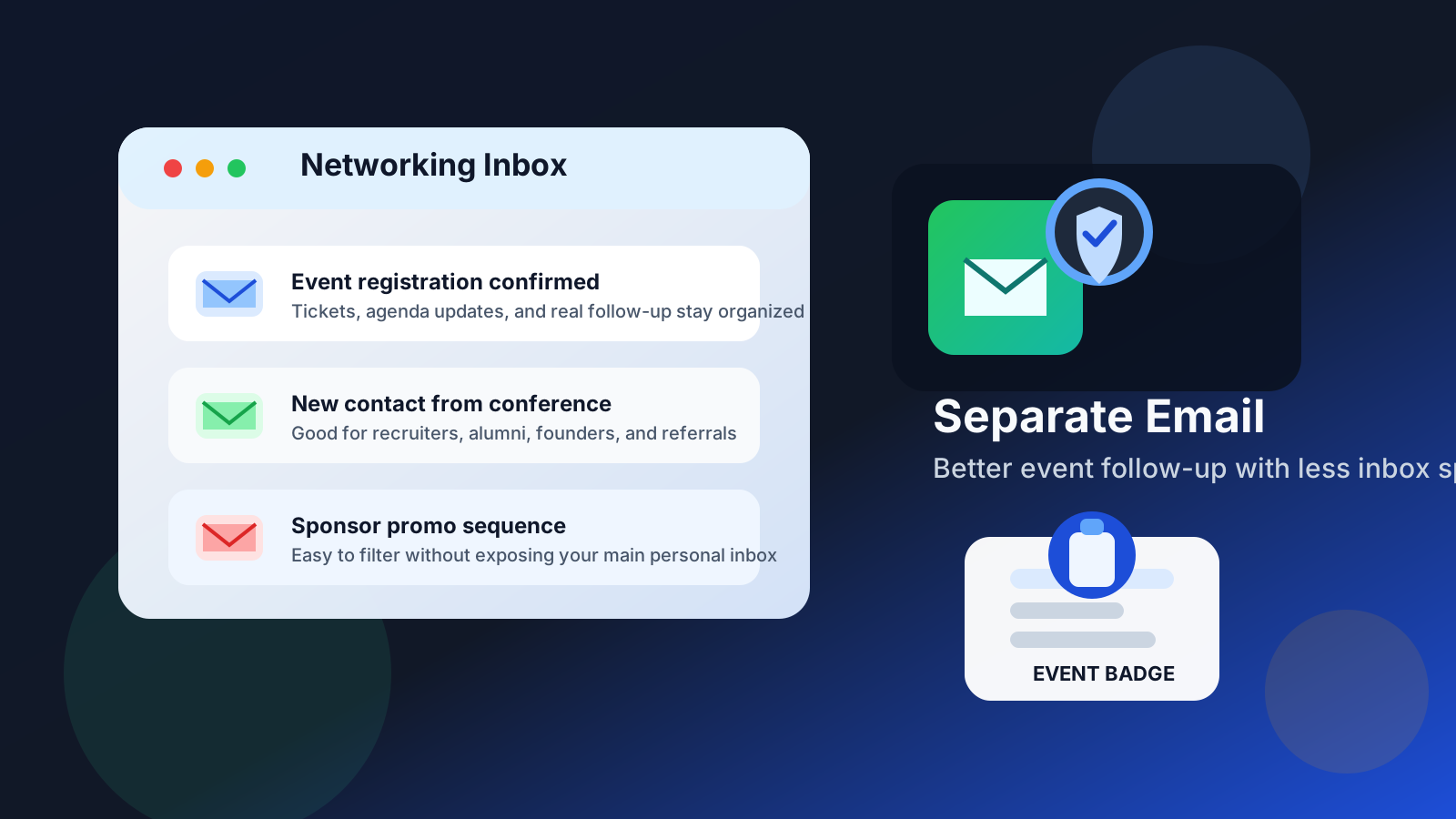
Yes — using a separate email for networking events is usually the smart choice if you want cleaner follow-up, less spam, and better control over who gets your main inbox.
The best version is a stable, professional inbox you can keep checking after the event. A temporary inbox can help with low-trust registrations or sponsor forms, but it is usually the wrong tool for real one-to-one networking follow-up.
Networking events look simple from the outside: you register, show up, talk to people, and follow up afterward. In practice, though, they create a surprising amount of email exposure. Your address may end up in event apps, speaker lists, sponsor funnels, attendee directories, QR-code lead capture forms, newsletter signups, and casual contact exchanges that stretch on for weeks.
That is why your email choice matters. You want to stay reachable, look professional, and make follow-up easy. But you also may not want every event organizer, sponsor booth, and new connection pointing directly at the same inbox you use for bills, family logistics, personal accounts, and everything else.
Short answer: separate is usually smart, disposable is only sometimes useful
If you attend networking events regularly, a separate email address is often the best balance between privacy and practicality. It gives you a clean place for event registrations, post-event follow-ups, introductions, and recruiter messages without turning your main inbox into a long-term overflow bin.
But there is an important distinction: a separate email is not the same thing as a temporary email. If you are talking to real people you may want to hear from again, use a stable inbox you control for the long term. Save temporary email for low-trust forms, giveaway signups, gated downloads, and situations where you mainly want to limit spam exposure.
Why networking events create email clutter so quickly
One event can spread your address farther than you expect. Even if the organizer is legitimate, there are often multiple layers of follow-up built into the experience.
- Registration emails: confirmations, ticket reminders, app downloads, venue updates, and schedule changes.
- Sponsor outreach: booth scans, demo requests, “thanks for stopping by” sequences, and sales follow-up.
- Attendee tools: networking apps, directories, matchmaking platforms, and chat systems.
- Speaker resources: slide decks, recordings, bonus guides, and newsletter opt-ins.
- New contacts: people you actually want to stay in touch with after the event.
Those are not all equally valuable. Some are useful. Some are harmless but noisy. Some turn into a long tail of marketing messages that lasts much longer than the event itself.
Why a separate email usually helps
1. It protects your main inbox from event spillover
Networking events tend to generate delayed follow-up. You might hear from a speaker two weeks later, from a vendor a month later, and from a recruiter three months later after your name was passed along internally. A separate inbox keeps that traffic from blending into your everyday life.
2. It makes follow-up easier to manage
After a good event, you may need to reply to several people quickly. A separate inbox lets you search by event name, company, or date without digging through receipts, newsletters, and personal messages. That makes it much easier to keep momentum.
3. It supports a confidential job search
If you are attending industry meetups, alumni events, conferences, or hiring mixers while still employed, a separate inbox gives you cleaner boundaries. It will not make you invisible, but it does reduce unnecessary overlap between your current life and your next-step exploration.
4. It gives you a more professional operating system
A dedicated networking inbox can be labeled, filtered, and checked intentionally. That matters when introductions turn into referral opportunities, informational interviews, or actual applications.
When your personal email is still fine
A separate inbox is often better, but your personal email is not automatically wrong. It can work well if your address already looks professional, you attend only occasional events, and your main inbox is not overloaded.
Your personal email may be perfectly reasonable if:
- you only go to a few events a year
- you are not running an active job search
- you are comfortable with some extra follow-up
- your address is clean and professional
- you already use that inbox reliably for career communication
The main risk is not that people will judge the address. The real risk is loss of control once event activity starts stacking up.
Separate email vs temporary email for networking events
This is where many privacy-conscious people make the wrong call. A temporary inbox and a separate long-term inbox solve different problems.
Use a separate stable email when:
- you want people to contact you after the event
- you are exchanging details with recruiters, speakers, founders, or peers
- you may want introductions, referrals, or future collaboration
- the conversation could continue for weeks or months
Use temporary email more selectively when:
- you are registering for a low-trust event or webinar
- you want a gated deck, checklist, or sponsor whitepaper
- you are entering a giveaway or booth raffle
- you suspect the main value exchange is really a marketing funnel
That is the practical line. If the interaction is transactional and spam-prone, a tool like Anonibox can make sense. If the interaction is relationship-based, use a stable inbox you control and monitor.
Why a throwaway address can hurt real networking
Networking events are not just lead forms. They are often the start of real relationships. If someone you meet wants to send an introduction, forward a job opening, share notes, or reconnect later, a disposable address can create friction you did not need.
Problems show up quickly:
- you miss replies because the inbox expires or stops being monitored
- your address looks obviously temporary or low-commitment
- you end up changing contact details halfway through the conversation
- future follow-up becomes harder than it should be
For serious networking, reliability usually matters more than maximum short-term privacy.
How to set up a good networking email
Keep it simple and professional
Use your real name or a straightforward variation of it. Avoid novelty handles, slang, or strings of numbers that make the address feel disposable even when it is not.
Choose an inbox you can keep
The whole point is continuity. The address should still exist if someone follows up next month or next quarter.
Turn on basic organization
Create labels or folders for events, recruiters, follow-ups, and leads. A tiny amount of structure saves a lot of time after busy conferences or meetups.
Check it consistently
A separate inbox only works if you actually monitor it. Good opportunities often go cold because people wait too long to answer simple follow-up emails.
Use a light professional signature
Your name, a short descriptor if useful, and maybe LinkedIn or a portfolio link are enough. You do not need a corporate-style block just to look organized.
A practical event-by-event approach
If you want the benefits of both privacy and professionalism, think in layers instead of using one tool for everything.
Before the event
- Use your separate networking inbox for the main event registration if you may want long-term follow-up.
- Use temporary email only for optional sponsor downloads, side webinars, or forms that feel marketing-heavy.
During the event
- Give your separate networking email to people you genuinely want to hear from again.
- Be more cautious with booth scans, swag forms, and QR codes that do not clearly explain how your data will be used.
After the event
- Reply quickly to the real people who matter.
- Archive or filter the mass follow-up that is not useful.
- Note who may become a referral, lead, or future opportunity.
This approach keeps your real networking relationships intact without handing your primary personal inbox to every organizer and sponsor in the room.
Red flags that should make you more cautious
Not every networking event is shady, but some are much more aggressive about lead capture than they first appear.
- Forms that ask for far more information than needed just to attend
- QR codes that do not say where the data is going
- Immediate sales outreach from companies you barely interacted with
- Requests to move off email into random chat apps right away
- Pressure to book demos, pay fees, or share sensitive details after only a brief conversation
In those cases, privacy tools help most at the edges. Use a temporary inbox for low-trust sponsor capture. Keep your stable networking inbox for people and organizations you actually want to build with.
Example: conference registration versus real follow-up
Imagine you are attending a product, startup, or hiring conference. You register in advance, download the event app, and visit a few booths. One booth offers a report in exchange for your email. Another offers a raffle. Later that day, you meet a founder, a recruiter, and an alum from a target company.
Those are not the same kinds of interactions. The report download and raffle are classic cases where a temporary inbox may be reasonable if you do not want long-term promo traffic. But the founder, recruiter, and alum are real relationship paths. For them, a stable separate inbox is the better tool because you actually want a reply next week.
That distinction is what keeps your workflow sane. You are not forced to choose between total exposure and total throwaway behavior. You can be selective.
Quick checklist before you share your email at an event
- Is this a real person I want to hear from again, or just a marketing form?
- Could this conversation turn into a referral, interview, or collaboration?
- Do I want this contact mixed into my everyday personal inbox?
- Will I still be able to access this address in a month?
- Am I sharing my email because it is useful, or just because the form made it easy?
If you want ongoing professional contact, use the stable separate inbox. If it is just a low-trust signup, a temporary address may be enough.
Final answer
Yes — you should usually use a separate email for networking events. It gives you better privacy, cleaner follow-up, and more control over how event-related communication fits into the rest of your life.
Just do not confuse separate with temporary. For real networking, use a professional inbox you can keep. For promo-heavy forms, sponsor downloads, and low-trust signups, temporary email can help reduce clutter. That balance lets you stay open to real opportunities without inviting every event funnel into your main inbox.