Yes, you can use Proton Mail for informational interviews, and for many privacy-conscious job seekers it is a strong choice. It gives you a stable inbox with better separation than using the same everyday address you hand to friends, stores, newsletters, and old accounts.
The real question is not whether Proton Mail is “allowed.” It is whether the address you use is reliable, easy to monitor, and appropriate for follow-up, because informational interviews often turn into second conversations, referrals, recruiter replies, and future opportunities weeks or months later.
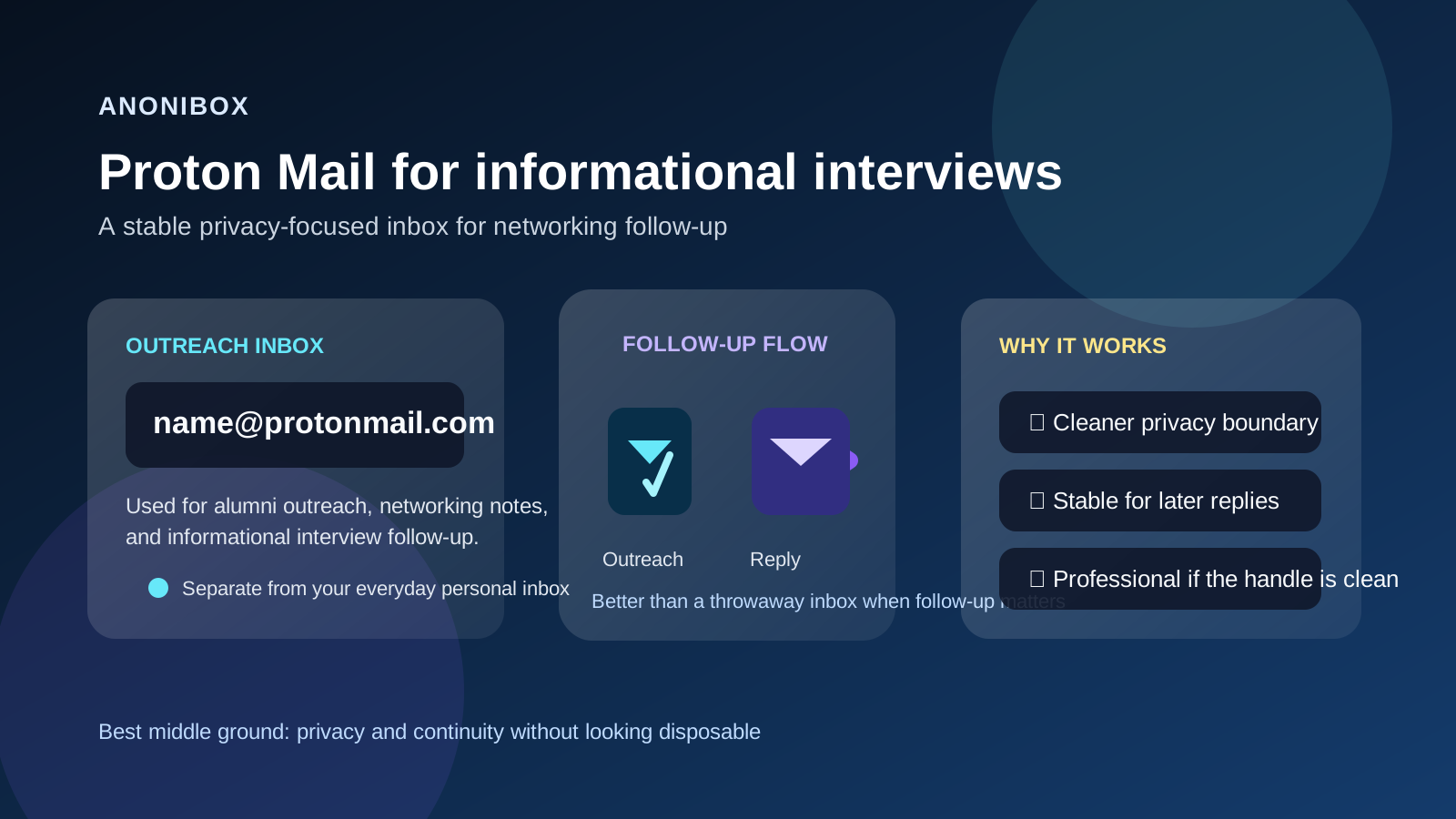
Why inbox choice matters for informational interviews
An informational interview is not the same as signing up for a webinar or filling out a one-time form. You are usually reaching out to a real person and asking for their time, perspective, and professional goodwill. If the conversation goes well, it may lead to a warm introduction, a recommendation to apply, a future check-in, or a message months later when a role opens up.
That longer tail changes the inbox decision. A disposable address can be useful for low-trust signups, but informational interviews need continuity. At the same time, many people do not want to use the same personal inbox they have used for years for networking outreach. That is exactly where a service like Proton Mail can make sense.
What Proton Mail gets right
1. It creates a cleaner privacy boundary
If you use your oldest personal email address for everything, there is a good chance it is already tied to shopping accounts, old mailing lists, school logins, and years of random internet history. Using a separate Proton Mail inbox for informational interviews gives you a cleaner boundary. The people you contact only see the address you intentionally chose for networking and career conversations.
That does not make you anonymous, and it should not be used to act deceptive. It simply keeps professional outreach from spilling directly into the same inbox that handles the rest of your life.
2. It is more durable than a burner inbox
One of the biggest mistakes people make is confusing privacy with disposability. Informational interviews are often too important for a throwaway address. Someone may reply after a delay, send a calendar invitation, or forward your message internally. If the inbox is temporary or hard to keep track of, you risk losing a useful connection over a tool choice that was too short-term.
Proton Mail works better because it is a real inbox you can keep. That makes it much safer for ongoing follow-up than a purely disposable email workflow.
3. It is usually professional enough if the address itself is sensible
Most people do not care deeply which provider you use. What they notice is whether your address looks normal, whether your message is thoughtful, and whether you reply like a serious person. A clean address such as firstname.lastname or a close variation generally matters far more than the brand behind it.
If your Proton Mail address is simple, readable, and clearly tied to your name, it is unlikely to create friction in an informational interview context.
4. It helps you stay organized
Informational interviews can create a surprisingly messy communication trail: your initial outreach, a reply, scheduling details, thank-you notes, follow-up questions, and maybe a reconnection later. A dedicated inbox makes that easier to manage. Even if you are only having a handful of conversations, keeping them out of your crowded primary personal inbox lowers the chance that you miss something useful.
Where Proton Mail can fall short
1. A privacy-focused provider does not fix a weak outreach strategy
If your outreach message is generic, too long, or obviously transactional, the inbox provider will not save it. People say yes to informational interviews because the message is relevant, respectful, and easy to answer. Your provider is secondary.
2. A strange-looking address can still hurt you
Even a good service can look unprofessional if the handle is messy. An address full of numbers, jokes, or niche internet references can make your note feel less credible. That is not unique to Proton Mail, but it matters. Choose an address that would look reasonable in a resume, LinkedIn message, or email signature.
3. It only works if you monitor it consistently
A separate inbox helps only if you actually use it well. If you forget to check it, miss notifications, or fail to respond for several days, the privacy benefit is not worth much. Informational interviews are often low-pressure, but responsiveness still matters. Someone who agrees to help you should not have to chase you.
When Proton Mail is a good fit for informational interviews
Using Proton Mail is usually a good idea when:
- you want a dedicated inbox for networking and career conversations,
- you do not want to expose your long-standing personal email everywhere,
- you expect follow-up to stretch over weeks or months,
- you want more structure and separation during a job search, or
- you are reaching out to alumni, peers, recruiters, or professionals outside your current employer.
In those situations, Proton Mail gives you a middle ground: more privacy and separation than your everyday inbox, but far more continuity than a disposable address.
When a different option may be better
Proton Mail is not always the best answer.
- Your existing personal email is already clean and professional: if you already have a tidy address you use for serious communication, changing providers may not add much value.
- You need one-off throwaway protection for low-trust signups: if you are downloading a guide, testing a tool, or joining a mailing list rather than starting a real conversation, a temporary workflow may be more practical.
- You are using your work email: for most people, that is the worse option. Informational interviews are often job-search adjacent, and using a work-managed inbox can expose more of your activity than you intend.
That last point matters. Proton Mail is rarely the riskier choice compared with a work address. The real trade-off is usually between a stable separate inbox and your main personal inbox, not between Proton Mail and something obviously unsafe.
Proton Mail vs temporary email for informational interviews
This is where many people get tripped up. Temporary email and privacy-focused permanent email are not interchangeable.
A temporary inbox is useful when the main risk is exposure to future spam, low-trust list building, or one-time verification. A stable inbox is better when the point of the interaction is a real relationship. Informational interviews live on the relationship side.
That is why a tool like Anonibox can be useful earlier in the funnel for disposable signups, rough research, or one-off access needs, while a real inbox like Proton Mail is usually the better choice once you are emailing an actual person you may want to hear from again. Privacy still matters, but continuity matters too.
Best practices if you use Proton Mail for informational interviews
Choose a straightforward address
Use your name or a close professional variation. Keep it easy to read, easy to repeat aloud, and easy to trust at a glance.
Set up a simple signature
You do not need anything flashy. A short signature with your name, LinkedIn profile if relevant, and maybe your field of interest is enough. The goal is to make follow-up easy, not to oversell yourself.
Check the inbox consistently
If you are actively reaching out, check the inbox daily. Informational interviews are often favors from busy people. Timely replies show respect and keep momentum alive.
Use folders or labels for organization
Even basic organization helps. One folder for outreach sent, one for active conversations, and one for follow-up can keep a small networking campaign from turning into chaos.
Keep the inbox long enough
Do not abandon the address right after the first conversation. People reconnect later. A good informational interview sometimes turns into a referral, a second conversation, or a note months down the line.
Pair it with a clean calendar process
If someone offers time, respond clearly and keep scheduling details in one place. The inbox choice is only part of the system. Reliable follow-up and calendar discipline matter just as much.
Red flags that have nothing to do with Proton Mail
If someone is evasive, asks you to move to a strange channel immediately, pressures you for personal information, or offers suspiciously fast access to hidden jobs, the problem is not your email provider. It is the interaction itself. Proton Mail can help with privacy boundaries, but it does not make a questionable conversation trustworthy.
Good informational interviews usually feel normal: clear identity, specific context, reasonable scheduling, and no pressure to hand over sensitive information.
So, should you use Proton Mail for informational interviews?
Yes, in many cases you should. Proton Mail is a strong option if you want a privacy-conscious inbox that is still stable enough for real networking follow-up. It is usually better than using your work email, and it is usually more reliable than using a disposable address for conversations that may continue.
The best outcome is not maximum secrecy. It is controlled professionalism: a clean address, consistent follow-up, and enough separation to protect your privacy without making yourself hard to reach. If Proton Mail helps you do that, it is a sensible choice for informational interviews.