Yes — using a separate Gmail account for networking events is often the smartest middle ground if you want a familiar inbox without mixing event registrations, sponsor email, and new-contact follow-up into your oldest personal account.
No — you usually do not need a disposable inbox for every event, but a dedicated networking Gmail can give you better privacy, cleaner organization, and easier follow-up than your everyday address.
Why this question matters at networking events
Networking events create a different kind of inbox exposure than one-off job applications. In a single evening, your address can end up on an event registration list, inside an attendee app, on a speaker follow-up list, in sponsor lead capture forms, on a QR-code signup page, and in the contact list of several people you just met. Some of those messages are useful. Some are harmless but noisy. Some turn into months of low-value marketing.
That is why the inbox you use matters. You want something stable enough for real relationship-building, but separate enough that one conference, meetup, panel, or alumni mixer does not spill into the same inbox you use for bills, personal accounts, family logistics, and every newsletter you never meant to keep.
A separate Gmail account works well because it feels normal to the people you meet, it is easy to check from any device, and it gives you room to organize follow-up without exposing your main inbox more than necessary.
Short answer: separate is usually smart, but disposable is not always the answer
If you attend networking events regularly, a separate Gmail account is usually more useful than either extreme.
- Better than your oldest personal inbox because it keeps event traffic out of the place where your entire life already lives.
- Better than a throwaway inbox because networking only works if people can still reach you later.
That distinction matters. A networking event is not just a registration form. It is often the start of an ongoing conversation. If someone wants to send an introduction, suggest coffee next week, share a job lead, or forward a slide deck a month later, you need an email address that still exists and still gets checked.
That is where a separate Gmail account beats a temporary address. A temporary inbox may be fine for a low-trust event signup or a one-time download. But for real relationship-building, you usually want an address that is persistent, professional, and easy to manage.
When a separate Gmail account makes the most sense
A dedicated Gmail account is especially useful if any of these apply:
- You attend conferences, meetups, job fairs, founder events, or alumni events more than occasionally.
- You often scan QR codes to get on lists, download slides, or enter sponsor demos.
- You want to keep networking separate from your personal life without looking hard to reach.
- You are changing industries, job searching quietly, freelancing, fundraising, or building a side project.
- You want one place for follow-up emails, calendar invites, business cards, and event reminders.
In those situations, a separate Gmail account gives you structure. Instead of letting every event scatter itself across your main inbox, you create one lane for networking activity and keep it there.
What a separate Gmail account does well
1. It keeps event noise away from your main inbox
Even good events generate a lot of mail: confirmations, reminders, venue changes, parking details, sponsor promos, post-event surveys, “watch the replay” messages, and mailing-list additions you did not really ask for. A separate Gmail account contains that clutter so it does not bury the messages you actually care about elsewhere.
2. It makes follow-up easier to manage
If all networking email lives in one account, it becomes much easier to star important contacts, label conversations by event, search for follow-up threads, and see which connections you still owe a reply. That is valuable because networking fails more often from disorganization than from bad introductions.
3. It gives you a cleaner professional boundary
Your oldest personal inbox often reveals more about you than you mean to share. Even if the address itself is fine, you may not want the same inbox connected to shopping accounts, personal newsletters, app logins, and years of account recovery trails. A dedicated networking Gmail creates a healthier boundary.
4. It still looks normal
One reason Gmail works well is that nobody finds it strange. A clean address based on your name usually looks familiar and professional. That matters because networking is partly about reducing friction. You want people to remember the conversation, not puzzle over an awkward contact method.
When your main Gmail is probably fine
You do not always need a separate account. Your primary Gmail may be enough if:
- You only attend a few networking events a year.
- Your current address already looks professional.
- Your inbox is not overloaded and you already organize it well.
- You do not mind event registrations and follow-up landing in the same place as everything else.
If that is your situation, creating another inbox may feel like extra maintenance. The point is not to multiply accounts for no reason. The point is to use separation when the amount of exposure, clutter, or privacy risk starts to justify it.
When a temporary email can still help
A separate Gmail account is usually the best default for actual networking, but temporary email still has a role at the edges.
For example, you may want a temporary inbox for:
- low-trust event registrations that look heavily sponsor-driven
- one-off downloads such as trend reports, attendee lists, or gated slides
- demo booths or raffle entries where you do not expect meaningful follow-up
- forms that feel more like lead capture than real relationship-building
That is where a tool like Anonibox can make sense. It gives you a way to protect your main inbox during low-value or high-noise interactions. But once you move from anonymous registration into real one-to-one follow-up, a stable Gmail account is usually the better choice.
What to avoid with a separate Gmail account
Do not make it look disposable
A separate Gmail account should still look like a real person uses it. A clean address based on your name, role, or project is far better than something random, joke-based, or obviously temporary. Networking depends on trust, and your contact details are part of that first impression.
Do not abandon it after the event
This is the biggest mistake. People often create a separate account, use it at an event, and then stop checking it. That defeats the whole point. If you share the address, commit to monitoring it long enough for the useful follow-up window to play out.
Do not use one inbox for every kind of boundary problem
A separate Gmail helps with organization, but it does not solve every privacy issue. If you also want stronger separation for calendars, browser sessions, or messaging apps, you may need those boundaries too. Otherwise the inbox is separate while the rest of your workflow is still tangled.
How to set up the account so it actually helps
Choose a simple professional address
Use something easy to say out loud and easy to type from a business card or phone. If possible, keep it close to your real name so new contacts remember it.
Turn on basic organization immediately
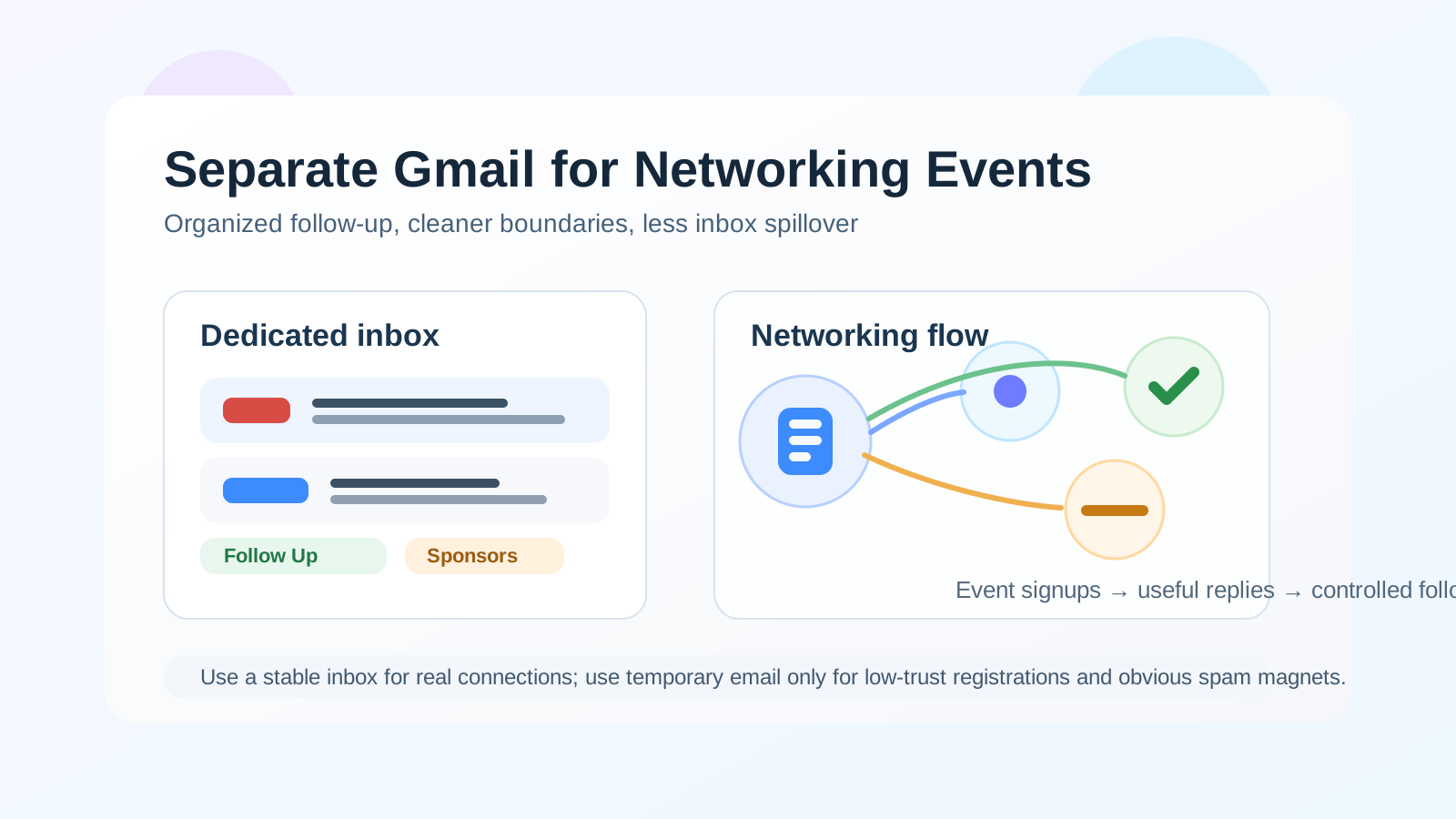
Create a small label system from the start. You do not need anything fancy. A few labels like Events, Sponsors, Follow Up, and Warm Leads are often enough to keep the account useful instead of chaotic.
Keep the signature clean
A short signature with your name and maybe LinkedIn or a relevant portfolio link is enough. Skip the clutter. The goal is to make it easy for someone to remember who you are and reply.
Check it on purpose
If you create the account, build a habit around it. Check it after events, the next morning, and during the week when follow-up is most likely. A separate inbox only works if it is still part of your actual communication routine.
Separate Gmail vs alias vs temporary inbox
These tools solve slightly different problems:
- Separate Gmail account: best for ongoing networking where you want stability plus privacy separation.
- Email alias: useful if you want filtering and address control without managing a fully separate inbox.
- Temporary inbox: best for low-trust, one-off, or spam-prone signups where long-term replies are unlikely to matter.
If you expect a message next month from someone you met this week, use the separate Gmail. If you only need to get through a registration wall without starting a relationship, temporary email may be enough.
A quick decision checklist
Before your next networking event, ask yourself:
- Am I likely to give this address to many people or forms in a short period?
- Do I want these messages separated from my personal inbox?
- Will I need to keep receiving real follow-up after the event ends?
- Does my current main Gmail already feel too exposed or cluttered?
- Would a temporary inbox be too fragile for the kind of contacts I want to keep?
If the answer to most of those is yes, a separate Gmail account is probably worth it.
Final answer
For most people who attend networking events with any regularity, using a separate Gmail account is a smart choice. It gives you a stable, familiar inbox for real follow-up while protecting your main account from extra noise, list growth, and unnecessary exposure.
The key is to use the right level of separation. A temporary inbox can help for low-trust forms and obvious spam magnets, but genuine networking usually needs a real address that stays active. A separate Gmail account gives you that balance: professional enough for lasting conversations, separate enough to keep your main inbox under control.
If your goal is better follow-up, less clutter, and more privacy without looking hard to reach, this is one of the simplest upgrades you can make before your next event.