Mostly no — a temporary email is fine for low-stakes audiology school research, but it is usually too risky as your main inbox for actual applications.
Use a stable email for AUDCAS, school portals, interview scheduling, and financial-aid follow-up; save temporary inboxes for newsletters, webinar signups, and early program comparisons.
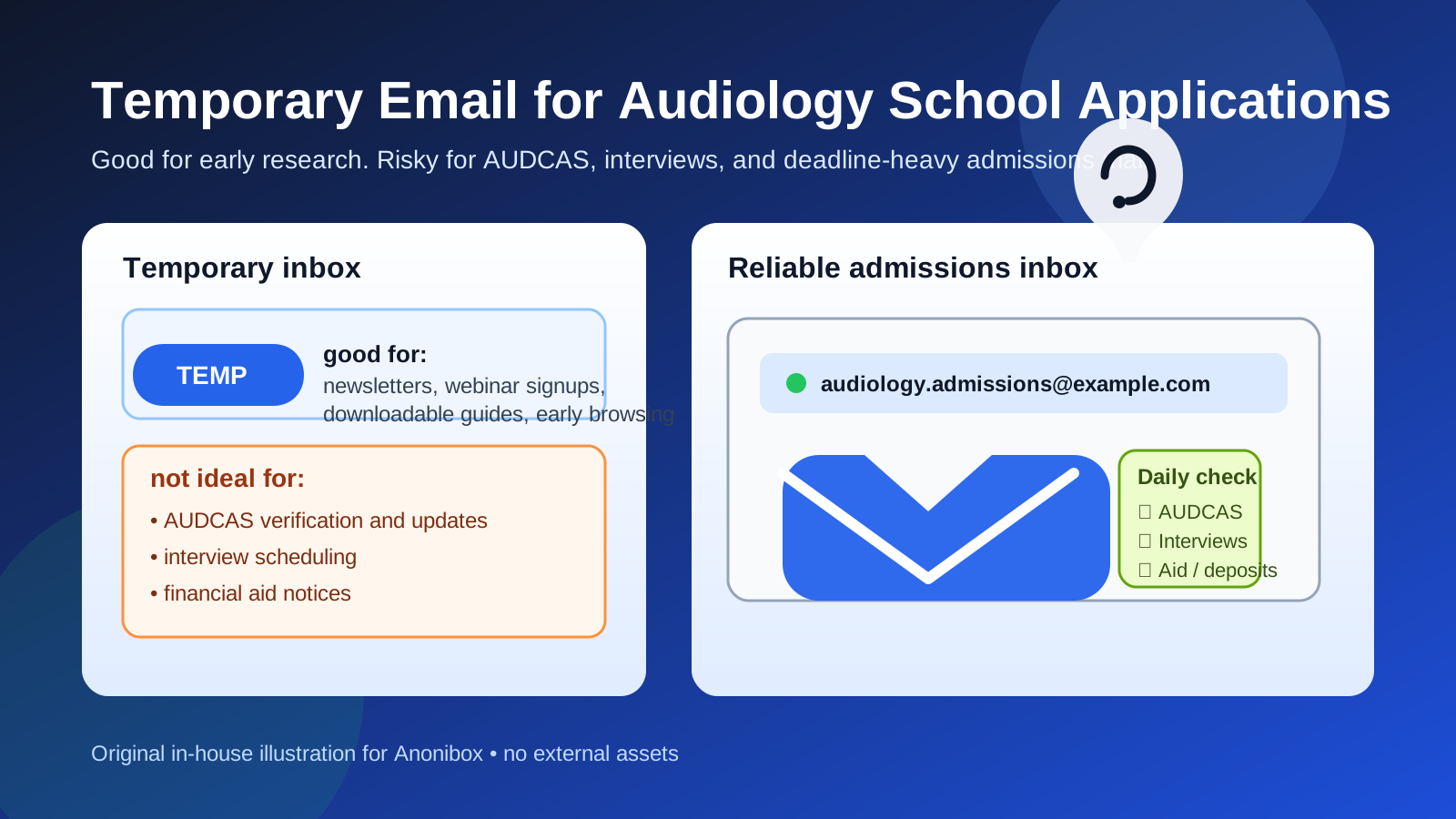
That distinction matters because audiology school applications are rarely a one-message process. You might start with casual browsing — comparing AuD programs, downloading admissions checklists, signing up for open-house reminders, or requesting program guides. Later, though, the stakes change. Once you move into AUDCAS, supplemental requirements, recommendation follow-up, interview invitations, and deposit deadlines, missing one email can create a completely different kind of problem than just getting a little spam.
So if you are asking whether a temporary email for audiology school applications is a good idea, the honest answer is: it depends on what stage you are in. Temporary inboxes can be genuinely useful for privacy during the research phase. They are much less reliable for the core admissions phase, where continuity matters more than convenience.
Why this question comes up in the first place
Audiology applicants often deal with more moving parts than they expect. There may be centralized application updates, program-specific instructions, clinical observation questions, interview coordination, scholarship or assistantship notices, and separate communication from graduate admissions offices. Even if every school is legitimate, the volume can still get messy.
That is exactly why privacy-minded applicants start looking at tools like Anonibox. A temporary inbox can shield your main email from mailing-list clutter, third-party event tools, and exploratory signups you may not want tied to your long-term personal address. Used carefully, that is a sensible workflow. The problem starts when people stretch a temporary inbox beyond the job it is good at.
When a temporary email can make sense
A temporary inbox can be useful for the parts of the process that are informational rather than mission-critical. Good examples include:
- Downloading brochures or admissions guides from schools you are only considering.
- Registering for virtual info sessions or webinars when you mainly want the access link and reminders.
- Testing low-trust forms on third-party education directories or ranking sites before you decide whether you want follow-up.
- Comparing multiple programs early without pushing your main inbox into months of promotional email.
- Separating casual research from serious applications so you can keep your next-step decisions organized.
In those cases, a temporary address is doing exactly what it should do: reducing clutter, limiting exposure, and giving you a little more privacy while you explore your options.
Where a temporary email becomes risky
The risk is not that audiology schools are doing something wrong by emailing you. The risk is that important application communication can arrive over a long period, from multiple senders, and not always on your preferred timeline.
Here is where a disposable inbox becomes a bad fit:
- AUDCAS confirmations and follow-up: if you need to revisit an old message, an expired inbox is a headache.
- School-specific supplement requests: these may arrive days or weeks after the first step.
- Interview scheduling: some invitations need quick replies and can get lost if the inbox is short-lived or unmonitored.
- Financial-aid, scholarship, or deposit notices: these are exactly the messages you do not want to gamble with.
- Waitlist and decision updates: admissions timelines are not always tidy, and some messages show up much later than expected.
Audiology admissions is not like signing up for a coupon or a software trial. The communication can stretch across months. That is why temporary email tends to work better at the edge of the process than at the center of it.
A better practical setup for most applicants
For most real audiology applicants, the safer middle ground is a stable separate inbox. That gives you organization and privacy without the fragility of a throwaway address. You still keep school-related communication out of your main everyday inbox, but you do not risk losing access when a deadline, portal notice, or interview invitation finally arrives.
A good workflow often looks like this:
- Use a temporary inbox only for early research. If you are browsing programs, signing up for info sessions, or downloading materials, a disposable address can be perfectly reasonable.
- Create one professional long-term admissions inbox. Once you decide you are seriously applying, switch to an address you control and check every day.
- Move every official school interaction to that stable inbox. That includes AUDCAS-related communication, school portals, interview scheduling, aid notices, and enrollment steps.
- Set filters and labels. Organize messages by school, application stage, or deadline type so you can spot time-sensitive items fast.
This is one of those cases where the best answer is not “always use temporary email” or “never use temporary email.” It is “use the right tool at the right stage.”
How to decide which stage you are in
If you are unsure whether you have crossed the line from casual research into real application territory, ask yourself a few simple questions:
- Have you started an official application, or are you still comparing programs?
- Would missing an email create a real deadline problem?
- Do you expect communication to continue for weeks or months?
- Are you now dealing with interviews, recommendations, financial aid, or deposits?
If the answer to any of those is yes, you are probably past the stage where a disposable inbox should be doing the heavy lifting.
What makes audiology applications different from lower-stakes signups
The reason this topic deserves a direct answer is that people sometimes assume all email privacy problems are basically the same. They are not. There is a big difference between protecting your inbox from marketing clutter and managing a long professional or academic process where continuity matters.
Audiology school applications can involve:
- multiple programs with different communication habits
- centralized and school-specific systems
- requests tied to observation, prerequisites, or transcript details
- interview logistics that may shift quickly
- funding, assistantship, or deposit deadlines that appear later in the cycle
A temporary inbox is great when your main goal is privacy from low-value follow-up. It is much weaker when your main goal is dependable access to high-value communication across a long timeline.
Best practices if you still want some temporary-email privacy
If you like the privacy benefits of a service such as Anonibox, you do not need to give them up entirely. You just need to use them with some discipline.
- Use temporary email for program research, not official application tracking.
- Do not split important admissions messages across too many addresses. One stable application inbox is easier to manage than five half-used ones.
- Save critical information outside the inbox. Keep a simple spreadsheet or checklist for deadlines, portals, and interview contacts.
- Check your admissions inbox daily during active months. Privacy is helpful, but responsiveness still matters.
- Keep the address professional. Whether it is separate or aliased, it should look normal and credible when a coordinator sees it.
Red flags that mean a temporary inbox is the wrong choice
You should switch to a stable address immediately if any of the following are true:
- You have already submitted, or are about to submit, official application materials.
- You are waiting on interview offers or scheduling emails.
- You are dealing with financial aid, assistantships, or deposit deadlines.
- You may need to search old messages later for instructions or proof.
- You are relying on the inbox for anything that would be hard to recreate if lost.
At that point, the cost of missing one message is simply higher than the privacy benefit of keeping everything disposable.
A simple recommendation that works for most people
If you want the short version, it is this:
- Early research: temporary email is fine.
- Real applications: use a stable separate inbox.
- Long-cycle admissions communication: avoid relying on disposable access.
That setup gives you the best of both worlds. You get protection from junk during the browsing stage, but you keep reliability once the process starts to matter.
Final answer
A temporary email for audiology school applications is usually fine for early exploration, but it is not the safest choice for the actual admissions process. Once you are dealing with AUDCAS messages, school-specific requirements, interviews, and deadline-heavy follow-up, a stable inbox is the smarter tool.
If privacy is your goal, use temporary email selectively instead of universally. Let it protect your main inbox during low-stakes research, then move serious admissions communication to one reliable address you can monitor for the full cycle. That gives you real privacy benefits without creating avoidable application risk.