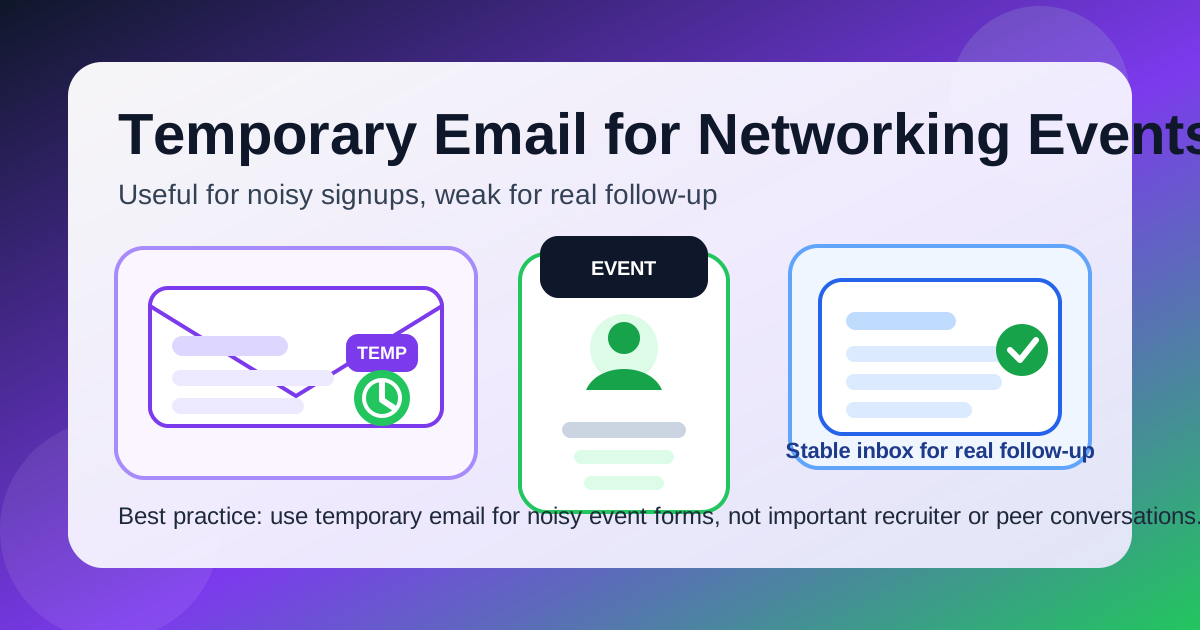
Usually not for real networking. A temporary email can be useful for low-trust event registrations, sponsor downloads, giveaway forms, or one-off webinar signups, but it is usually a poor primary address for actual networking relationships.
If you expect recruiter follow-up, introductions, calendar invites, or ongoing conversations, a stable separate inbox is the better choice. Use temporary email to limit spam at the edges of an event, not as the home for important career contacts.
Why this question matters more at networking events than it does on a normal website signup
Networking events are messy by design. You might register for a conference, professional meetup, alumni mixer, trade show, hiring fair, virtual summit, association panel, or industry webinar and think you are just handing over one email address to one organizer. In reality, event-related communication often spreads across several systems at once.
One event can trigger confirmations, venue updates, mobile-app invites, badge reminders, sponsor follow-up, recruiter outreach, slide decks, attendee directory messages, booth-scan campaigns, community invitations, and post-event newsletters. Some of that is useful. A lot of it is harmless but noisy. Some of it is pure marketing that keeps coming long after the event is over.
That is why people consider temporary or disposable email in the first place. They want the convenience of getting through registration without giving every organizer, sponsor, or partner permanent access to their main inbox. That instinct is reasonable. The mistake is assuming every networking-event interaction has the same value.
A registration form for a vendor-led giveaway is not the same thing as an email exchange with a hiring manager you actually want to know. A webinar landing page is not the same thing as an introduction from a former colleague. The right answer depends on whether you are protecting yourself from noise or trying to build a relationship that may matter later.
When a temporary email does make sense for networking events
Temporary email can be a smart tool when the interaction is shallow, noisy, or uncertain. Good examples include:
- Event registrations that look marketing-heavy: you mainly need the confirmation link and start-time reminder.
- Sponsor downloads and gated resources: whitepapers, booth demos, product sheets, “exclusive” reports, and similar lead-capture content.
- Giveaways, raffles, or swag forms: especially when the prize is minor and the follow-up is likely to be promotional.
- One-off public webinars: you want access to the session, but you do not necessarily want months of nurture emails afterward.
- Low-trust or unfamiliar organizers: the event may be real, but you are not yet confident about how your information will be used.
In those cases, temporary email helps you collect the few messages you need without volunteering your long-term inbox for every follow-up campaign that might be tied to the event. If your goal is simply to get in, grab the link, attend, and move on, temporary email can be an efficient privacy tool.
When temporary email is the wrong choice
Temporary email becomes a bad trade when the point of the event is genuine follow-up. That includes:
- Career fairs and hiring events where employers may email later with interview requests or next steps.
- Industry meetups where you expect real introductions or post-event conversations.
- Professional associations and alumni events where contacts may reconnect days or weeks later.
- Conferences with networking apps or meeting requests that rely on a stable address for account recovery and updates.
- Situations where you hand your email to a real person and want to look reachable, organized, and consistent.
A temporary inbox is good at reducing spam. It is usually bad at supporting continuity. Important messages do not always arrive immediately. A recruiter may follow up three days later. A panel speaker may send a note next week. A strong lead may share an introduction after the event ends. If your inbox strategy expires before the relationship does, you lose the upside you were trying to create.
The biggest risks of relying on temporary email for networking follow-up
1. You miss delayed replies
Many of the best networking outcomes are not instant. Someone meets ten people, gets busy, and follows up later. Temporary email works poorly when the payoff happens after the initial registration window.
2. You look flaky without meaning to
If someone emails you, gets a bounce, or notices that your address looks disposable, it can create doubt. That does not mean using temporary email is unethical. It just means the impression may be weaker when the interaction is supposed to feel professional and ongoing.
3. You lose access to useful event tools
Some event apps, directories, and meeting systems send login links, updates, or scheduling reminders over time. If the inbox disappears or becomes hard to monitor, the workflow becomes annoying fast.
4. You break your own recordkeeping
Networking is easier when you can trace who contacted you, which event they came from, and what you discussed. Disposable inboxes are not ideal when you want a reliable trail of opportunities and follow-up context.
A better default: use a stable separate inbox
For most serious networking, the cleanest answer is a dedicated separate inbox rather than a temporary one. That gives you most of the privacy benefits without sacrificing continuity.
A separate networking inbox helps because:
- you keep event and career messages out of your main personal inbox
- you avoid using your work email for exploratory career activity
- you stay reachable for weeks or months after the event
- you can filter or retire the inbox later if it starts attracting too much noise
- you maintain a more professional, stable contact identity
This is where a service like Anonibox fits naturally. The practical split is simple: use a stable separate inbox when you want real follow-up, and use temporary/disposable email only when the main goal is to get through a noisy signup without creating permanent inbox clutter.
A practical decision framework
Before you type an email address into an event form, ask one question: am I trying to start a relationship, or am I just trying to access something?
If you are trying to access something:
- a registration confirmation
- a webinar link
- a sponsor download
- a booth giveaway
- a one-time event reminder
then temporary email may be fine.
If you are trying to start or preserve a relationship:
- with a recruiter
- with an employer
- with an alum or mentor
- with a speaker or operator in your field
- with peers you want to stay in touch with
then use a stable inbox instead.
Three realistic event workflows that work well
1. The conference workflow
You register for the conference with a separate professional inbox because you may want speaker updates, venue changes, and follow-up from people you actually meet. But when a random sponsor asks for an email to download a benchmark PDF or enter a giveaway, that is where a temporary address can make sense.
This is probably the best real-world compromise: stable inbox for the event itself, temporary inbox for noisy side interactions.
2. The career fair workflow
Use a stable inbox. Even if the event feels crowded and transactional, the employers you speak with may follow up later about applications, interviews, or referrals. A temporary address creates more risk than value here.
3. The webinar workflow
If it is a public webinar from an unfamiliar vendor and you mainly want the session link, temporary email is often fine. If it is a niche community event where you expect meaningful follow-up or discussion, a stable separate inbox is safer.
Red flags that make temporary email more attractive
Some event experiences are much more about list-building than relationship-building. Temporary email becomes more useful when you notice patterns like:
- the form asks for excessive data before giving basic event details
- the organizer is vague about sponsors or data sharing
- the event looks like a thin wrapper for a sales funnel
- you are being pushed toward multiple gated assets at once
- the registration page feels low-trust, overdesigned, or oddly urgent
- you only want a recording, not an ongoing relationship
In those cases, protecting your real inbox is sensible. You are not refusing to participate. You are just deciding not to treat every lead-capture form like it deserves permanent access to your contact identity.
Where people get into trouble
The most common mistake is using temporary email at the first touchpoint and then forgetting that real humans may continue using that address later. Someone you met at a panel might email the address printed on your badge. A recruiter may reply to the email you used for event registration because that is what they have. A sponsor you actually liked may send a useful invitation that arrives after the disposable inbox stopped being part of your workflow.
The second mistake is overcorrecting and using a main personal or work inbox everywhere. That solves continuity but creates a different mess: too much spam, too much employer visibility, or too much career noise mixed into everyday life.
The better approach is not “temporary email always” or “real email always.” It is segmentation. Use the right kind of inbox for the value and trust level of the interaction.
A quick checklist before you decide
- Will I care if someone replies next week? If yes, do not use temporary email.
- Is this mainly a sponsor, download, or giveaway flow? If yes, temporary email may be fine.
- Is the event tied to jobs, referrals, or mentorship? If yes, use a stable inbox.
- Am I trying to reduce spam or build a relationship? Pick the inbox type that matches the goal.
- Would a separate inbox solve this better than a disposable one? In many cases, yes.
Final answer: should you use a temporary email for networking events?
Sometimes, but only selectively. A temporary email is useful for noisy registrations, gated sponsor content, giveaway forms, and low-trust event signups where you mainly want access without long-term inbox clutter.
For real networking, though, it is usually the wrong primary tool. If you want replies, introductions, recruiter follow-up, or long-term professional relationships, use a stable separate inbox instead. That keeps your privacy intact without making you harder to reach when an event turns into a real opportunity.