Usually, no—not if you expect important follow-up. A burner email can work for low-stakes networking event signups, but for real conversations, recruiter follow-ups, or referral leads, a separate long-term email is usually the safer choice.
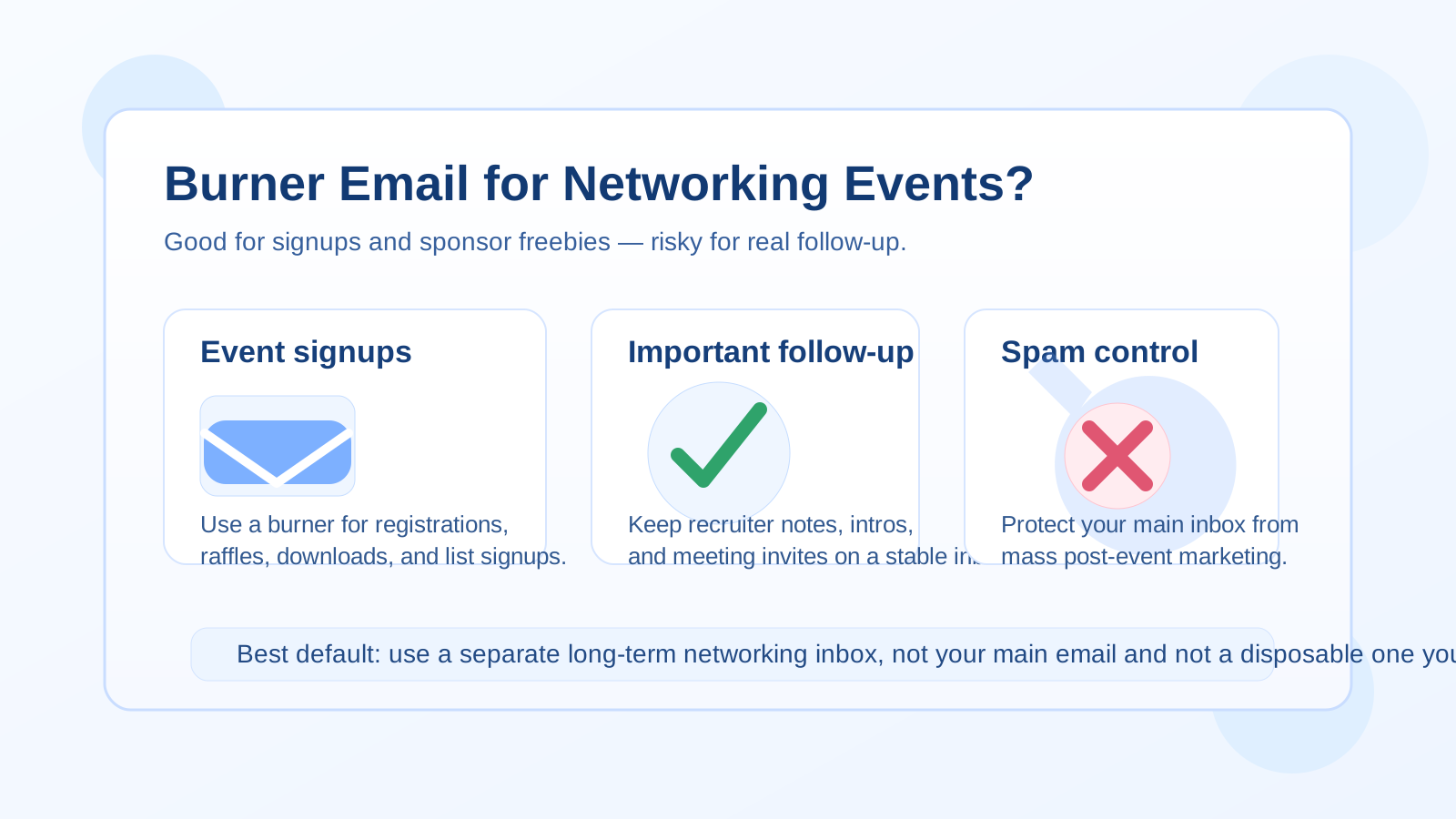
The practical rule: use a burner address for one-off registrations, swag raffles, sponsor downloads, and general mailing lists; use a stable email you control for people you may genuinely want to hear from again.
Why this question comes up at networking events
Networking events create a weird mix of opportunities and inbox risk. You might register for a conference, RSVP to a local meetup, scan a QR code at a booth, download a sponsor guide, join a waiting list for a workshop, or hand your contact details to someone who says they would love to stay in touch. Some of those contacts become useful. Many do not.
That is why people start asking whether a burner email is the smart move. They want to protect their main inbox from lead-gen sequences, mass follow-up campaigns, vendor newsletters, and random post-event spam. That instinct is reasonable. The problem is that networking events are not all the same. Some contacts are disposable. Some are exactly the kind you do not want to lose.
What a burner email does well
A burner email is helpful when your main goal is limiting exposure. It gives you a throwaway contact point you can use without handing your everyday inbox to every organizer, sponsor, or attendee list. For the right situation, that is genuinely useful.
- Event registrations: You need the confirmation email, venue reminder, or QR ticket, but you do not necessarily want months of marketing afterward.
- Booth signups: Sponsors often trade guides, checklists, demos, or giveaways for an email address. A burner can absorb that noise.
- Raffles and swag tables: If the contact exchange is mostly promotional, a burner email is often enough.
- Early-stage curiosity: Maybe you are exploring a new industry, local job scene, or founder meetup and you do not want to blend that research into your permanent inbox yet.
Used this way, a burner email acts like a buffer. It helps you take part without instantly turning your main inbox into a mailing list warehouse.
Where a burner email starts to backfire
The downside is simple: networking only works if people can reach you again. A burner email reduces spam, but it also reduces continuity. If the address expires, gets buried, or stops forwarding, you can miss the exact follow-up that made the event worth attending in the first place.
That matters more than many people expect. Useful networking-event follow-up is often delayed. A recruiter may write three days later. A founder may send a calendar invite next week. A hiring manager may forward your note internally after the event is over. If you used a disposable address that you are no longer checking, the privacy win becomes an opportunity loss.
Common situations where a burner email is a bad fit
- You met someone you genuinely want to build a relationship with.
- You expect a referral, introduction, or meeting invite.
- You are attending a career-focused event where follow-up is the whole point.
- You may need account recovery, ticket updates, or post-event recordings later.
- You are talking to recruiters, hiring managers, speakers, or organizers you want to hear from again.
In those cases, a burner email can look neat in theory but sloppy in practice. You do not need a perfect lifelong address for every event, but you do need enough stability for real replies to land somewhere you still control.
Burner email vs temporary email vs separate long-term email
People often use these terms interchangeably, but they are not exactly the same.
Burner email
A burner email is typically meant for short-term use and low attachment. It is useful when you want a layer between your identity and a signup form.
Temporary email
A temporary inbox is even more disposable. It can be perfect for one-off verification, but it is often a poor fit for any situation where the relationship may continue beyond the first message.
Separate long-term email
This is usually the best choice for serious networking. You still protect your main personal or work inbox, but you keep a stable address that you can monitor over time. That means less spam than using your main inbox everywhere, without the fragility of a true throwaway account.
If your real concern is privacy plus long-term follow-up, a separate dedicated email is usually better than a burner. That is the middle ground many people actually want.
So should you use a burner email for networking events?
Yes for low-stakes event admin. No for high-value relationship-building. That is the cleanest answer.
If you are signing up for a crowded expo, downloading sponsor material, or registering for an event that is likely to trigger broad marketing outreach, a burner email can make sense. If you are going to a job fair, alumni mixer, industry meetup, founder gathering, or niche conference where one useful follow-up could matter, a burner email is often too disposable.
Think about the event’s purpose. If the point is consumption, a burner works. If the point is connection, stability matters more.
A better privacy-first approach for most people
For most networking events, the best setup is not your main inbox and not a true burner. It is a separate email you control for ongoing professional outreach. That could be a secondary inbox used for job searching, networking, newsletters, event registrations, and cold outreach. It stays distinct from your personal life while remaining reliable enough for serious follow-up.
This is where a service like Anonibox can fit naturally into the workflow. If you want to reduce spam exposure or avoid giving your primary inbox to every event form, using a separate privacy-conscious address strategy is usually more practical than relying on an address you may abandon too quickly. The goal is not just to hide from spam. The goal is to stay reachable without overexposing your main inbox.
How to decide before you type your email address
Ask yourself these questions:
- Why am I giving this email? Ticket delivery, a raffle, a sponsor PDF, or a real person I want to hear from?
- Will I care about replies next week? If yes, do not use something you may stop checking.
- Is this event mostly marketing-driven? If yes, a burner becomes more attractive.
- Do I want this contact to feel professional? If yes, a stable separate inbox is usually a better signal.
- Would I be annoyed if this address got added to several mailing lists? If yes, protect your main inbox.
Those questions usually make the decision obvious. The issue is rarely whether a burner email is technically possible. The real issue is whether it matches the kind of follow-up you are trying to create.
Practical examples
Good use of a burner email
You are attending a large technology expo with dozens of sponsors. You want the pass, agenda, and maybe one or two promo downloads, but you do not want nonstop vendor follow-up. A burner email is reasonable here.
Bad use of a burner email
You are going to a recruiting mixer where you hope to meet hiring managers and alumni who may introduce you to openings. A disposable address creates too much risk that meaningful follow-up will get lost.
Best middle-ground use case
You attend several events per month and want privacy without losing continuity. A separate networking email is the strongest setup because it absorbs event traffic while staying stable enough for interviews, introductions, and referrals later.
Red flags after the event
Even if you use a stable inbox, networking events can still produce shady follow-up. Be cautious if someone contacts you with pressure tactics, vague job promises, requests to move the conversation to an odd platform immediately, or demands for sensitive personal documents early. Protecting your inbox is useful, but protecting your judgment matters more.
If a follow-up feels generic, overly urgent, or disconnected from the conversation you actually had, verify it before replying. A cleaner inbox helps, but it does not replace basic skepticism.
Simple best practices
- Use a burner email for one-off registrations, raffles, and sponsor handouts.
- Use a separate long-term inbox for career networking and meaningful professional conversations.
- Avoid using your work email for outside networking unless you are fully comfortable with the visibility and retention issues.
- Save important confirmations, calendar invites, or speaker follow-ups promptly.
- Review who actually deserves your ongoing contact details instead of giving the same address to every form.
Final takeaway
A burner email can be a smart privacy move for networking events, but only when the interaction is low-stakes and mostly transactional. If you care about real follow-up, introductions, referrals, or future conversations, a burner address is often too fragile for the job.
For most people, the best answer is not “always use a burner” or “always use your main inbox.” It is to separate event noise from important communication with an address strategy that protects your privacy and preserves reachability. That way you can avoid the spam without accidentally throwing away the opportunity.