Usually no — you should not use your work phone number for car dealership quotes unless the purchase is actually work-related or you fully control that business line yourself.
A separate number you personally control is usually the safer default because dealerships often reply with calls, texts, appointment follow-ups, and repeated sales outreach long after your first quote request.
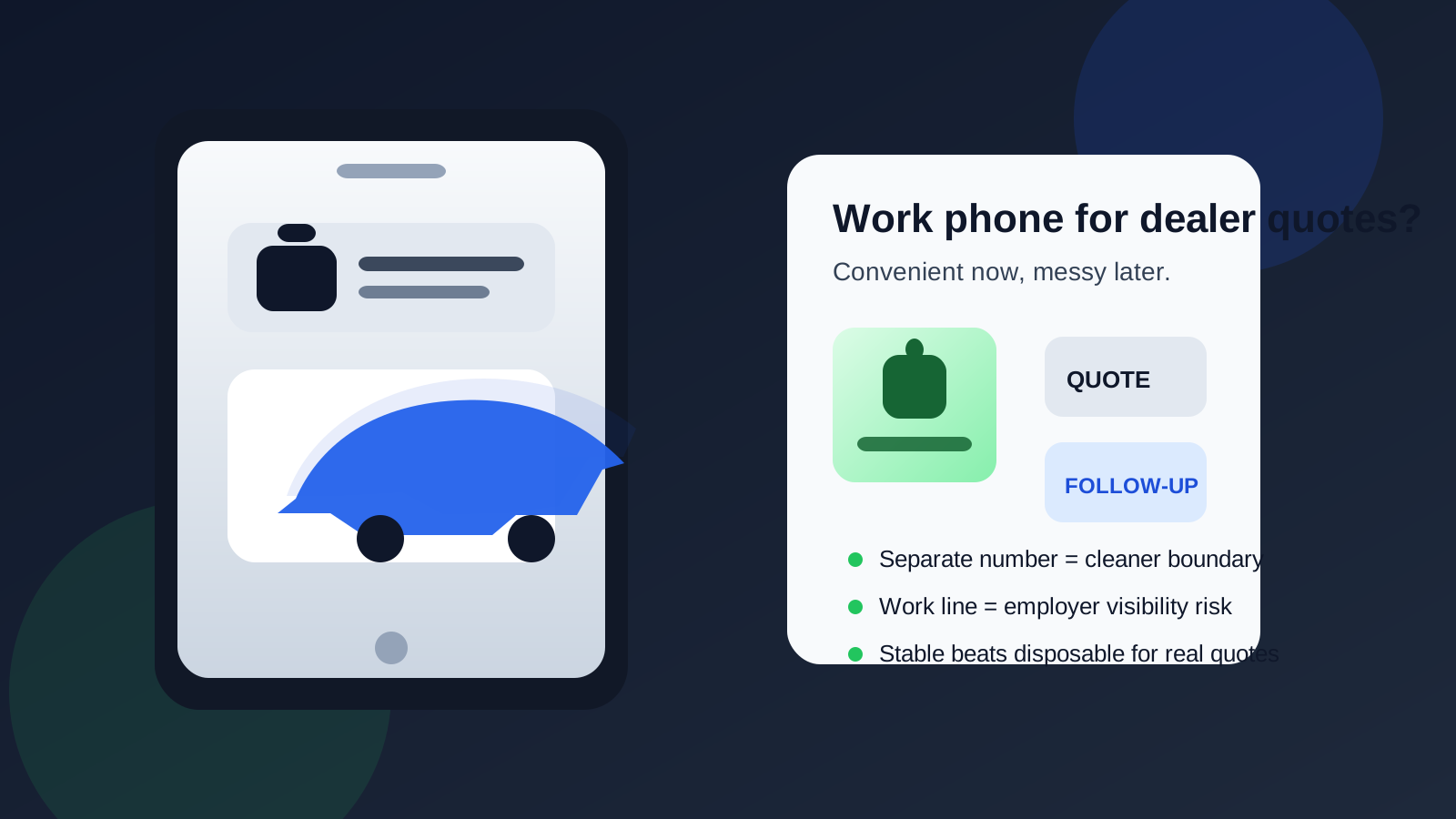
At first glance, a work number can feel practical. You already answer it, it may seem more “serious” than a second line, and it can look easier than setting up a dedicated shopping number before you start comparing dealerships. But car-shopping lead forms are not the same as a one-time message to a local business. One quote request can trigger callbacks from multiple salespeople, CRM-driven text sequences, trade-in questions, inventory alerts, financing nudges, and weekend promotion messages. Once that activity lands on a work-managed line, the convenience starts to look a lot less attractive.
The real question is not whether a work number can receive dealership calls. Of course it can. The better question is whether it gives you enough privacy, enough control, and enough continuity for a buying process that may last days or weeks and may keep generating follow-up after you are done shopping. In most cases, the answer is no.
Why dealerships ask for a phone number in the first place
Dealerships often prefer the phone because it moves the conversation faster than email alone. Even when you only want an out-the-door quote, the store may want to confirm availability, ask whether you have a trade-in, schedule a test drive, or push the conversation toward a visit. That usually leads to:
- same-day sales calls after a lead form submission,
- text messages from individual salespeople,
- automated follow-up campaigns from the dealership CRM,
- appointment reminders and inventory alerts,
- finance-office callbacks about rates or approvals, and
- check-in messages long after you contacted the store.
None of that is automatically shady. It is just how many dealership quote workflows operate. The problem is that a work phone line is usually the wrong place to absorb all of that activity.
Short answer: your work phone can function, but it is usually the wrong tool
If you are contacting one trusted local dealer about one specific car and expect the process to end quickly, using your work number may not blow up immediately. But most shoppers are not doing that. They are comparing stores, checking inventory, asking about add-ons, chasing written quotes, and trying not to get buried in follow-up.
For that broader reality, a work number creates more boundary problems than it solves. It mixes personal shopping into employer-controlled systems, makes cleanup harder later, and can expose your car search to workday interruptions you did not need.
The biggest risks of using your work phone number
1. The number may not really be yours
This is the most important point. If your employer owns the line, you may use it every day, but you do not fully control it. You can change jobs, change devices, lose access during a role change, or return the number entirely. That matters because dealership conversations do not always end when you expect. You may want to revisit quote texts, confirm a promised price, retrieve a voicemail, or respond to a salesperson later when the timing changes.
A number you could lose is a weak anchor for a purchase process that may stretch longer than the first inquiry.
2. Dealer follow-up can spill straight into your workday
Dealer contact rarely arrives on your schedule. Calls come during meetings. Texts show up while you are trying to focus. Salespeople follow up at the exact moment their CRM tells them to, not when it is convenient for your job. That means a personal car-shopping process can start competing with actual work communication on the same line.
Even if the messages are harmless, they add noise where you probably want less noise, not more.
3. Employer visibility is an unnecessary tradeoff
Not every company is actively inspecting employee calls and texts, but work-managed devices and lines often exist inside billing systems, mobile-device-management policies, support workflows, carrier dashboards, backups, or internal recordkeeping. That does not automatically mean surveillance. It does mean your dealership interactions can become more visible, more persistent, or easier to surface than they would be on a line you control yourself.
There is no strong reason to place personal vehicle shopping inside that environment if you have another option.
4. Shared, public-facing, or desk numbers are even worse
If by “work phone” you mean a desk extension, front-desk number, departmental line, or shared company mobile, the answer is an even clearer no. Quotes, callbacks, and text-based verification can end up in front of coworkers or become impossible to manage properly. A dealership quote workflow works best when one person controls the contact channel from start to finish.
5. You may lose the context you actually need
Car shopping is full of small details that matter later: which store promised no dealer add-ons, who quoted the best out-the-door number, which salesperson confirmed the vehicle was still available, or which financing offer sounded better before the fees changed. If those messages are mixed into a busy work line, they are easier to miss, harder to organize, and more annoying to revisit later.
When using a work phone number might be acceptable
There are a few situations where a work number is not automatically the wrong choice:
- You are self-employed and the “work” number is still fully yours to keep long-term.
- The vehicle purchase is actually work-related and you intentionally want dealer contact tied to the business.
- You control the business line personally and already use it for vendor communication you expect to retain.
Even then, it is worth asking whether the line really helps. A personally controlled business number is very different from an employer-issued line on a company device. Most people asking this question mean the second case, and that is where the privacy downside is usually strongest.
What is usually better than your work number?
A separate personal shopping number
The best default is usually a separate number you personally control and can keep as long as needed. That gives you a buffer between dealer follow-up and your everyday life without making you unreachable.
A dedicated number helps you:
- screen dealer calls and texts instantly,
- keep your main line quieter,
- separate shopping from work, family, and account-recovery traffic, and
- retire or mute the contact channel later if follow-up drags on.
A stable virtual number
If a reliable virtual number works in your region and with the dealerships you are contacting, it can be a strong middle ground. It provides separation without forcing you to juggle another physical device. This is often a better fit than a work number because the number is tied to your own workflow rather than your employer’s.
A burner number for very early low-trust outreach
A burner-style number can make sense when you are testing low-trust lead forms, third-party marketplace listings, or dealerships you are not sure you even want to engage seriously. But it is not automatically the best tool for the whole process. Once a dealership becomes a real contender, continuity matters. If you might need the texts later, a stable separate number is safer than an ultra-disposable one.
How this differs from the other contact choices people consider
Each option solves a slightly different problem:
- Main personal number: easiest to use, but it absorbs all the long-tail follow-up.
- Work number: reachable, but mixes personal shopping into employer-controlled systems.
- Burner number: useful for early testing, but sometimes too fragile for serious negotiation.
- Stable separate number: usually the best balance of privacy, control, and reliability.
That same layered logic applies to email. A stable shopping inbox usually works better than your work mailbox for real quote conversations, while an early-stage temporary inbox can help on low-trust forms. If you want to reduce exposure on the email side too, an Anonibox address can be useful for the earliest dealership or marketplace signups before you decide which stores deserve a longer conversation.
A practical privacy-first workflow for dealership quotes
- Set up the number before you request quotes. The privacy benefit is much stronger if every initial inquiry starts from the same separate line.
- Use one dedicated email strategy too. Pair the number with either a stable shopping inbox or, for low-trust first-touch forms, a temporary Anonibox inbox.
- Ask for written details early. Request the out-the-door price, required add-ons, fees, VIN, and availability in writing so you can compare stores later.
- Save useful texts and voicemails. A dedicated notes app or simple spreadsheet makes quote comparisons less fuzzy.
- Promote only the serious dealers. If one store becomes a real finalist, you can decide whether to keep using the separate number or transition to your main line later.
- Clean up when the search ends. Mute, archive, block, or retire the separate channel once you buy or stop shopping.
Red flags that make a work number an even worse idea
- The dealership immediately pushes from email to repeated calls without answering basic pricing questions.
- You are contacting multiple stores and already expect heavy follow-up.
- Your employer manages the device, line, or backups centrally.
- Your work number is shared, public-facing, or used in signatures and customer records.
- You may change jobs or lose access to the line soon.
- You want to keep your car-shopping process fully separate from work life.
If several of those apply, a work number is not just suboptimal. It is the wrong default.
Quick checklist before you submit a dealer form
- Do I control this number personally and long-term?
- Would I still have access if I left my job tomorrow?
- Do I want dealer calls and texts landing on my work line during the day?
- Am I contacting enough dealerships that compartmentalization would help?
- Do I also have a separate email plan for quote requests?
If those questions make you hesitate, that hesitation is useful. It usually means a separate number would give you a cleaner setup.
Final answer
Usually no — you should not use your work phone number for car dealership quotes unless the purchase is genuinely work-related or the business line is fully under your own long-term control. For most shoppers, it creates unnecessary employer visibility, makes follow-up harder to manage, and puts a personal buying process inside a communication channel you do not fully own.
A separate number you control yourself is usually the better default. Pair it with a separate shopping inbox — and, for low-trust early lead forms, a temporary Anonibox address if needed — and you get the real benefit: you stay reachable for serious quotes without turning your work line into the long-term home for dealership sales follow-up.