Yes — an email alias is often a smart choice for volunteer applications when you want privacy without risking missed follow-up.
It gives you a stable address you control, which is usually safer than a temporary inbox and less cluttered than using your main personal email for every nonprofit, charity, or community signup.
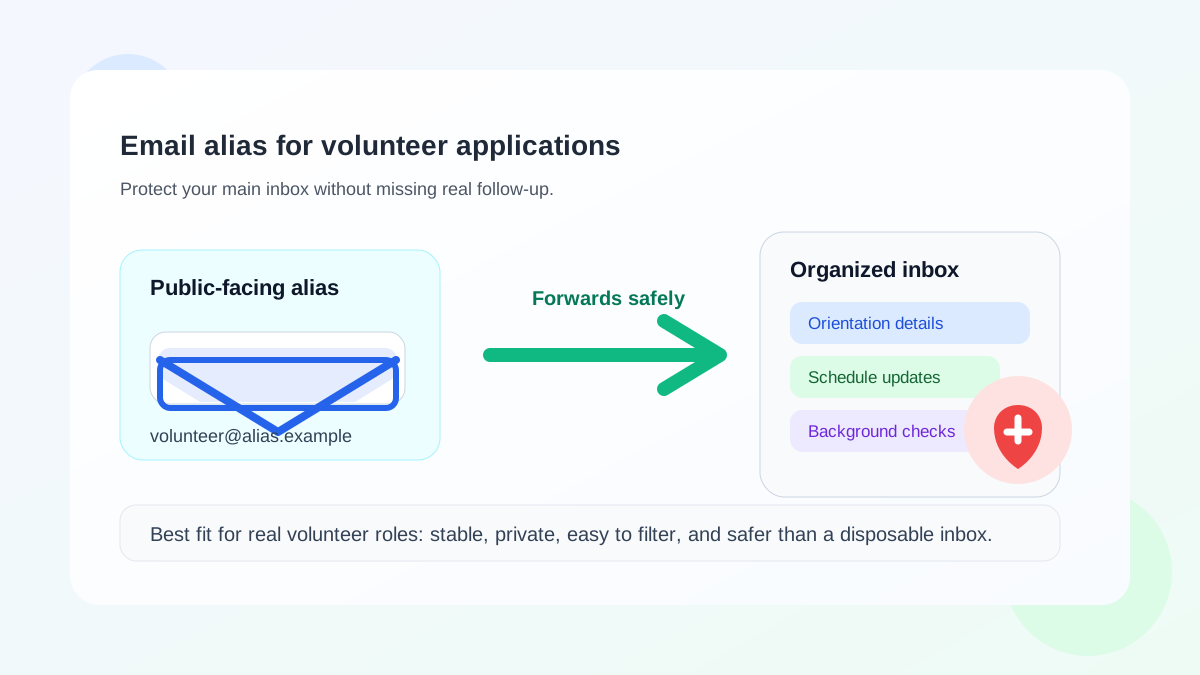
That is the practical answer behind searches for email alias for volunteer applications. A lot of people want to help, but they do not want their everyday inbox turning into a mix of orientation updates, fundraising appeals, newsletters, volunteer alerts, and one-off follow-up messages from organizations they may never work with again. That concern is reasonable. The trick is choosing a contact method that protects your privacy without making you harder to reach when an opportunity becomes real.
An email alias can do that well. Unlike a fully disposable inbox, an alias is stable enough for screening questions, onboarding steps, schedule updates, and delayed replies. Unlike your main personal email, it gives you separation and control. For many real volunteer applications, that middle ground is exactly what you want.
What an email alias actually means
An email alias is a secondary email address that routes messages into an inbox you already control. To the volunteer coordinator, it looks like a normal email address. On your side, it helps you filter, label, forward, and manage volunteer-related mail separately from everything else.
That makes it different from two other common options:
- Temporary email: good for low-stakes browsing, one-time downloads, or quick verification when long-term access may not matter.
- Separate mailbox: good when you want maximum separation and do not mind maintaining a dedicated login just for volunteer work.
- Email alias: good when you want privacy and organization, but still need a durable address for real communication.
If you already use a service like Anonibox for one-time signups, think of an alias as the more durable option once a volunteer opportunity starts to look legitimate. It keeps the privacy mindset, but with much better long-term reliability.
Short answer: usually yes, if the alias is stable and easy to monitor
For most real volunteer applications, an alias is a sensible choice if it forwards reliably, lets you reply cleanly, and will stay active for as long as the opportunity might matter. Volunteer coordinators usually do not care whether an address is technically an alias. They care that it works, that you check it, and that you respond when they send something important.
An alias is especially useful if you are:
- applying to several organizations at once,
- using volunteer directories or community boards that may generate extra email,
- trying to keep cause-related messages out of your main personal inbox,
- screening opportunities before deciding where to commit, or
- managing recurring shifts, training, waivers, or background-check steps.
In those situations, an alias gives you real separation without the fragility of a throwaway inbox.
Why an alias works well for volunteer applications
1. It protects your main inbox
Volunteer applications can create more follow-up than people expect. Even legitimate organizations may send newsletters, event reminders, donation asks, annual campaign updates, or “other ways to help” messages after your initial contact. An alias keeps that activity from spilling straight into your everyday inbox.
2. It stays usable if the process moves slowly
Many volunteer programs do not reply instantly. Small nonprofits and community groups often run lean. Someone may review applications next week, send orientation details a few days later, and ask for schedule confirmation after that. A stable alias handles that delay much better than a temporary inbox that may expire or become inconvenient to monitor.
3. It helps you stay organized
Aliases make filtering easier. You can label volunteer mail, route it into a folder, set reminders, or search it later without mixing it into family messages, receipts, work mail, and everything else. That matters when you need to find a waiver link, training packet, parking instructions, or a request to confirm availability.
4. It gives you more control if the organization is noisy
Sometimes the role is real, but the follow-up is broader than you expected. An alias gives you cleaner control over what to keep, mute, or close later. If an organization keeps sending general outreach after you decide not to continue, managing that traffic is easier when it came through an alias in the first place.
When an alias is better than a temporary email
This is where the distinction matters most. A temporary inbox can be fine for low-trust browsing, a single verification email, or a one-off sign-up where you only need a code once. But a real volunteer application usually involves communication that stretches beyond the first message.
An alias is the better choice when:
- the role may involve interviews or screening questions,
- you may receive orientation materials later,
- background checks or references could be part of the process,
- you expect schedule updates or volunteer portal messages,
- you want privacy but still need dependable long-term access.
In short, temporary inboxes are better for exploration. Aliases are better for real opportunities that might still matter next week.
When a separate mailbox may be better than an alias
An alias is not always the perfect answer. Sometimes a fully separate inbox is still the better setup.
A dedicated mailbox may be worth it if:
- you volunteer regularly and want a long-term home for all related communication,
- you need very clear separation between personal life and volunteer work,
- your alias provider makes replies awkward or confusing,
- you plan to coordinate teams, recurring shifts, or leadership responsibilities.
If volunteer work is becoming a serious ongoing part of your life, a separate mailbox can be easier to manage than stacking everything through aliases. But for many people, especially those exploring opportunities or applying selectively, an alias is a lighter and more practical solution.
When you should not use an alias
An alias only helps if it behaves like a normal, dependable address. You should be cautious if:
- the alias looks disposable or obviously fake,
- you cannot reliably reply from it,
- you rarely check the inbox it forwards into,
- your forwarding setup sometimes misroutes mail to spam,
- the alias may be turned off before the organization finishes onboarding you.
You also do not want to create confusion by switching addresses constantly. If you apply with one address and then answer from another, some coordinators may lose the thread. Use an alias that you can keep consistent throughout the process.
Best practices for using an email alias for volunteer applications
Choose a simple, professional alias
Keep it readable and normal. Something clean is better than anything gimmicky. You want the address to look trustworthy, even if the organization never knows it is an alias.
Test forwarding before you apply
Send yourself a few messages first. Make sure they arrive quickly, do not land in spam, and are easy to reply to from the setup you plan to use.
Use filters or labels
Create a rule so messages sent to that alias are tagged automatically. This is one of the biggest practical benefits: you can instantly separate application confirmations, schedule updates, waivers, and coordinator replies from the rest of your inbox.
Keep the alias active long enough
Volunteer processes can move slowly. Do not close the alias the day after you apply. Keep it running until you are sure the opportunity is over or you have transitioned to another stable address if needed.
Know when to escalate to a more permanent contact method
If you move into recurring shifts, leadership roles, or long-term coordination, it may make sense to keep using the alias or to switch to a dedicated long-term volunteer inbox you control. The important thing is to make the switch deliberately, not after you have already missed an email.
Common volunteer scenarios
Applying to multiple local organizations: an alias is a strong fit. You stay reachable and keep everything contained.
Signing up for a one-time event you barely know: a temporary inbox may still be fine if you only need one confirmation and nothing else.
Applying for a role that requires training or background checks: use an alias or a separate stable inbox, not a disposable address.
Exploring several causes before committing: an alias is a good middle ground because it reduces exposure without making follow-up fragile.
So, should you use an email alias for volunteer applications?
Usually yes. An email alias is often one of the best privacy-friendly options for volunteer applications because it protects your main inbox while staying reliable enough for real follow-up.
It is usually a better fit than a temporary inbox once a volunteer role becomes real, and often an easier setup than maintaining a whole second mailbox if you only want clean separation and simple filtering. If your alias is stable, professional, and easy to monitor, it can give you the privacy benefits you want without making you miss the messages that actually matter.
That is the sweet spot: protect your inbox, stay organized, and remain easy to reach when a good opportunity comes along.