Yes — you can use a temp email for CallTrackingMetrics if you only need to open a trial, verify the account, and explore the dashboard for a short evaluation.
It becomes a bad idea once tracking numbers, teammate access, agency-client reporting, integrations, billing, or account recovery depend on that inbox.
That distinction matters because CallTrackingMetrics is not just another lightweight sign-up. Even in an early trial, you may end up testing phone numbers, call flows, form attribution, CRM connections, ad reporting, and call routing rules that can become operational very quickly. A disposable inbox is useful at the beginning, but risky once the account starts touching real campaigns or real customer conversations.
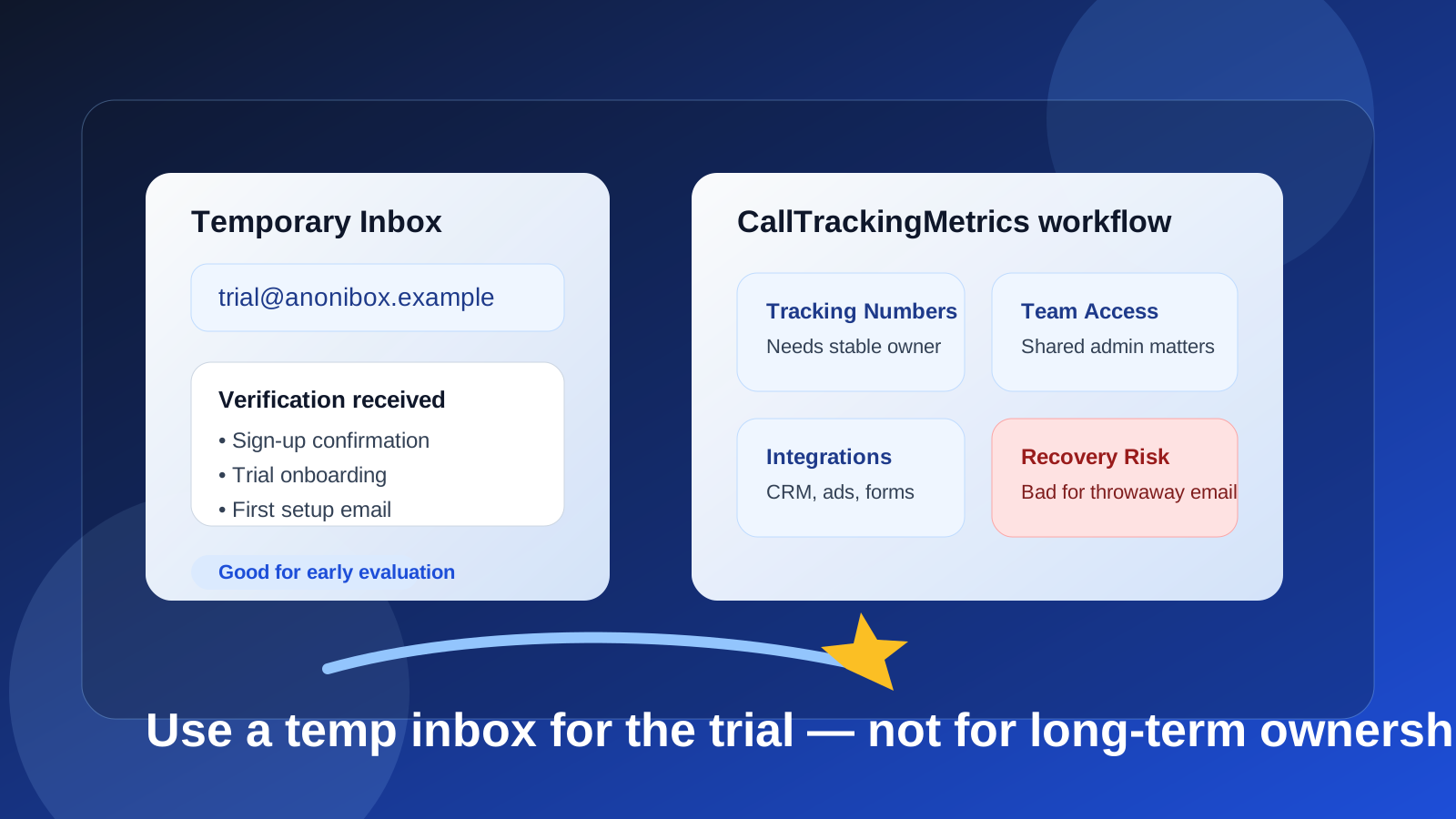
If your goal is simple research, a temporary inbox can keep your main address out of follow-up sequences while you compare platforms. A service like Anonibox can be handy for that early stage: receive the verification message, confirm the trial, and see whether the product is worth deeper attention before giving a long-term work address. But once the account is moving beyond a quick look, you should switch to an inbox your team can actually keep.
When a temp email makes sense for CallTrackingMetrics
A throwaway address is reasonable when you are still in evaluation mode and have not tied the account to real operations yet. That usually includes a few specific situations:
- Opening a free trial or booking a sandbox-style product evaluation
- Comparing CallTrackingMetrics with alternatives such as call tracking or conversation analytics tools
- Reviewing the interface, onboarding flow, and reporting layout before committing to a real setup
- Checking whether the platform covers your use case for agencies, lead attribution, or inbound call workflows
- Avoiding long-term sales email in your primary inbox during early vendor research
In that stage, the temp inbox is doing one job: getting you through email verification and the first few onboarding messages without turning a short comparison into months of marketing follow-up.
When a temp email becomes risky
The problem starts when the account stops being temporary in practice, even if you originally meant it to be temporary on paper. CallTrackingMetrics can sit close to real revenue workflows, which means the email attached to the account matters more than it might on a casual app trial.
A disposable address becomes risky when you start doing any of the following:
- Claiming or buying tracking numbers you may want to keep
- Inviting teammates, clients, or contractors into the workspace
- Connecting ad platforms, CRM tools, calendars, or form-routing workflows
- Managing call attribution for live campaigns
- Relying on the inbox for invoices, renewal notices, or security alerts
- Depending on that email for password resets or account recovery
At that point, the inbox is part of the operational backbone of the account. If it disappears, expires, or becomes inaccessible, the mess is larger than a missed marketing email.
Why CallTrackingMetrics is different from a one-click sign-up
Some trials are mostly self-contained. You sign up, click around for ten minutes, and leave. CallTrackingMetrics often sits closer to your actual communication stack. Even small tests can spill into real routing and reporting decisions.
For example, a team might start with an innocent trial just to compare call reports, then realize they also want to test number pools, call forwarding, IVR behavior, agent notifications, or lead-source attribution. Suddenly the account is no longer a disposable experiment. It is part of a real evaluation with data, numbers, people, and possibly clients involved.
That is the core rule: temp email for CallTrackingMetrics is fine for opening the door, but not for owning the room.
Specific risks of keeping a throwaway inbox on the account
1. You can lose access to important number and routing notices
Call tracking platforms often send important messages when numbers are provisioned, settings change, or account actions need confirmation. If those notices go to an inbox you do not monitor, you can miss something operational instead of merely promotional.
2. Team access becomes fragile
If your agency, marketing team, or operations staff starts using the account, the original login email matters. Even if other users are invited later, the primary owner inbox may still be tied to key administrative actions. A dead throwaway inbox is a weak foundation for a shared system.
3. Integrations can outlive the trial mindset
Once you connect a CRM, ad account, scheduler, or reporting workflow, the platform stops being a casual test. If the original inbox is temporary, you create avoidable recovery risk later when something breaks or permissions need to be confirmed.
4. Billing and renewal messages are easy to miss
A disposable address is poor for anything involving paid numbers, usage charges, subscription changes, or card issues. Even if you only intended to test the tool, accounts have a habit of lingering.
5. Security becomes harder to manage
Password resets, suspicious-login alerts, and ownership confirmations matter more on a platform that touches customer calls and marketing attribution. If you lose the inbox, you may complicate recovery right when you need it most.
A smarter workflow if you want privacy during evaluation
If you want both privacy and practicality, use a staged approach instead of an all-or-nothing approach.
Stage 1: Use a temp inbox only for the earliest evaluation
If you are still deciding whether the trial is even worth your time, a disposable inbox is reasonable. Use it to receive the verification email, enter the product, and review the basics.
Stage 2: Decide quickly whether the account is staying alive
Within the first session or two, ask a simple question: is this just vendor research, or are we actually going to test live workflows? If the answer is yes, move to a permanent inbox early rather than waiting until the account becomes more important.
Stage 3: Switch to a controlled long-term email before real setup
Before adding real tracking numbers, real client data, or real integrations, switch the account to an inbox your business controls. For a team, that might be a role-based address or a durable shared admin inbox rather than one person’s throwaway experiment.
What kind of permanent email is better?
The best long-term email for CallTrackingMetrics is usually not your random personal inbox and definitely not an expiring one. A better choice is an address that is:
- Monitored regularly
- Accessible to the right owner or admin team
- Stable enough for billing and recovery
- Separate from everyday personal clutter
- Professional enough for vendor communication
For some teams that means a dedicated operations or marketing-tools inbox. For agencies, it may mean a client-specific admin address or a central internal account owner address with proper documentation. The main goal is durability, not just convenience.
How to evaluate CallTrackingMetrics safely with a temp email
If you still want the privacy benefits of a disposable inbox, you can do it safely by keeping the trial scope narrow.
- Use the temp address only for signup and first access.
- Review the dashboard, reports, and setup flow before adding anything real.
- Avoid connecting production systems in the earliest session.
- Do not attach real billing ownership unless the email is already permanent.
- Switch to a durable address before inviting teammates or launching live numbers.
This gives you the best of both worlds: inbox protection during research and fewer ownership problems later.
Questions to ask before you keep using a temp email
Before you leave the account tied to a throwaway inbox, run through this checklist:
- Will we need this account again after today?
- Are we testing real tracking numbers or only browsing features?
- Will multiple people need access?
- Are we connecting ads, forms, CRM tools, or reporting systems?
- Would it be a problem if we lost access to the email next week?
If the last answer is yes, the temporary inbox has already outlived its safe use case.
Common mistake: treating evaluation infrastructure like production infrastructure
A lot of teams make the same mistake with software trials. They start with a quick privacy-minded sign-up, then never clean up the setup when the tool becomes real. What began as “just a trial” turns into a live environment with numbers, reporting, and integrations attached to an inbox nobody owns anymore.
That is manageable for some tools, but it is much riskier for communication platforms and call attribution systems. When calls, campaigns, and reporting chains are involved, you want fewer points of failure, not more.
Final answer
Using a temp email for CallTrackingMetrics is fine for a short trial, a quick feature review, or an early comparison when you want to protect your main inbox from vendor follow-up. It is not a good long-term choice once the account starts handling tracking numbers, call routing, team access, billing, integrations, or recovery.
The practical rule is simple: use a temporary inbox to explore, then switch to a stable inbox before the platform becomes operational. That keeps your evaluation cleaner without creating avoidable ownership and recovery problems later.