Yes, you can use AOL Mail for job referrals if the address is professional, stable, and checked regularly.
It is usually a much better choice than a temporary inbox for referral conversations, but an outdated-looking address, poor inbox hygiene, or missed follow-ups can still make it work against you.
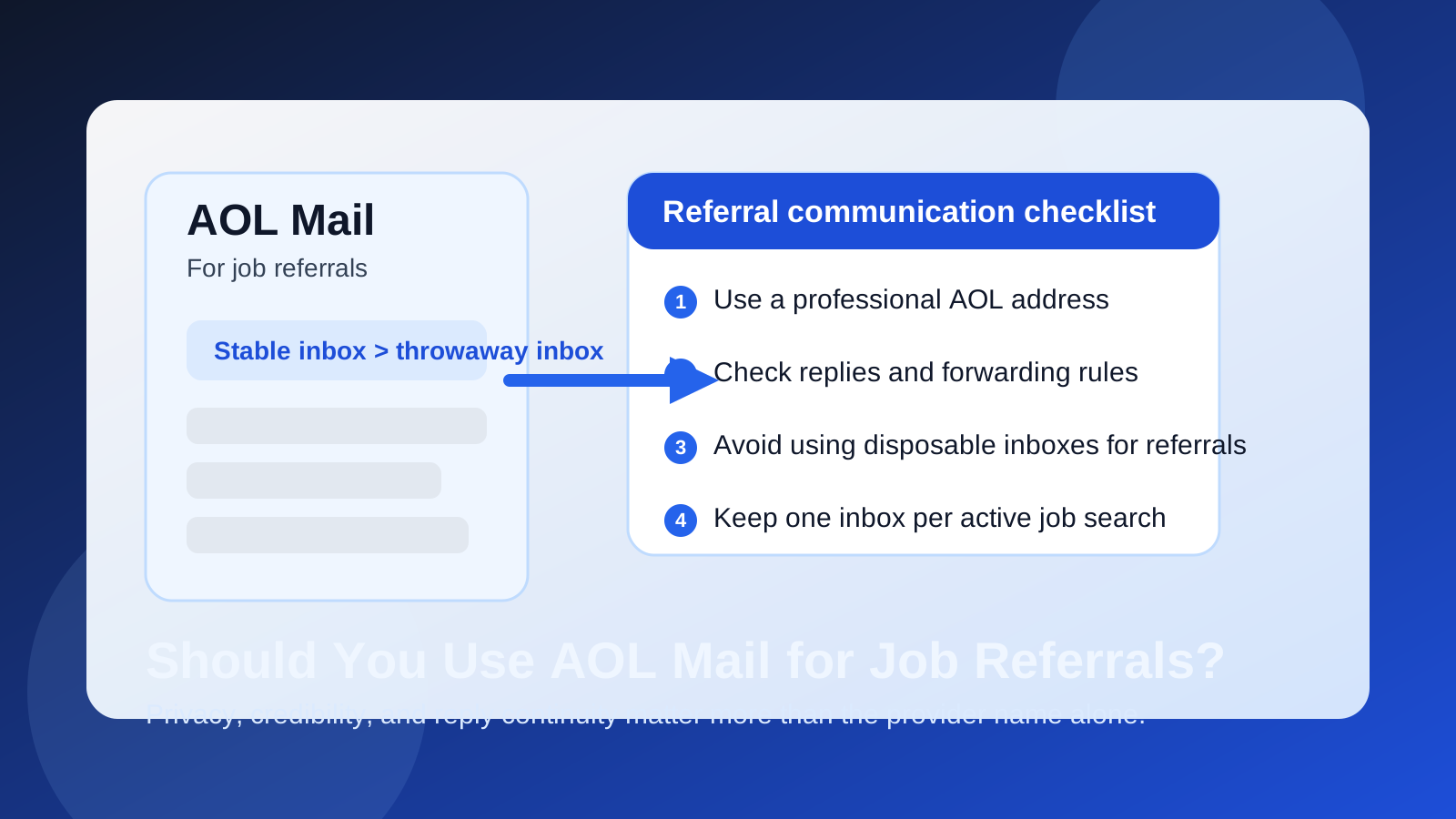
Job referrals are different from anonymous signups or one-off website registrations. When someone refers you for a role, they are attaching some of their own reputation to the introduction. That means the contact details you use matter more than they do in a throwaway situation. The good news is that AOL Mail is not automatically a problem. The bigger issue is whether your email address looks credible, stays organized, and supports smooth follow-up once the referral conversation starts.
Short answer: AOL Mail can work, but stability matters more than nostalgia
If you already have an AOL Mail account that uses your real name, stays reasonably clean, and is easy for you to monitor, it can work for job referrals. Most referrers and recruiters care far more about whether you reply promptly, sound professional, and keep the process moving than about whether your inbox is on Gmail, Outlook, AOL, or another mainstream provider.
Where AOL Mail can create friction is not the brand alone. The friction usually comes from things around it: an old username that looks unserious, a cluttered inbox that causes missed replies, or a habit of mixing job-search messages with years of spam and personal signups. In other words, the referral risk is usually operational, not purely provider-based.
Why job referrals raise the standard
With a normal application, you can sometimes get away with a less polished setup because you are one of many applicants entering a system. A referral is more personal. A colleague, friend, former manager, or recruiter is often passing your name directly to a hiring team or helping you make a warm introduction. That creates a few expectations:
- You should be easy to reach. Referrals often move quickly, especially when a team wants to schedule an intro call fast.
- You should look credible. A referral already carries a layer of trust, and your email should not immediately create doubt.
- You should stay organized. Losing a referral email in an overcrowded inbox is a very avoidable mistake.
That is why a stable mainstream inbox like AOL Mail can be fine, while a temporary or disposable address is usually the wrong tool for the job. Referral threads often involve follow-up questions, résumé sharing, scheduling updates, and occasional delays. You need continuity.
What AOL Mail gets right for job referrals
It is a real, established email provider
AOL Mail is not a disposable service, and it does not look like one. For job referrals, that matters. A referrer who sees a normal AOL address is far less likely to worry than if they see a random throwaway inbox that looks made for one-day use.
It can be perfectly fine if the address looks professional
An address like firstname.lastname or another clean name-based variation is usually fine. What matters is whether the address feels like something a working adult actually uses for important communication.
It supports continuity
Referral conversations do not always end in one message. Sometimes the referrer checks back a week later. Sometimes a recruiter replies after internal review. Sometimes you need to search old threads for a hiring manager’s contact details. A stable AOL inbox handles that far better than a temporary address ever could.
Where AOL Mail can create friction
An old or awkward username
The real risk is often not AOL; it is the address itself. If your email still looks like something you made years ago with nicknames, random numbers, or joke references, it can make a weak first impression. That does not mean instant rejection, but it can subtly reduce credibility in a referral context where professionalism matters.
Inbox clutter
Older personal accounts often collect newsletters, shopping receipts, spam, password resets, social notifications, and years of leftover signups. If your AOL inbox is noisy, the referral problem is simple: you may miss a time-sensitive reply. That is especially risky if a recruiter follows up only once.
Mixed personal and job-search communication
If your AOL account is also your everyday personal inbox, your referral messages may get buried among unrelated mail. Even if you do not miss anything, that kind of clutter makes it harder to respond quickly and keep the thread professional.
When AOL Mail is a good choice for job referrals
AOL Mail is usually fine when most of the following are true:
- Your address uses a clean, professional name.
- You check the inbox consistently and can reply quickly.
- You can search, star, label, or otherwise organize important threads.
- You are not drowning in spam or promotional mail.
- You want one stable inbox for the full referral and application process.
In that situation, AOL Mail is good enough because it behaves like what it is: a standard long-term email account. Referrals do not require a trendy provider. They require a dependable one.
When you should use something else instead
You may want a different inbox if your current AOL account is messy, unprofessional, or too personal to manage a serious job search. A cleaner separate inbox may be the better move when:
- Your current AOL username looks dated or casual in a way you cannot fix.
- Your inbox gets so much noise that you regularly miss important messages.
- You want stronger separation between personal life and job-search communication.
- You expect a long or active search and want a dedicated professional inbox.
That does not mean you must abandon AOL specifically. If you already have access to a cleaner separate address on another mainstream provider, using it may simply make your life easier. The goal is not to chase a perfect brand. The goal is to reduce friction.
Why a temporary inbox is usually the wrong tool for referrals
This is where the Anonibox angle matters naturally. Tools like Anonibox are helpful when you want to reduce spam exposure during early browsing, one-off signups, or low-trust situations. They are great for short-lived inbox use cases where anonymity or inbox protection matters more than long-term continuity.
Job referrals are different. A referral can turn into interview scheduling, recruiter follow-up, document requests, or later outreach for another role. If you use a temporary inbox for that, you risk losing the thread, confusing the referrer, or looking flaky. For referral communication, use a stable inbox you control over time.
A practical approach is this: use temporary inboxes for disposable situations, and use a persistent professional inbox for people-driven hiring conversations.
How to make an AOL Mail account referral-ready
1. Clean up the display name and signature
Use your real name, or the name you use professionally, and keep your signature simple. You do not need anything fancy. Name, optional phone number, and maybe LinkedIn or portfolio if relevant are enough.
2. Check the username honestly
If the address itself looks unserious, decide whether the convenience is worth the impression cost. If not, switch to a cleaner account before you start actively requesting referrals.
3. Create job-search folders or filters
Even basic organization helps. Put referral threads, recruiter follow-ups, and application confirmations in an obvious place so they are easy to find.
4. Reduce noise before you begin
Unsubscribe from obvious clutter, clear out old junk, and make sure legitimate hiring emails are less likely to get lost.
5. Reply quickly and clearly
A professional response style matters more than the provider logo. Thank the referrer, confirm the role, share materials promptly, and keep the tone concise and respectful.
Common mistakes to avoid
- Using an AOL address with a joke-style username for serious referrals.
- Letting referral replies disappear inside a heavily spammed inbox.
- Switching between multiple inboxes mid-process and confusing the thread.
- Treating a referral like a disposable lead instead of a real relationship.
- Using a temporary inbox for a conversation that may continue for weeks.
A simple decision checklist
Before you use AOL Mail for a referral, ask yourself:
- Does the address look professional at a glance?
- Will I definitely see and answer follow-ups quickly?
- Can I keep referral emails separate from clutter?
- Would a different stable inbox make me look or feel more organized?
If the answers are mostly yes, AOL Mail is probably fine. If the answers are mostly no, the safer move is to use a cleaner long-term inbox before you start asking people to refer you.
Final answer
Should you use AOL Mail for job referrals? Yes, you can — as long as the account is professional, stable, and actively monitored. AOL Mail is far better suited to referral communication than a temporary inbox because referrals depend on continuity and trust.
The real question is not whether AOL Mail is modern enough. It is whether your specific AOL account helps you look organized and respond reliably. If it does, keep it. If it does not, switch to a cleaner persistent inbox and keep temporary-email tools like Anonibox for the short-lived privacy tasks they are actually good at.